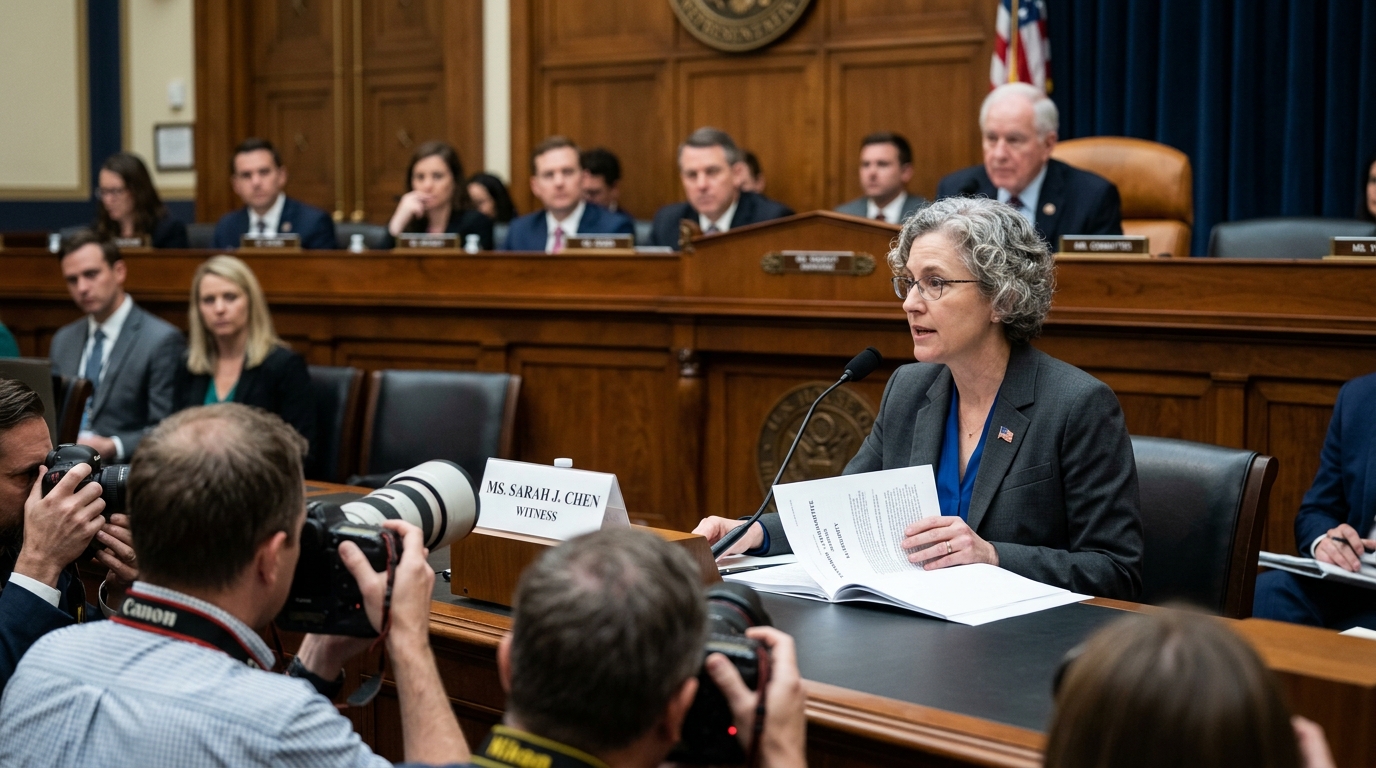
The era of experimental Artificial Intelligence (AI) has definitively passed for the public sector. As federal agencies worldwide, and particularly in the U.S., integrate Large Language Models (LLMs) into their daily operations, the challenge is no longer just performance, but absolute security and data integrity. The recent focus on Retrieval-Augmented Generation (RAG) is not merely a technical upgrade; it is a strategic necessity for protecting national interests.
The Core of the Problem: Why Standard LLMs Fall Short for Government
Classic AI models, such as GPT-4 or Claude, are trained on vast volumes of public data. However, for a government agency, knowledge that stops at a specific training cutoff date is insufficient. Furthermore, the tendency of models to "hallucinate"—producing false information with absolute confidence—poses a lethal risk to policymaking or decision-making in national security contexts.
RAG addresses this issue by connecting the AI to external, controlled, and authoritative databases. Instead of the model relying solely on its internal memory, it functions like an expert librarian searching through specific, classified documents before synthesizing an answer. This process ensures that responses are grounded in facts and up-to-date.
Security Architecture and Data Workflows
Implementing RAG at a federal level introduces new vulnerabilities that require rigorous management. Data security is no longer just about the model itself, but the entire "journey" of information. The primary pillars of protection include:
- Role-Based Access Control (RBAC): Not every user within an agency should have access to all documents feeding the RAG system. Integrating RBAC ensures the AI only "sees" what the specific user is authorized to view.
- Vector Database Protection: Information in RAG is stored as mathematical vectors. If such a database is compromised, sensitive data can be recovered through reverse engineering.
- Input Sanitization: Preventing "prompt injection" attacks, where malicious actors attempt to bypass system constraints through specially crafted queries.
"Security in Artificial Intelligence is not a static feature, but a continuous process of monitoring information flow," state analysts at the Federal News Network.
Zero Trust and FedRAMP Compliance
For federal agencies, AI usage must align with the Zero Trust framework. This means no component of the system—neither the user, the application, nor the network—is trusted by default. Within the context of RAG, this translates to continuous authentication and encryption of data both in transit and at rest.
Furthermore, FedRAMP (Federal Risk and Authorization Management Program) certification is becoming the "gold standard" for cloud providers offering AI services. Tech companies are now required to prove that their infrastructure can withstand attacks from state actors while maintaining the speed required by the modern era.
The Future: From Reaction to Prevention
The transition to secure RAG systems is only the beginning. The next step is using AI itself to monitor AI workflows. Specialized AI systems will audit other AI systems for potential leaks or bias in responses. The federal government is not just looking to use technology; it is looking to build a digital ecosystem where innovation does not sacrifice national sovereignty. The success of this endeavor will determine state effectiveness in the 21st century.