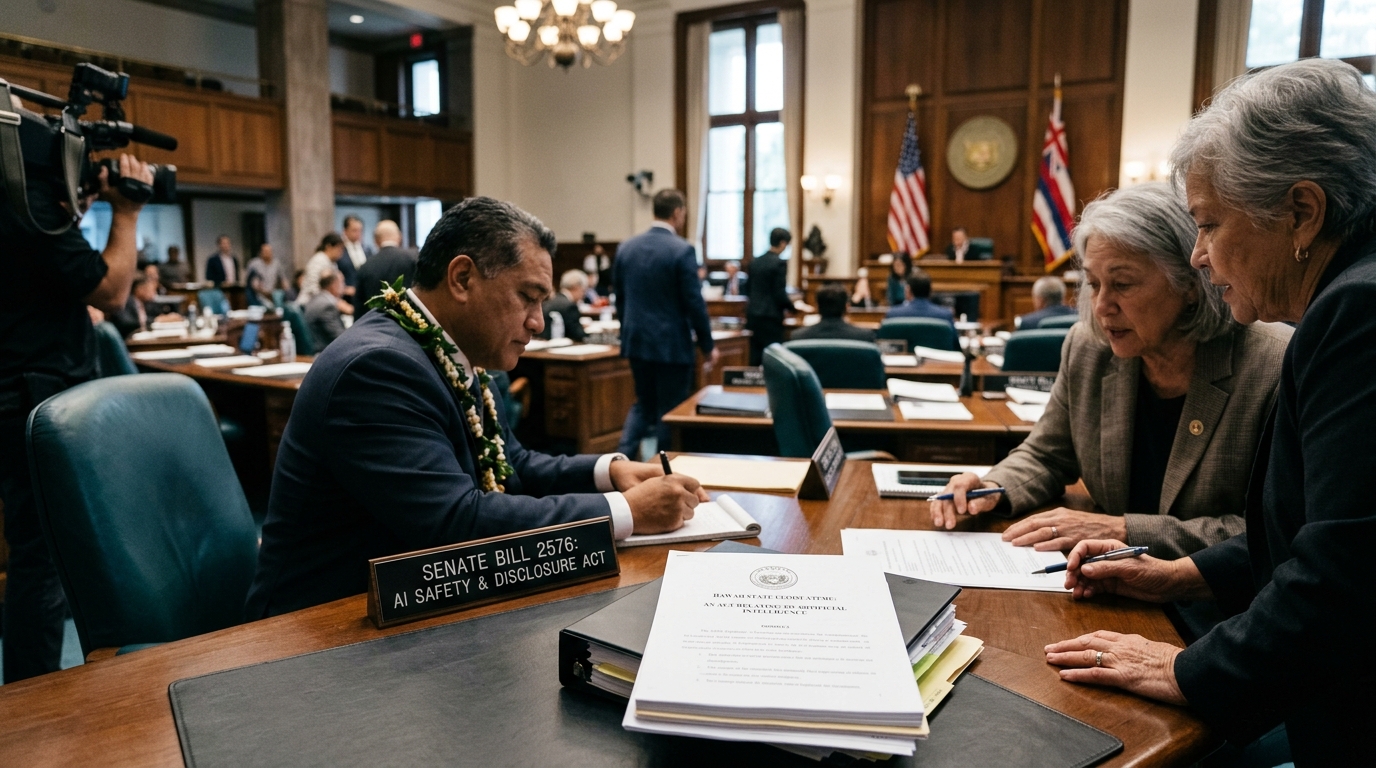
In a historic move poised to reshape the landscape of technological governance in the United States, the Hawaiʻi State Legislature has passed the "Artificial Intelligence Disclosure and Safety Act." This development is not merely a localized legislative initiative but a definitive statement of intent against the unchecked proliferation of algorithmic systems that increasingly influence the daily lives of citizens. In an era where the U.S. federal government continues to struggle with establishing a unified regulatory framework, individual states—with Hawaiʻi now at the vanguard—are stepping in to shoulder the burden of regulating Silicon Valley.
Transparency as a Democratic Pillar
The core of the new act focuses on the mandatory disclosure of AI-generated content. Specifically, the law requires content creators and platforms to clearly label any video, audio, or imagery that has been produced or significantly altered by Generative AI tools. This provision is a direct strike against deepfakes, which have evolved into a major threat to the integrity of electoral processes and social cohesion.
Under the terms of the act, failure to label such content will result in substantial fines, while social media platforms will be mandated to implement mechanisms for the immediate reporting and removal of unlabeled AI content. Hawaiʻi, having witnessed the devastating impact of misinformation during recent natural disasters like the Maui wildfires, displays a heightened sensitivity to the necessity of verifiable information in the public sphere.
Frontier Model Safety and Corporate Liability
Beyond content transparency, the act introduces rigorous safety protocols for so-called "frontier models." These are the high-capacity AI systems developed by tech giants that possess capabilities approaching or exceeding human intelligence in specific domains. The law requires companies to conduct stringent safety testing before releasing their models into the Hawaiʻi market, ensuring they cannot be weaponized for biological warfare, large-scale cyberattacks, or other catastrophic events.
Furthermore, the act establishes the concept of "algorithmic liability," where developers can be held legally responsible for foreseeable harms caused by their systems. This marks a significant shift from the previous regime of immunity enjoyed by tech corporations, forcing them to integrate ethics and safety into the very core of their design processes. The message is clear: if you profit from the technology, you are responsible for its failures.
Cultural Protection and Local Nuance
A unique aspect of Hawaiʻi's legislation is its focus on protecting indigenous heritage and local communities. The act includes specific provisions prohibiting the use of AI for the unauthorized appropriation or misrepresentation of Native Hawaiian (Kānaka Maoli) culture. This encompasses the protection of language, traditional dances, and sacred symbols from being commercialized through AI without community consent. By doing so, Hawaiʻi sets a global precedent for how technology can be regulated to respect the historical and cultural identity of a people, preventing what many call "digital colonialism."
Industry Pushback and the Road Ahead
As expected, the technology industry has expressed reservations, arguing that a "patchwork" of differing state laws could stifle innovation and create immense compliance burdens. However, proponents of the act argue that the vacuum left by federal inaction makes these state-level initiatives essential. Hawaiʻi, though small in population, is sending a powerful signal: the safety of citizens and the sanctity of truth in the public square are non-negotiable. As the act moves toward implementation, all eyes will be on how it is enforced and whether it serves as the catalyst for a broader, national legislative movement in the United States.