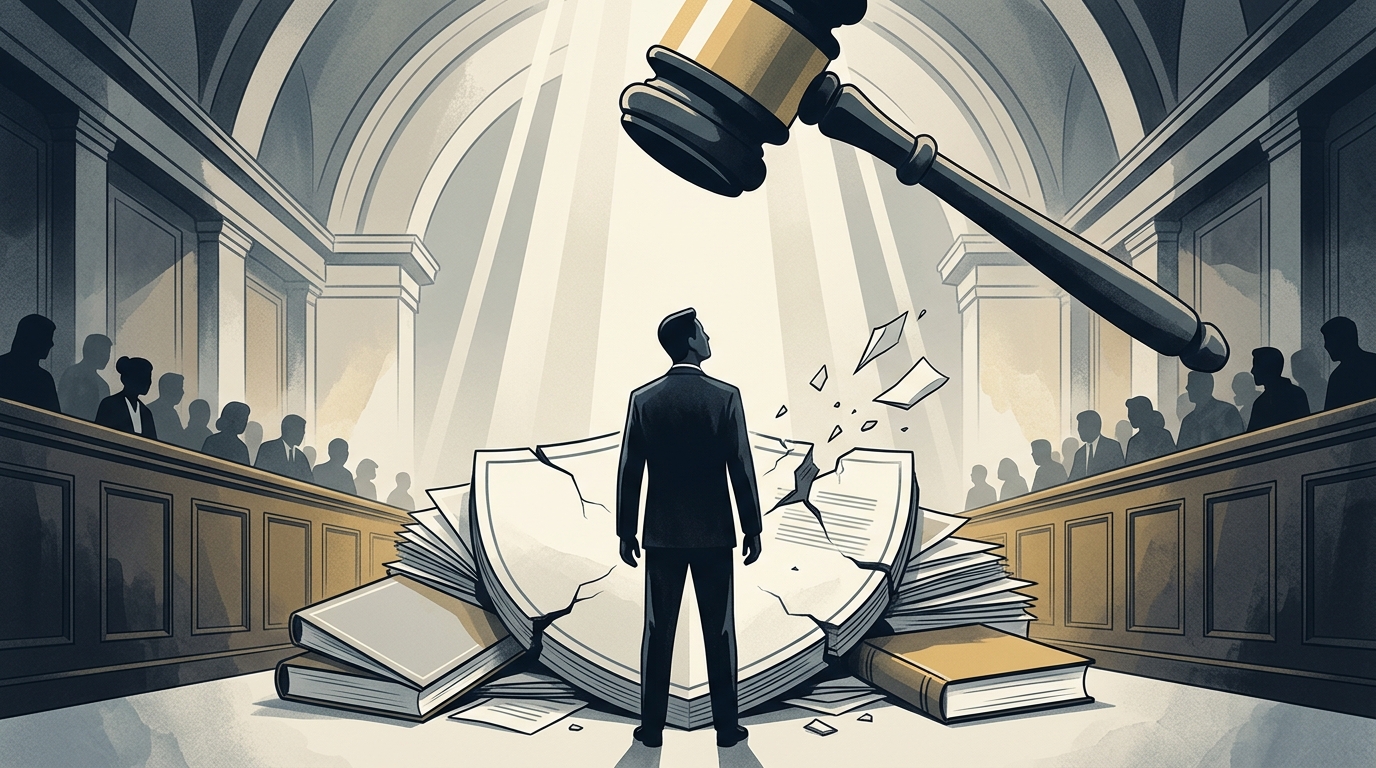
May 7, 2026, will likely be recorded in the annals of technology as the day the 'golden age' of unfettered AI training hit a brick wall. Sam Altman, the charismatic leader of OpenAI, found himself in a courtroom that appeared unimpressed by grand narratives of 'transformative use.' The court's decision to deny OpenAI's motion to dismiss a landmark copyright lawsuit from major publishers and creators signals a decisive shift toward protecting intellectual property over technological expansion.
The Crumbling Shield of 'Fair Use'
For years, OpenAI and its peers relied on the doctrine of 'Fair Use' to justify scraping billions of pages of text, images, and code without permission or compensation. Their argument was simple: models do not 'copy'; they 'learn' much like a human does. However, mounting evidence of 'regurgitation'—where models like GPT-5 output verbatim snippets of copyrighted material—has rendered this legal defense increasingly fragile.
During the proceedings, plaintiffs' attorneys presented evidence suggesting that OpenAI not only used data without authorization but actively developed products that directly compete with their sources. The judge's refusal to toss the case means OpenAI will now be forced into the 'discovery' phase, potentially exposing internal documents detailing exactly how their black-box models were trained. This is a 'transparency nightmare' for a company that began as an open-source non-profit but evolved into one of the most secretive entities in the tech world.
The 'Scorched Earth' Strategy and Its Fallout
Altman attempted to frame generative AI as an inevitable step in human evolution, arguing that data restrictions would 'stifle' American innovation to the benefit of global rivals. Yet, this rhetoric is losing its potency against judges tasked with upholding existing property laws. This setback is as much a PR disaster as it is a legal one. The image of Altman as the 'prophet' leading humanity toward AGI is being eclipsed by the image of a CEO being held accountable for the appropriation of others' labor.
- OpenAI could be forced to pay billions in statutory damages.
- 'Model disgorgement'—the court-ordered deletion of models trained on infringing data—is now a realistic threat.
- Investors are beginning to re-evaluate the risk profiles of AI firms lacking clean data provenance.
Toward a New Social Contract for Data
The aftermath of this ruling has sent shockwaves through Silicon Valley. If OpenAI ultimately loses, the cost of operating AI will skyrocket, as every bit of training data may require a licensing fee. This could lead to a further consolidation of power among those with the deepest pockets, or conversely, a renaissance for open-source models built on ethically sourced or voluntary data.
'We cannot build the future on the ruins of others' creativity,' stated one of the lead counsels for the plaintiffs, capturing the shifting legal sentiment.
Sam Altman now faces a stark choice: persist in a costly and uncertain legal war or capitulate by signing expensive licensing deals that will permanently alter OpenAI's path to profitability. Either way, this day marks the end of the 'Wild West' era for the digital frontier.