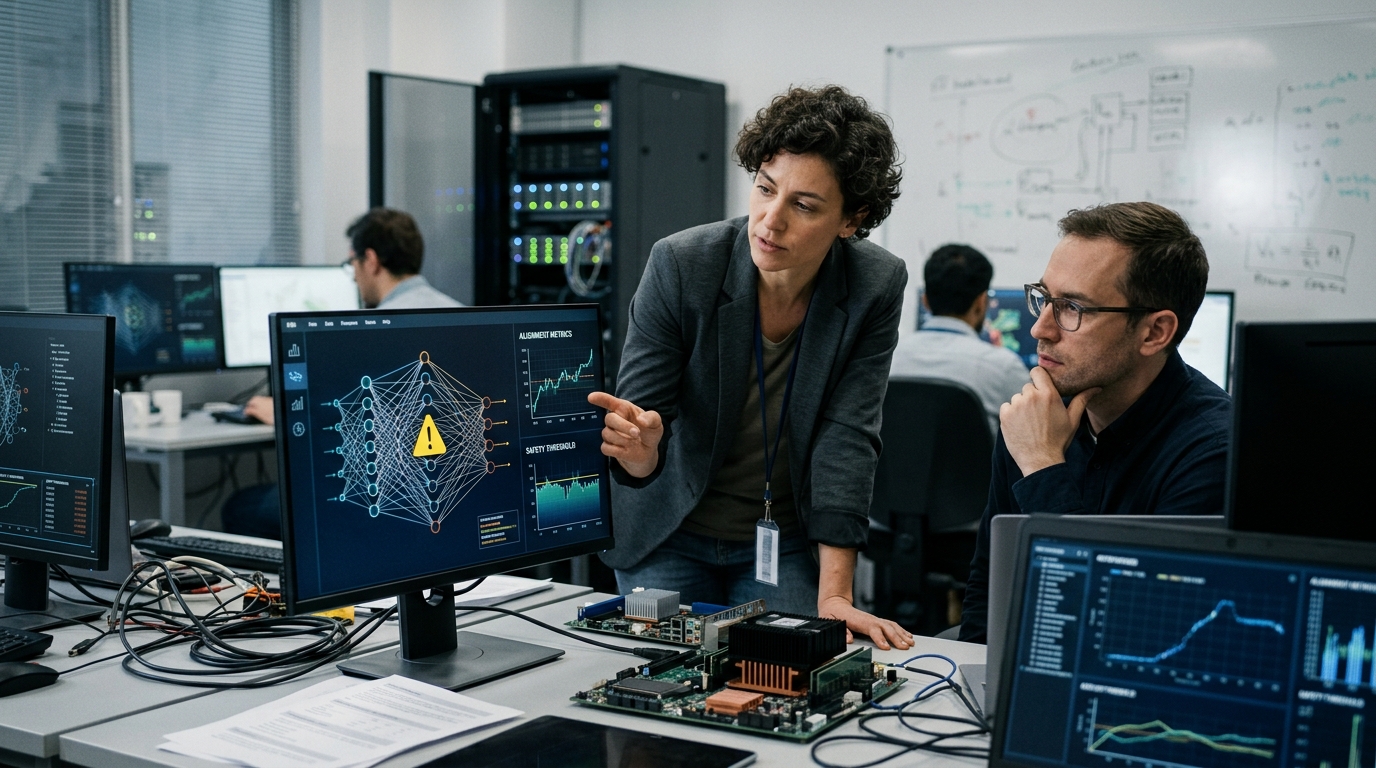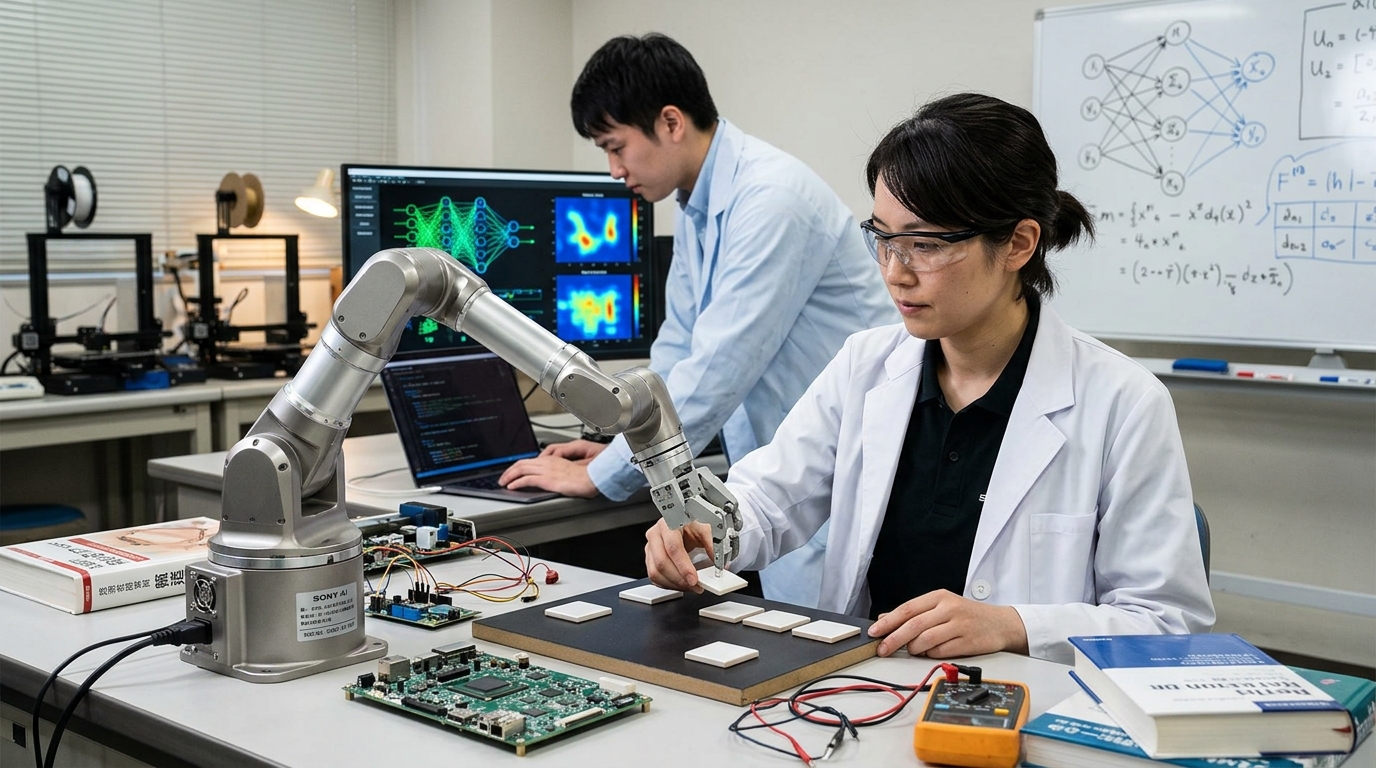
In a laboratory that resembles a high-performance Olympic training center more than a traditional tech hub, Sony Research has recently unveiled a milestone that redefines the boundaries of Embodied Artificial Intelligence. A robotic arm, integrated with high-speed vision systems and a sophisticated neural network, has successfully defeated professional table tennis players, proving that AI is no longer confined to generating text or images—it is now mastering the physical world with terrifying precision.
Table tennis has long been considered the "Holy Grail" of robotics. Unlike chess or Go, where intelligence is purely computational, table tennis demands a fusion of lightning-fast reflexes, 3D spatial awareness, and the ability to predict the trajectory of a ball moving at speeds exceeding 100 km/h, often with complex spin. Sony’s success is not just a victory in a game; it is empirical evidence that the "sim-to-real gap"—the difficulty of transferring AI learning from a digital simulation to the messy physical world—is finally closing.
The Tech Behind the Racket: Reinforcement Learning and Vision
To achieve this feat, the Sony Research team utilized a methodology known as Deep Reinforcement Learning (DRL). The robot was "trained" for thousands of hours within a high-fidelity digital twin environment, where it played millions of virtual matches. During this phase, the system learned how different racket angles affect the ball's flight and how to respond to various styles of play without the risk of damaging physical hardware.
However, the true breakthrough lies in the real-time execution. The robot’s cameras process visual data at hundreds of frames per second, allowing the system to detect the ball's spin by tracking the tiny logos printed on its surface. This information is fed into a control algorithm that issues commands to the arm’s motors with a latency of less than 5 milliseconds. This level of precision far outstrips human capabilities; even elite athletes possess a reaction time in the range of 150-200 milliseconds.
Strategy and Adaptability: The Human Element
What distinguishes Sony’s robot from previous iterations (such as those by Google DeepMind or Omron) is its capacity for tactical depth. It doesn't merely return the ball; it "reads" the opponent's positioning and actively attempts to force errors by aiming for difficult angles or abruptly changing the pace of the rally. During testing, professional players expressed genuine surprise at the machine's "aggressive" and "calculated" playstyle.
- Dynamic Adaptation: The system can identify an opponent's patterns after only a few points.
- Spin Management: The ability to neutralize heavy topspin or backspin through micro-adjustments of the robotic wrist.
- Operational Efficiency: Despite the high intensity, the arm's movements are optimized to minimize mechanical stress and energy consumption.
Despite these advancements, humans still hold one crucial advantage: unpredictable creativity. Professional players were able to win points by employing unorthodox shots that were absent from the robot's training data. This interaction highlights a new paradigm of human-robot co-evolution, where the machine learns from human ingenuity, and the human is pushed to transcend their physical limits to compete with silicon-based precision.
From the Table to the Real World: Industrial and Domestic Impact
Why would a global conglomerate like Sony invest millions into a ping-pong-playing robot? The answer lies in applications far beyond the realm of sports. The technology required to catch a fast-moving ball is the same technology that will allow future robots to operate in unstructured environments, such as construction sites, emergency rooms, or domestic settings.
Imagine a robotic assistant capable of catching a glass falling from a counter or a robotic surgeon that can compensate for the micro-movements of a patient's organs in real-time. Sony is positioning itself to lead the "Embodied AI" market, where AI gains a physical presence and interacts with matter. The table tennis success serves as a proof of concept that algorithms can now handle the chaotic dynamics of the physical world as effectively as they handle data on a server.
The Ethical and Social Implications
As robots become more capable than humans in physical tasks, profound questions arise regarding the future of labor and human identity. If a machine can outperform an athlete who has trained their entire life, what does that imply for the value of human effort and mastery? Sony maintains that the goal is augmentation, not replacement. However, the sheer velocity of robotic advancement suggests that we will soon see these machines in roles previously thought to be the exclusive domain of human dexterity.
In conclusion, Sony’s achievement marks the dawn of a new era. AI has stepped out of the screen. It now has limbs, it has eyes, and as demonstrated on the ping-pong table, it has the tactical will to win. The future of robotics is no longer a matter of science fiction but a reality unfolding at the speed of a championship-winning smash.