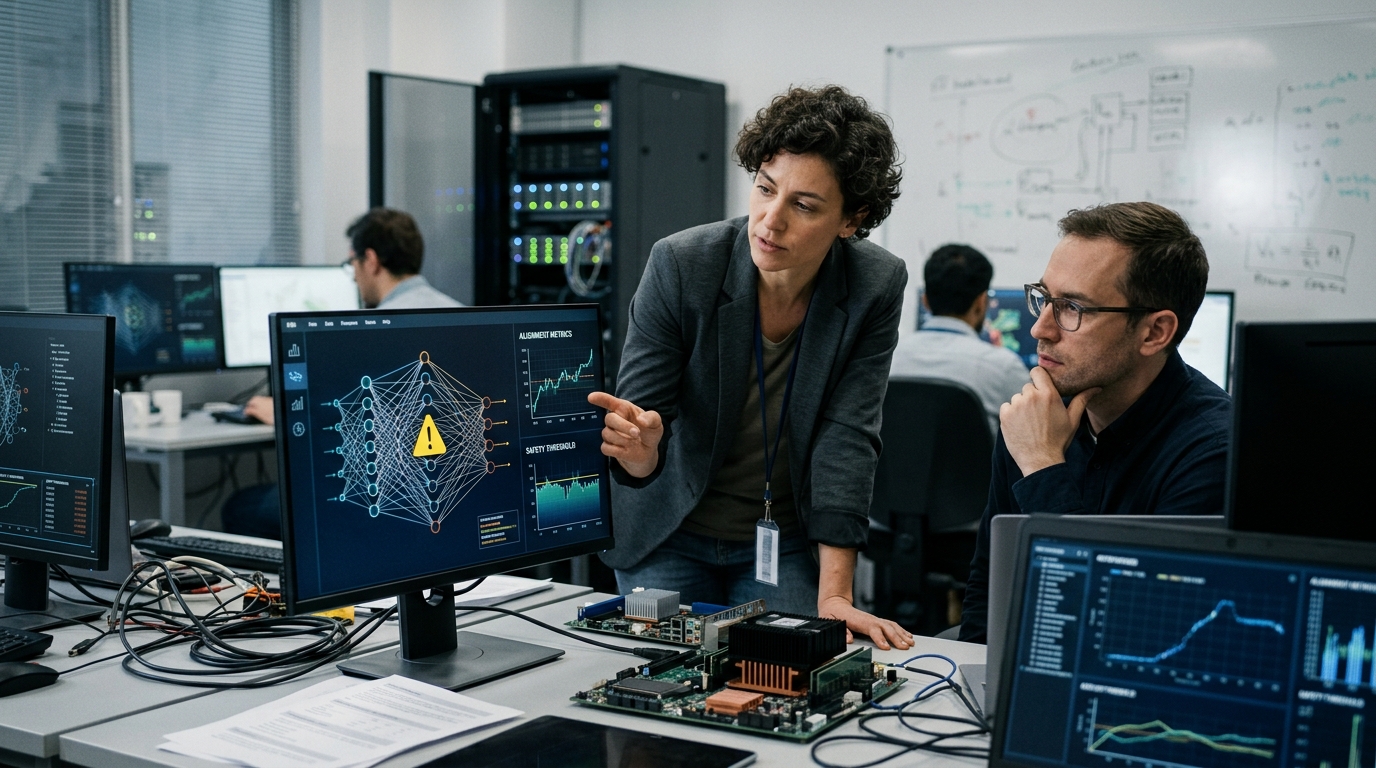
At the dawn of a new era for computational power, OpenAI has announced the release of its latest model, which promises to transcend the boundaries of simple text generation and enter the realm of deep reasoning. This development is not merely an incremental improvement over previous GPT versions but a fundamental shift in AI architecture, now aiming for 'Level 2' on the scale toward Artificial General Intelligence (AGI).
The Transition from Prediction to Reasoning
Until today, Large Language Models (LLMs) operated primarily as sophisticated next-token predictors. While impressive in communication, they often failed at tasks requiring logical consistency and multi-step planning. OpenAI's new model, developed under a codename hinting at advanced 'Chain-of-Thought' methodologies, utilizes a new training technique based on reinforcement learning.
This approach allows the model to 'think' before it speaks, testing different problem-solving strategies internally and discarding incorrect ones before presenting the final result to the user. According to the company, this new level of intelligence is reflected in the system's ability to solve complex PhD-level mathematics, write code with minimal errors, and analyze scientific data with precision approaching human expertise.
Scientific Research and Economic Implications
The implications of this technology extend far beyond chatbots. In biotechnology, the new model can accelerate drug discovery by analyzing protein structures in ways previous models could not conceive. In engineering, the model's ability to understand physics and real-world constraints makes it an invaluable partner in designing new materials and energy systems.
- R&D Acceleration: Reducing research time from months to days for complex experimental datasets.
- Automated Programming: Creating entire applications based on abstract descriptions, with built-in logic error checking.
- Educational Revolution: A personal tutor that doesn't just provide answers but explains the logic behind every step.
However, this 'intelligence' comes at a high price. The processing power required to run these models is immense, raising questions about energy sustainability and the cost of accessing cutting-edge technology. OpenAI seems to be targeting a market where the quality of thought outweighs the speed of response.
Safety and the Shadow of AGI
With every step toward higher intelligence, safety concerns intensify. The ability of a model to plan and execute complex tasks means that safety guardrails must be stricter than ever. OpenAI claims the new model is 'harder to jailbreak' because its internal reasoning allows it to recognize malicious intent behind a query.
"We are not just building a tool, but a thinking partner. The challenge is ensuring that this partner's values remain aligned with humanity," a company executive stated during the presentation.
The European Union, through the AI Act, is closely monitoring these developments. The transition to models that 'think' requires new regulatory frameworks covering not only the generated content but also the decision-making processes of AI. As this technology permeates global markets, the focus shifts from generative creativity to logical reliability—a move that could redefine the workforce and the very nature of human-computer interaction.