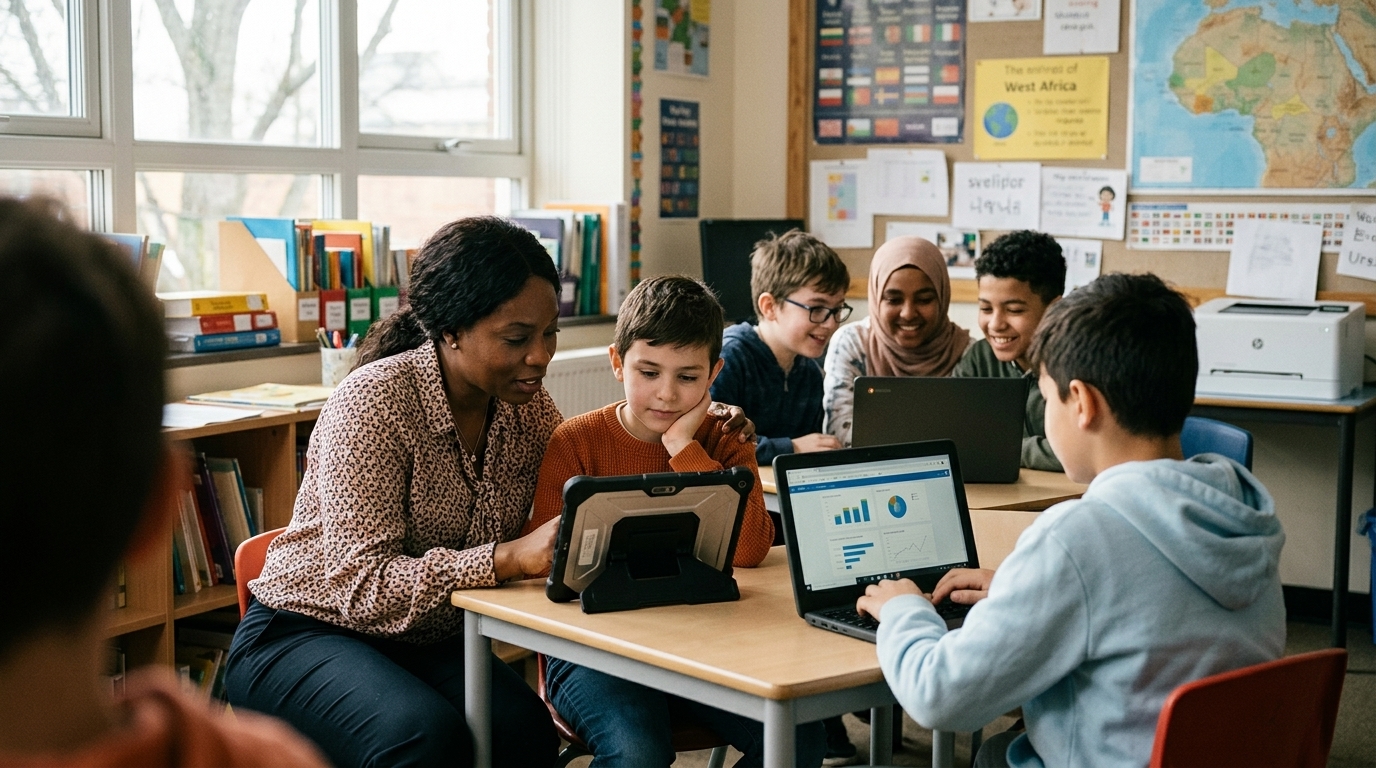
The integration of Artificial Intelligence (AI) into the educational landscape is no longer a speculative promise; it is a tangible reality reshaping classrooms worldwide. Recent studies conducted in partnership with Google in Sierra Leone and Italy provide a rare, data-driven look at how generative AI models, such as Gemini, are impacting both student performance and the daily lives of educators. The findings suggest that AI can serve as a catalyst for dismantling educational inequalities, provided its deployment is framed by sound guidance and strategic planning.
Sierra Leone: Democratizing Personalized Tutoring
In Sierra Leone, a nation grappling with significant infrastructure challenges and high student-to-teacher ratios, the study focused on using Gemini as a personal tutor for mathematics. In many parts of Sub-Saharan Africa, access to specialized tutors is a luxury few can afford, making AI a potential lifeline. Students who utilized the tool to navigate complex problems and grasp theoretical concepts showed marked improvement in their learning outcomes compared to a control group.
The key to success was not merely the provision of answers, but Gemini’s ability to explain the process step-by-step. This Socratic method of instruction, where the AI guides the student toward discovering the solution rather than handing it over, proved remarkably effective. Researchers observed that students’ confidence in mathematics grew as the tool provided a safe environment for experimentation without the social pressure or fear of judgment often felt in a traditional classroom setting.
Italy: Empowering the 21st-Century Educator
On the other side of the Mediterranean, in Italy, the research pivoted to a different but equally critical front: teacher productivity. Italian educators, often burdened by administrative tasks and the need for differentiated instruction in diverse classrooms, utilized Gemini for lesson planning and material creation. The results were striking, with participants reporting time savings of up to 30% on preparatory work.
AI allowed teachers to generate personalized worksheets tailored to individual student needs, including those with learning disabilities. Instead of spending hours drafting exercises, teachers were able to focus on direct interaction with their students and fostering critical thinking. The Italian study underscores that AI does not replace the teacher; rather, it liberates them from the mechanical aspects of their profession, allowing them to practice their vocation with greater creativity and focus.
Challenges and the Digital Divide
Despite the positive outcomes, the widespread adoption of AI in education is not without its hurdles. The "digital divide" remains a stark reality. In Sierra Leone, access to reliable internet and hardware is the primary barrier. Without the necessary infrastructure, the benefits of AI will remain the privilege of a few, widening rather than bridging existing gaps. Furthermore, there is the issue of the "illusion of knowledge," where students might become overly reliant on AI without internalizing core concepts.
Ethical considerations, such as the protection of minors' data and the potential for algorithmic bias, require rigorous regulatory frameworks. Google and other tech giants bear a massive responsibility to ensure their models are trained to respect cultural diversity and avoid reinforcing stereotypes. Training teachers in "AI literacy" is just as vital as providing the tools themselves, ensuring they can guide students in using AI ethically and effectively.
Conclusion: Toward a New Pedagogical Paradigm
The studies in Sierra Leone and Italy are just the beginning. They demonstrate that when technology is deployed with a human-centric focus, it can unlock potential that was previously unimaginable. AI in education is not an automation of the mind, but a collaborative partner. The challenge for governments and educational bodies is to integrate these tools not as a foreign element, but as an integral part of a modern pedagogy that promotes equity, creativity, and lifelong learning.
"AI has the potential to be the great equalizer in education, but only if we ensure that the technology serves the teacher and the student, rather than the other way around."