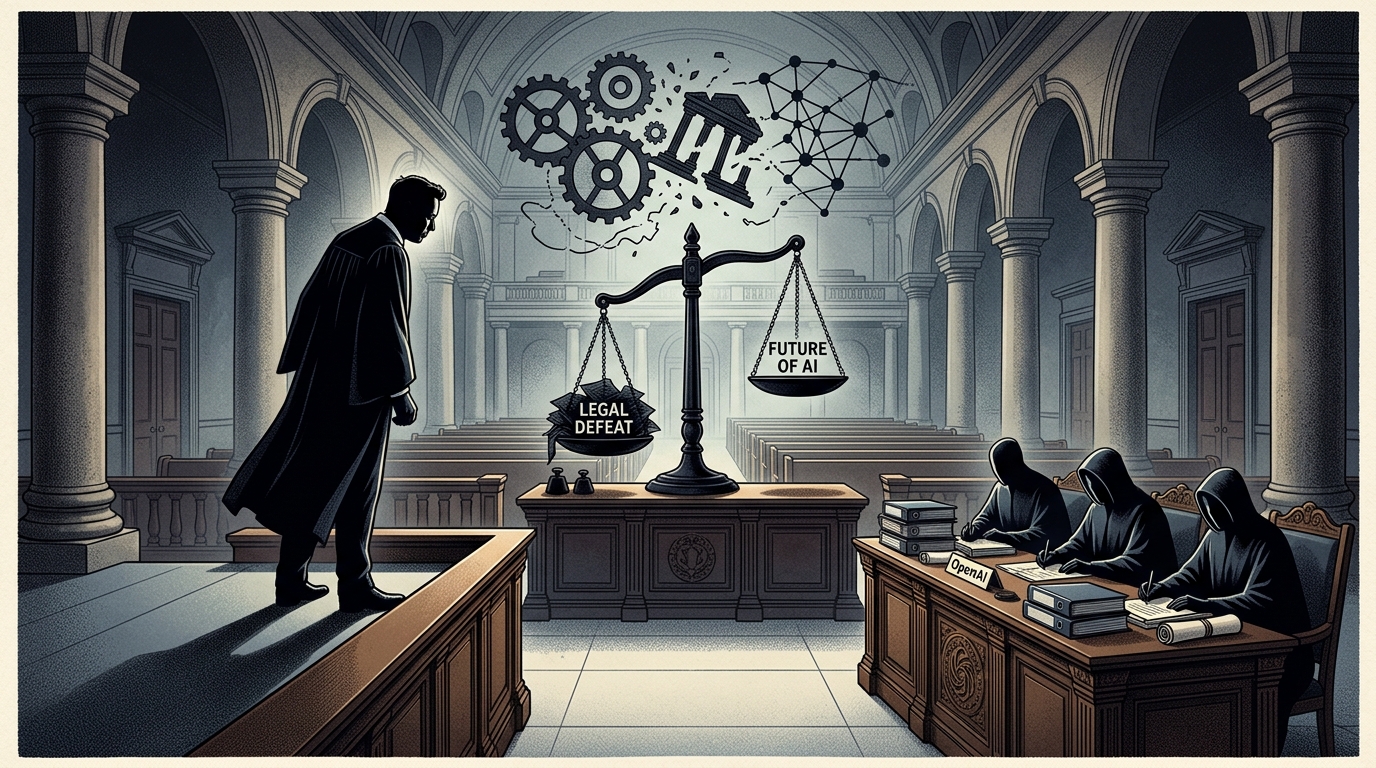
The legal showdown between Elon Musk and OpenAI, the company he helped found in 2015, ended in a manner many described as an anticlimax. However, the essence of the case was never just about contracts or personal feuds between billionaires. It concerned the existential question of Artificial General Intelligence (AGI) and whether an entity that began as a non-profit dedicated to the benefit of humanity can transform into a de facto arm of a tech giant like Microsoft.
The 'Founding Agreement' That Never Existed
The basis of Musk's lawsuit was the alleged breach of a "Founding Agreement." According to Musk, Sam Altman and Greg Brockman convinced him to invest tens of millions of dollars with the promise that OpenAI would remain a non-profit organization, committed to open-source development to avoid the risks posed by the concentration of power in private hands. The problem, however, from a legal standpoint, was that this agreement was never captured in an official, signed document. It relied on email exchanges and verbal assurances which, while morally binding to many, proved legally fragile.
OpenAI responded by making public past emails from Musk, which suggested that he himself had accepted the need for massive capital—which only a for-profit structure could attract—and had even proposed merging OpenAI with Tesla to ensure its viability. This move exposed the contradiction in Musk's arguments, presenting him not as an altruistic protector of humanity, but as a frustrated investor who lost control of the "next big thing" in technology.
The AGI Enigma and Microsoft
The most critical point of the dispute, which remains legally unresolved, is the definition of Artificial General Intelligence (AGI). In OpenAI's charter, AGI is defined as a system that outperforms human capabilities at most economically valuable tasks. The significance of this definition is immense: OpenAI's commercial agreement with Microsoft explicitly excludes AGI. If GPT-4 or its successors are deemed AGI, Microsoft loses the rights to exploit them.
Musk argued that GPT-4 already constitutes a form of AGI and that OpenAI is concealing this to maintain the flow of revenue to Microsoft. The court was never called upon to rule on this, as the case was withdrawn. Thus, the question of "who defines when we have reached AGI?" remains under the exclusive jurisdiction of OpenAI's board—a board that, following the November 2023 crisis, appears more aligned than ever with corporate interests.
Ethical Implications and the Future of Open Source
The case highlights a deep identity crisis within the AI industry. If OpenAI, founded as a counterweight to Google, ended up being more closed and profit-oriented than its competitors, what does this mean for safety and democratic access to technology? The shift toward "closed" models is justified by the company as a safety measure to prevent malicious use, but critics like Musk see it as an attempt to monopolize knowledge.
- The conversion of OpenAI into a capped-profit entity created an unprecedented legal hybrid structure.
- Reliance on Microsoft's computing power (Azure) makes OpenAI's independence nearly impossible.
- The lack of transparency in model training data undermines the scientific community.
Ultimately, Musk's defeat in court is not a moral vindication for OpenAI. It is simply a confirmation that, in the world of Silicon Valley, verbal promises about the "good of humanity" do not hold up against billions of dollars in investment and the absence of a regulatory framework. The vacuum left by this case will likely need to be filled by legislators rather than private lawsuits, as humanity waits to learn whether the future of intelligence will be a public good or a private asset.