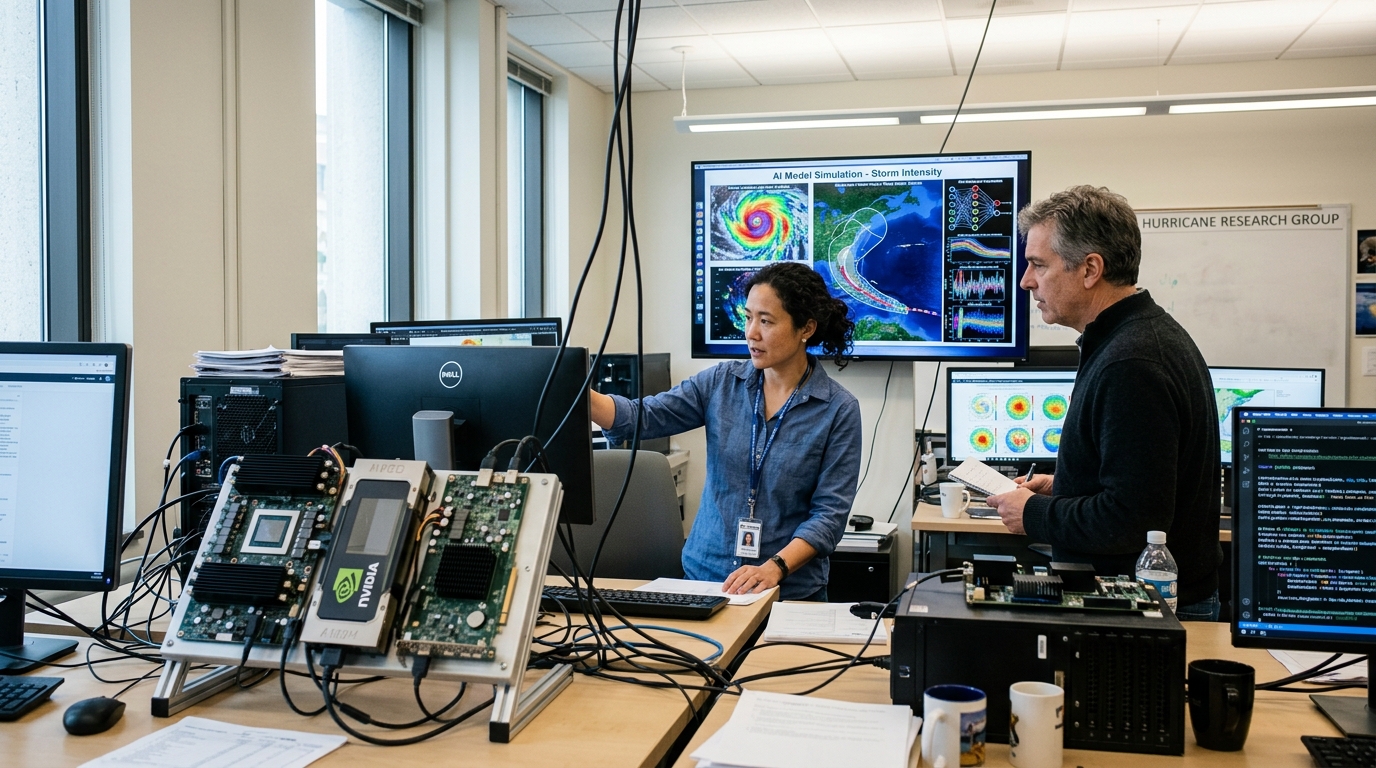
Humanity stands at a critical juncture in addressing extreme weather events. As we move through 2026, the debate over whether hurricanes are getting stronger is no longer theoretical; it is a reality etched into the data of recent years. The scientific community is in consensus: while the total number of storms may not be increasing dramatically, their intensity and the speed at which they evolve into deadly cyclones have fundamentally altered the risk landscape. In this context, Artificial Intelligence (AI) is not merely a technological addition but a necessary revolution in how we understand and predict nature's fury.
The Thermodynamics of Destruction: Why Storms are Escalating
The core principle behind hurricane intensification is simple in its physics but terrifying in its consequences. Oceans act as massive heat reservoirs. With global temperatures rising, the sea surface absorbs the lion's share of this energy. A hurricane is, essentially, a heat engine fueled by warm water. The warmer the water, the more energy is available to generate high-speed winds and torrential rains.
The phenomenon of "rapid intensification" has become the new nightmare for meteorologists. It is defined as an increase in maximum sustained winds of at least 35 mph within a 24-hour period. In the past, this was a rare outlier. Today, we witness storms transforming from disorganized tropical depressions into Category 4 or 5 monsters in the blink of an eye, leaving minimal windows for evacuation and infrastructure preparation. Science indicates that climate change has effectively "rigged the deck" in favor of these extreme events.
AI as a Forecasting Shield
Traditionally, weather forecasting relied on Numerical Weather Prediction (NWP) models that required immense computational power from supercomputers to solve complex physical equations. While reliable, these models are slow and often struggle to capture the micro-scale processes that lead to a storm's sudden surge in power. This is where AI steps in.
New AI models, such as Google DeepMind’s GraphCast and Huawei’s Pangu-Weather, have demonstrated the ability to produce global forecasts in seconds rather than hours, with accuracy that often rivals or exceeds traditional models. The power of AI lies in its ability to recognize patterns within decades of historical data. It can identify the subtle interplay between ocean temperatures, atmospheric moisture, and wind shear that signals an impending disaster long before it becomes apparent to conventional tools.
- Processing Speed: The ability to run thousands of simulations (ensemble forecasting) allows scientists to better quantify uncertainty and potential track scenarios.
- Pattern Recognition: AI can "see" connections in satellite and buoy data that escape human analysts.
- Resource Efficiency: Using neural networks significantly reduces the energy and hardware costs associated with traditional supercomputing.
From Forecast to Civil Protection: The Human Element
However, the best forecast in the world is useless unless paired with effective action. The challenge for 2026 and beyond is bridging the gap between technological precision and societal response. Civil protection agencies must integrate AI-driven data into their evacuation protocols. When an AI predicts a 90% probability of rapid intensification before landfall, the decision to evacuate must be made faster than ever before.
Furthermore, the increased moisture in the atmosphere—a byproduct of warming—means modern hurricanes carry significantly more water. Flooding from rainfall is now as lethal as wind damage. AI models are now being utilized to predict neighborhood-level flooding, allowing local communities to fortify specific areas more effectively. The future of survival in coastal regions depends on this symbiosis of human judgment and machine intelligence.
The Paradox of Accuracy
Yet, a trap exists. As forecasts become more precise, there is a risk of complacency or "warning fatigue." If an AI predicts a danger that does not materialize with maximum intensity, the public may lose trust. Transparency in how these algorithms function and clear communication regarding their limitations are essential. Technology is not a crystal ball, but a tool for risk mitigation on a planet that is becoming increasingly unpredictable.