In an era where the global geopolitical chessboard is being redefined by technological prowess, Sierra Leone is attempting a bold leap into the future. The West African nation, traditionally reliant on its mineral resources, is now pivoting toward "digital mining": Artificial Intelligence (AI). With the announcement of a comprehensive national AI agenda, the government in Freetown seeks to establish the country as a blueprint for the Global South, proving that innovation is not the exclusive domain of developed economies.
The Digital Transformation Strategy
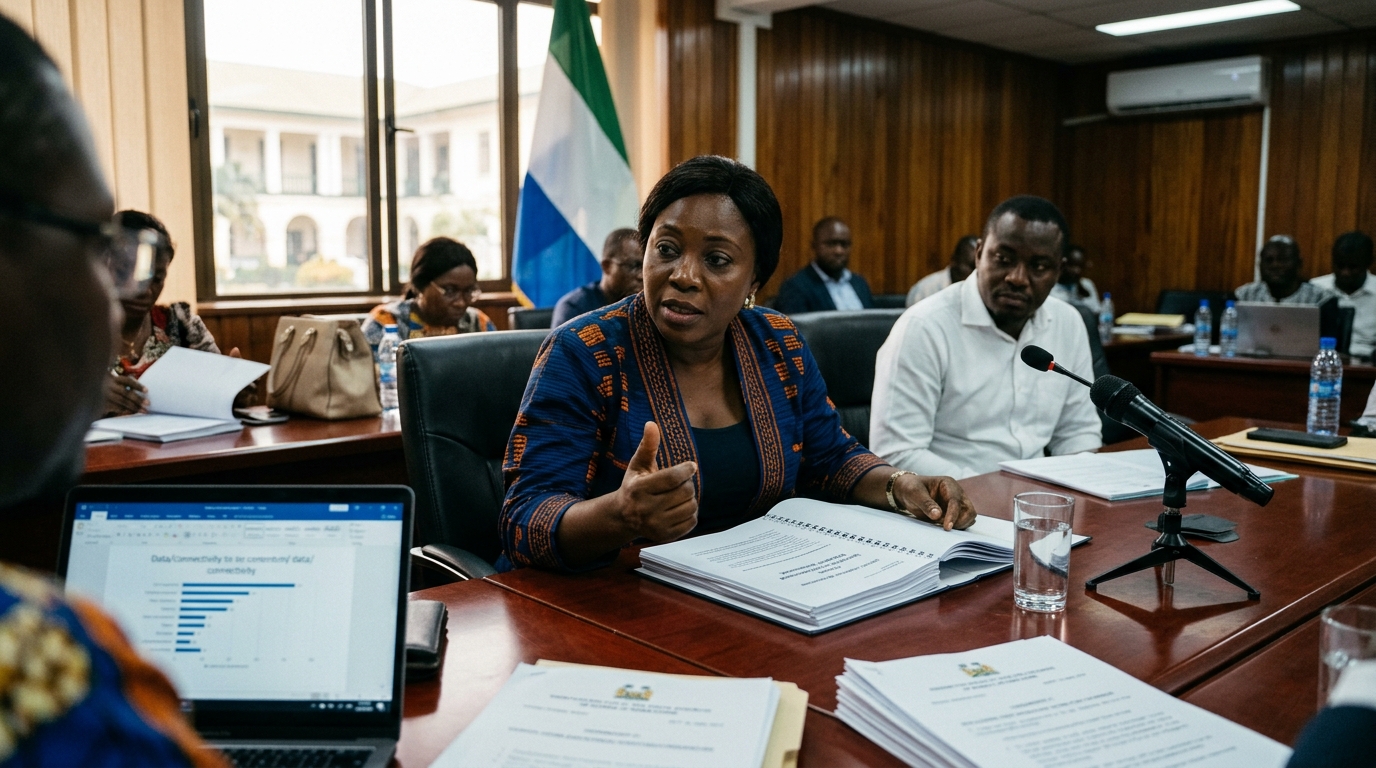
The Minister of Communication, Technology, and Innovation, Salima Mornorn Bah, is spearheading an effort that goes beyond the mere adoption of tech tools; it aims to build an entire ecosystem. Sierra Leone’s National AI Strategy focuses on strengthening digital infrastructure, nurturing homegrown talent, and creating a regulatory framework that encourages investment without compromising ethics or data security.
This vision is built on three central pillars: education, governance, and economic diversification. The government recognizes that for AI to thrive, a digitally literate population is essential. Consequently, training programs are being launched in partnership with international organizations and tech giants like Google to train young developers and data analysts. This strategy is not just about high-end tech but about embedding digital literacy across all levels of society.
Applications with a Human Face
Artificial Intelligence in Sierra Leone is not intended for theoretical pursuits but for solving pressing daily problems. In the healthcare sector, using algorithms to diagnose diseases in remote areas, where access to specialized medical personnel is limited, could save thousands of lives. Similarly, in agriculture—the backbone of the local economy—AI is being used for weather prediction and crop optimization, offering farmers vital tools to combat the effects of climate change.
Furthermore, the digitalization of public administration through AI tools promises to slash bureaucracy and enhance transparency. Automating processes can reduce the scope for corruption, ensuring that state resources reach those in genuine need. It is an exercise in building trust between the state and its citizens, with technology serving as the guarantor of fairness.
Challenges and Infrastructure Realities
Despite the enthusiasm, the road to digital sovereignty is fraught with obstacles. The most significant remains the lack of basic infrastructure. Stable electricity and broadband internet connectivity are not yet guaranteed for the entire population. Without power and connectivity, AI remains a hollow promise. The Sierra Leonean government must strike a delicate balance between investing in cutting-edge technology and reinforcing the fundamental infrastructure that allows such technology to function.
There is also the looming concern of "digital colonialism." Dependence on foreign AI models and international platforms poses risks to data sovereignty. Sierra Leone is striving to develop its own locally adapted models (Large Language Models) that understand local dialects and cultural nuances, ensuring that technology serves the needs of its people rather than the interests of foreign corporations.
Conclusion: A Model for Africa?
Sierra Leone’s initiative represents a critical experiment. If successful, it will prove that AI can act as a developmental accelerator for developing nations, allowing them to leapfrog industrial stages that took decades in the West. However, success will not be measured by proclamations but by the government’s ability to translate political will into tangible results for the average citizen in Freetown, Bo, and Kenema.