In the high-stakes theater of global artificial intelligence, few players have managed to unsettle the Silicon Valley establishment as effectively as Beijing-based DeepSeek. With the official unveiling of DeepSeek-V4, the company isn't just launching another large language model; it is signaling the dawn of the "Agentic AI" era. The headline isn't merely the model's enhanced cognitive capabilities, but its radical cost structure, which threatens to upend the business models of incumbents like OpenAI, Google, and Anthropic.
The Architecture of Efficiency
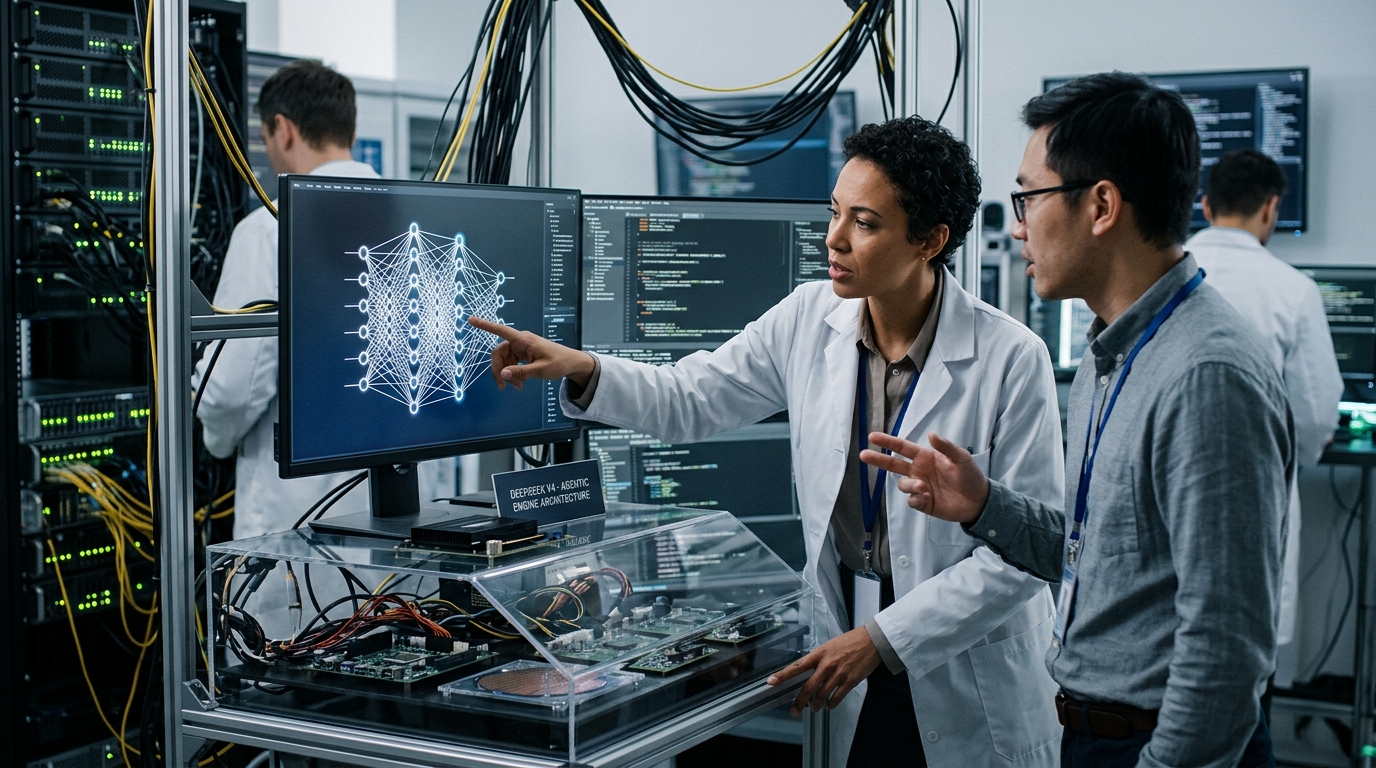
DeepSeek-V4 is built upon a sophisticated evolution of the Mixture-of-Experts (MoE) architecture, a design philosophy the company has championed to circumvent the diminishing returns of brute-force scaling. Unlike monolithic models that activate their entire neural network for every query, V4 dynamically engages only the relevant "experts" for a given task. This is further optimized by Multi-head Latent Attention (MLA) and an advanced Multi-token Prediction (MTP) framework, allowing the model to achieve superior reasoning speeds while consuming significantly less compute.
The defining characteristic of V4 is its prowess in multi-step reasoning. While previous generations often faltered when tasked with complex, long-horizon objectives, V4 has been fine-tuned for autonomous agency. It can navigate software environments, debug complex codebases, and execute sequences of API calls with a precision rate exceeding 95% in specialized agentic benchmarks—all while reducing the cost per million tokens by approximately 70% compared to V3.
Democratic Access to Autonomous Agents
The industry is currently pivoting from "passive AI" (chatbots) to "agentic AI" (autonomous actors). An agent powered by DeepSeek-V4 can independently research a topic, draft a report, cross-reference it with internal databases, and deploy the finished product to a web server. Previously, the prohibitive cost of the high-reasoning models required for such tasks kept this technology in the hands of elite enterprises.
- Cost Disruption: DeepSeek’s pricing model makes large-scale agentic deployment economically viable for startups and SMEs for the first time.
- Open-Weights Philosophy: By providing open weights, DeepSeek enables organizations to host models locally, addressing critical concerns regarding data sovereignty and security.
- Developer-Centric Performance: V4 sets new records in coding benchmarks, particularly in Python, C++, and Rust, positioning itself as a foundational layer for automated software engineering.
Geopolitical and Economic Implications
The rise of DeepSeek occurs against a backdrop of intensifying US-China tensions, specifically regarding access to high-end NVIDIA H100 and B200 GPUs. Paradoxically, these export restrictions appear to have functioned as a crucible for innovation. Deprived of infinite compute, DeepSeek’s engineers were forced to prioritize algorithmic efficiency over raw scale. The result is a model that rivals GPT-4o and Claude 3.5 Sonnet in performance while being trained on a fraction of the hardware budget.
"DeepSeek isn't just catching up to the West; they are rewriting the rules of the game. They've proven that intelligence isn't just a function of GPU count, but a function of architectural ingenuity," notes a senior AI researcher.
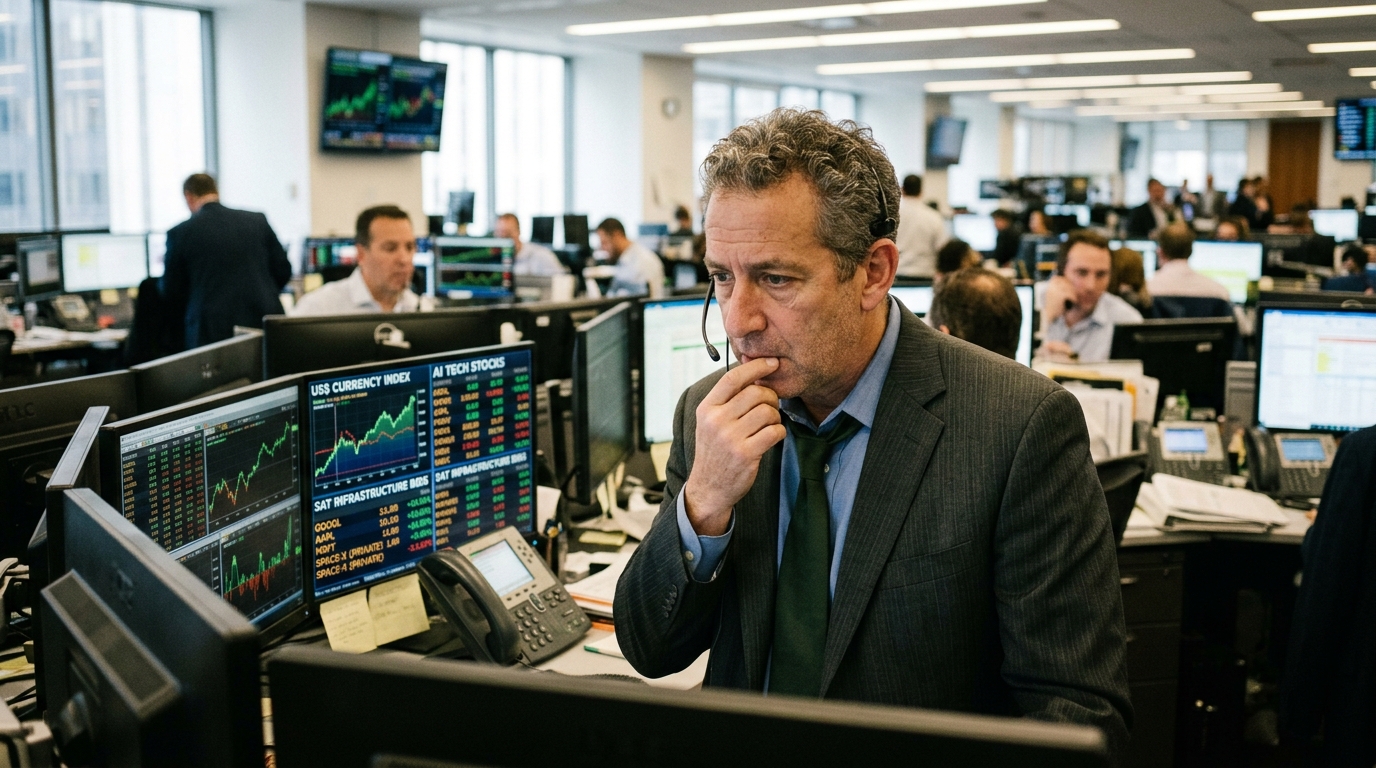
For the broader market, this move signals an inevitable price war. If businesses can achieve enterprise-grade results at one-tenth of the cost, the pressure on Western labs to slash their margins will be immense. Furthermore, the focus on agency suggests that the primary value proposition of AI is shifting from "content generation" to "task execution," fundamentally altering the corporate productivity landscape.
The Future of Work in the V4 Era
As the cost of AI agency plummets, the implications for the global workforce become more immediate. If an autonomous agent costs mere cents per hour and can perform the duties of a junior analyst or a specialized programmer, the rate of adoption will be exponential. DeepSeek-V4 provides the infrastructure for a fully automated digital economy. The question remains whether Western regulators will respond with further protectionism or if Western companies will rise to the challenge of matching DeepSeek’s efficiency. One thing is certain: the era of expensive, gatekept AI is coming to an end.