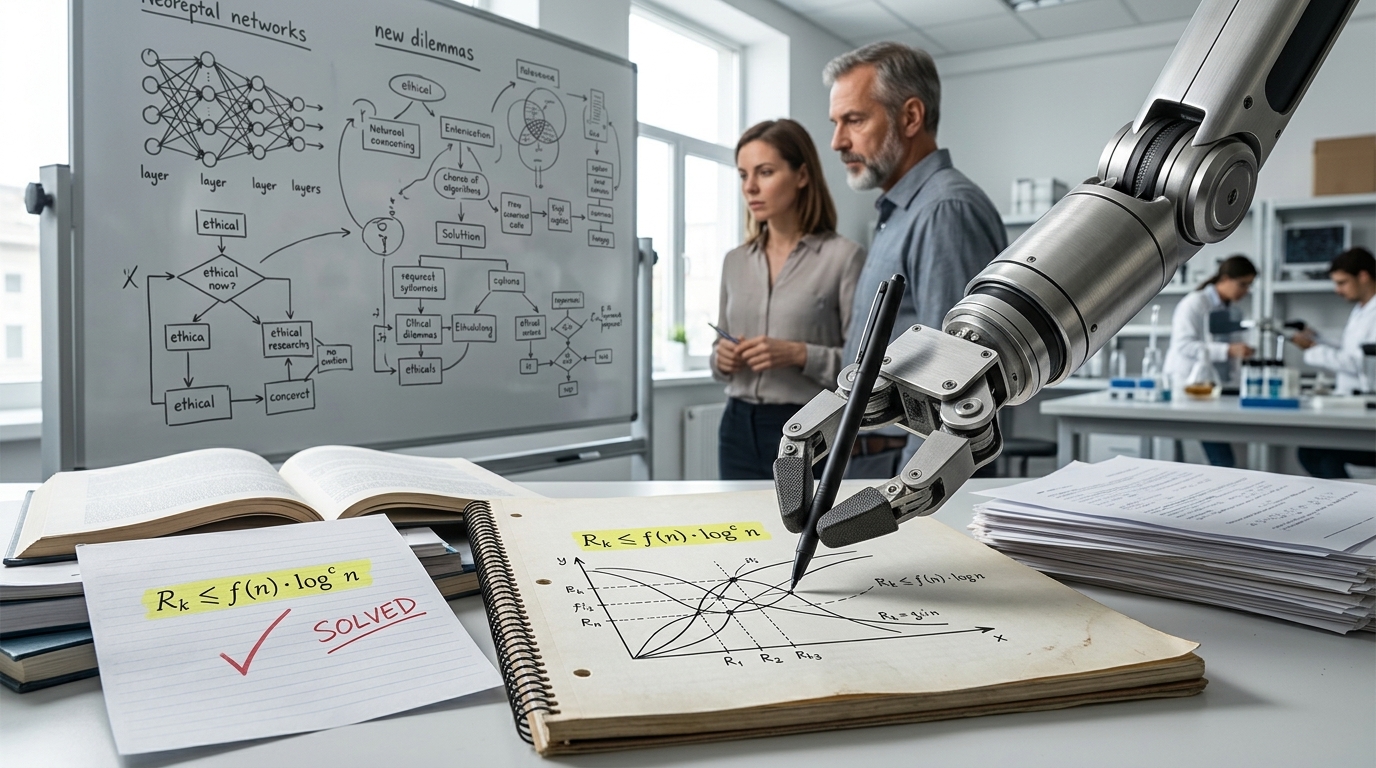
For over eight decades, the problem posed by Paul Erdős and other titans of mathematics remained an impregnable fortress. The world's leading mathematicians, armed with human intuition and traditional computational power, attempted to find cracks in its structure, but failed. Today, the landscape has changed permanently. An artificial intelligence system, combining the power of Large Language Models (LLMs) with rigorous formal verification, has managed to unlock the secret. However, this success brings not only relief but also a series of profound questions about the future of scientific discovery.
Transcending 'Stochastic Parrotism'
Until recently, the common belief was that AI, specifically GPT-style models, were merely 'stochastic parrots'—systems that predict the next word without any real understanding of the underlying logic. The resolution of an 80-year-old riddle in Ramsey Theory or Combinatorics proves the opposite. Here, we were not dealing with a simple database search, but with the generation of genuinely new knowledge.
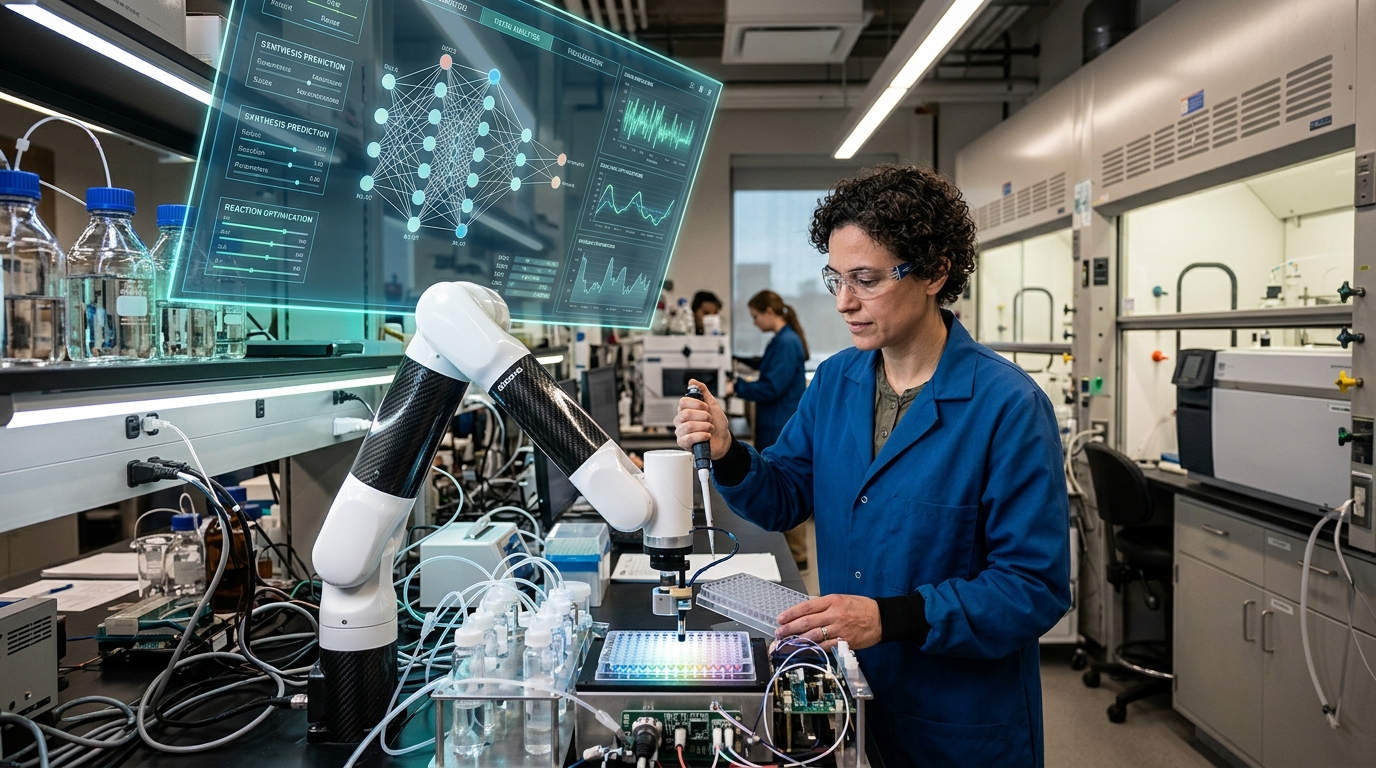
The key to this success lies in the convergence of two distinct schools of AI: neural learning and symbolic logic. The models used, such as Google DeepMind's FunSearch, did not just suggest solutions; they wrote code in programming languages like Python, which was then checked by an automated 'verifier.' This feedback loop allowed the AI to discard incorrect ideas and refine the correct ones, operating in a manner that strongly mirrors the scientific method: hypothesis, testing, rejection, or confirmation.
Why 'The Hard Part Starts Now'
While the solution to the riddle is a triumph, the scientific community faces a new challenge: interpretability. In many cases, AI provides the solution or the proof, but the way it arrived there remains a 'black box.' Mathematicians often seek not just the 'what' (the solution) but the 'why' (the deeper structure that makes the solution true).
- The Crisis of Understanding: If a machine solves problems that humans cannot even conceive, mathematical knowledge risks turning into a collection of 'oracles' without explanation.
- The Role of the Mathematician: The scientist is being transformed from a creator into an editor of the machine's ideas.
- The Speed of Evolution: AI can generate thousands of hypotheses per second, far outstripping the ability of human reviewers to evaluate them.
As analysts note, the problem is no longer a lack of solutions, but a lack of human time to assimilate them. The mathematical community is now called upon to decide whether a proof generated by AI, which is too complex for a human to verify, can be considered part of 'human' science.
The Geopolitics of Mathematical Power
We must not overlook that these achievements are not taking place in open-access academic labs, but within private tech giants. The ability to solve complex mathematical problems has direct applications in cryptography, supply chain optimization, and materials science. Whoever owns the 'machine that thinks logically' holds a strategic advantage that transcends the boundaries of theoretical science.
"We didn't just solve a problem; we opened a door to a world where creativity is no longer an exclusively human privilege," noted one of the project's researchers.
In the future, the challenge will be the creation of 'Explainable AI' (XAI), which will not only provide the answer but also teach humans the path taken. Until then, we will live in a paradoxical era where machines will know truths about the universe that we, their creators, may never fully understand.