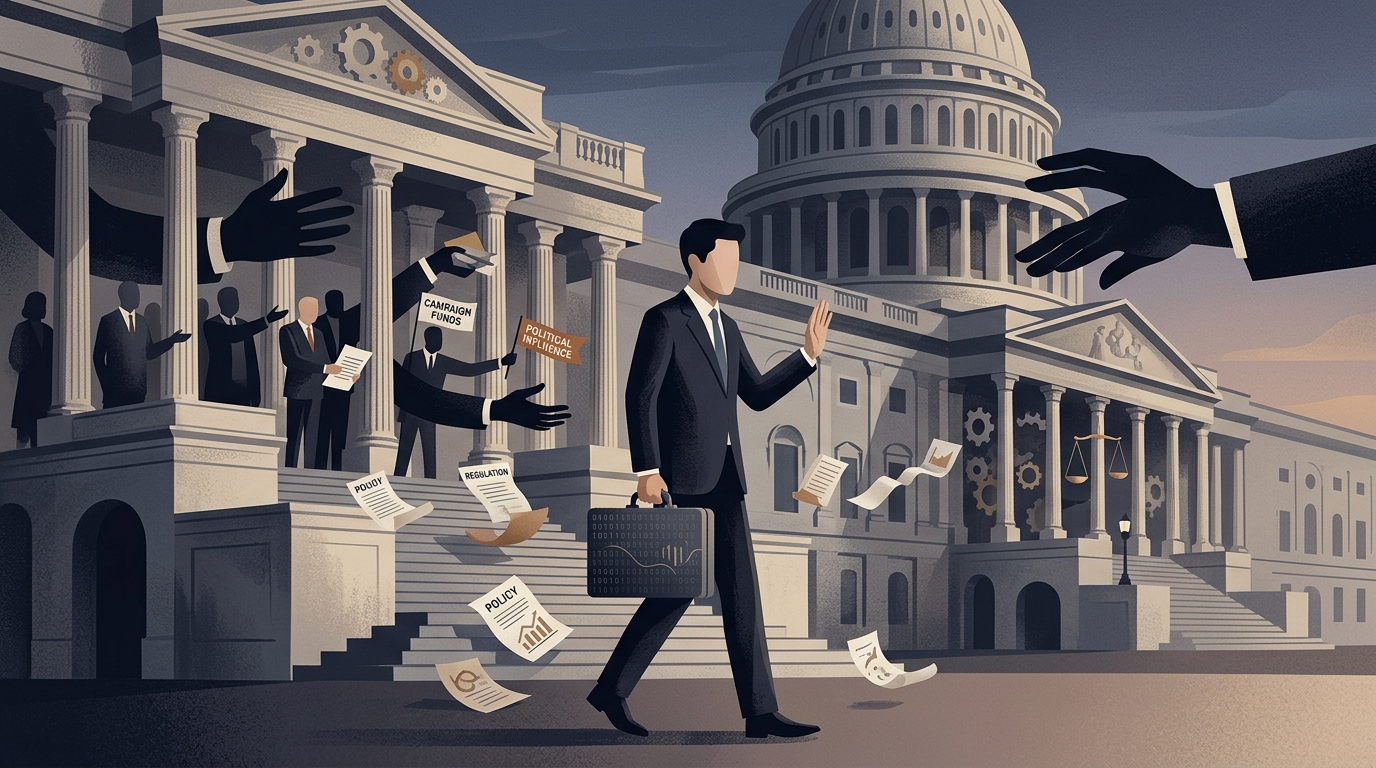
Washington is currently in a state of high tension as the much-anticipated AI Executive Order from Donald Trump, which promised to dismantle the Biden administration's regulatory framework, appears to have stalled within the gears of conflicting Silicon Valley interests. While campaign rhetoric spoke of a "new era of absolute freedom" for American innovation, the reality of governing is proving far more complex, with late-night phone calls from tech billionaires and deep-seated national security concerns creating a volatile political deadlock.
The Clash of Accelerationists and Sceptics
At the heart of the delay lies a profound rift among Trump's tech-sector supporters. On one side, the so-called "accelerationists," led by figures like Marc Andreessen and Elon Musk, are pushing for the total repeal of the safety guardrails established by Biden's Executive Order 14110. They argue that any regulatory hurdle is effectively a "gift" to China, slowing down the U.S. in a winner-takes-all arms race. On the other side, a group of national security advisors and certain traditional Republicans fear that a complete lack of oversight could lead to unaligned AI models capable of facilitating cyberattacks or the synthesis of biological weapons.
According to sources close to the White House, the draft order prepared for signature was deemed "too radical" even by some cabinet members. The provision for the immediate cessation of mandatory "red-teaming" (safety testing) for large-scale AI models sparked pushback from intelligence agencies, who believe the government must maintain a direct line of sight into the laboratories of OpenAI, Anthropic, and Google.
The Energy Gridlock and Data Centers
Another critical factor that has put the brakes on the order is the issue of energy infrastructure. The new administration is eager to fast-track the expansion of data centers on U.S. soil, but the physical reality of the American power grid poses significant obstacles. Tech companies are demanding preferential access to energy sources and a relaxation of environmental regulations, a move that has caused friction with state governments and local utility commissions.
- The push to restart nuclear reactors exclusively for AI workloads.
- Conflicts with rural communities over land use for massive server farms.
- Big Tech's demand for federal subsidies for infrastructure, despite promises of a "smaller government."
Donald Trump appears to be oscillating between his desire to be seen as the champion of the free market and the necessity of maintaining sovereign control over a technology that many consider more powerful than nuclear weaponry. This "block" is not permanent, but it signals that Silicon Valley is no longer a monolithic front.
Elon Musk’s Influence and the Shadow of China
It is no secret that Elon Musk has assumed the role of an informal tech czar. However, his personal stance is multifaceted. While publicly advocating for deregulation, his own company, xAI, is in direct competition with OpenAI—a firm that had invested heavily in complying with the previous administration's framework. Whispers in D.C. suggest that Musk isn't just looking for deregulation, but for a "bespoke regulatory environment" that favors his own ventures while handicapping incumbents.
"This isn't a battle between innovation and bureaucracy; it's a battle over who will hold the keys to America's digital future," says a senior industry executive.
The coming weeks will be decisive. If the executive order is signed in its current form, the U.S. will enter an experimental phase where the responsibility for AI safety is shifted entirely to the private sector. If the internal resistance persists, Trump may be forced to retain elements of the Biden policy, which would represent a significant political retreat for the hardline "accelerationist" wing of his base.