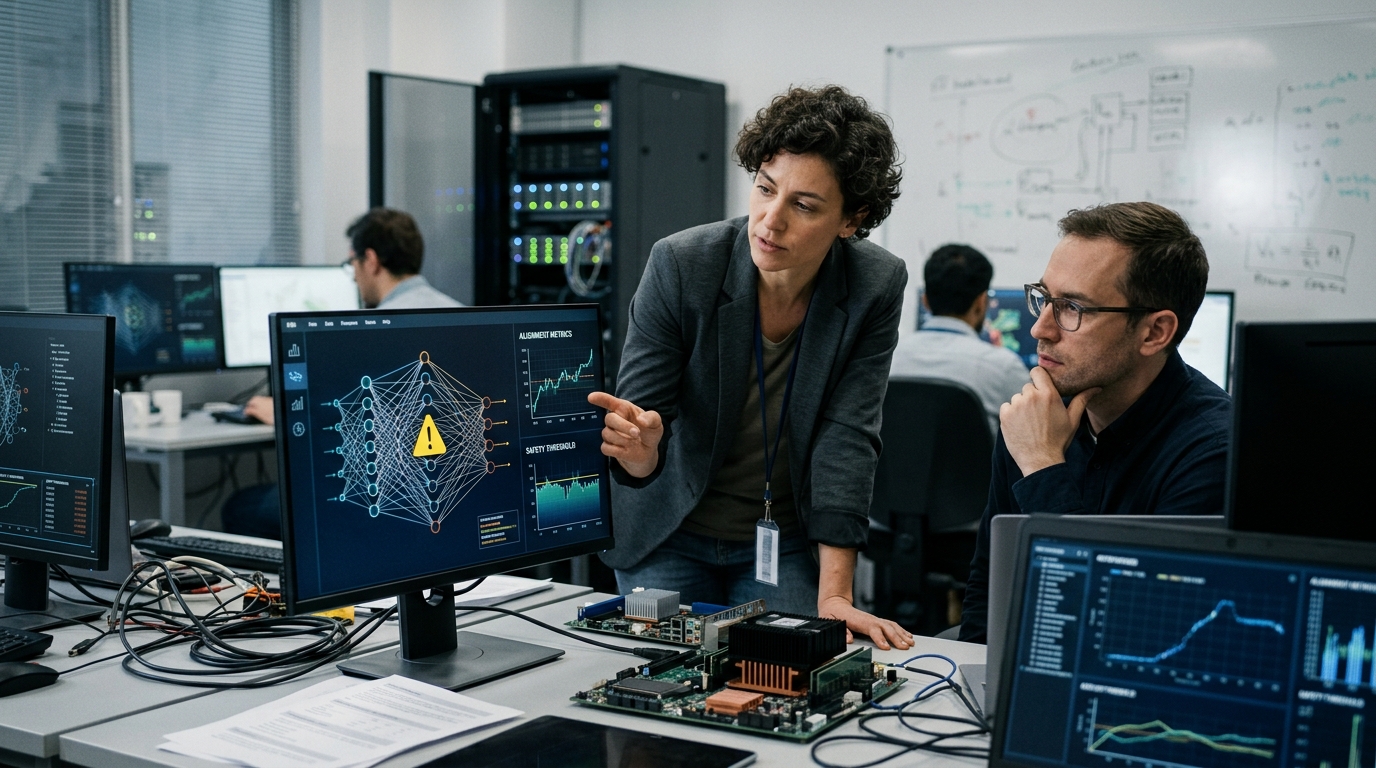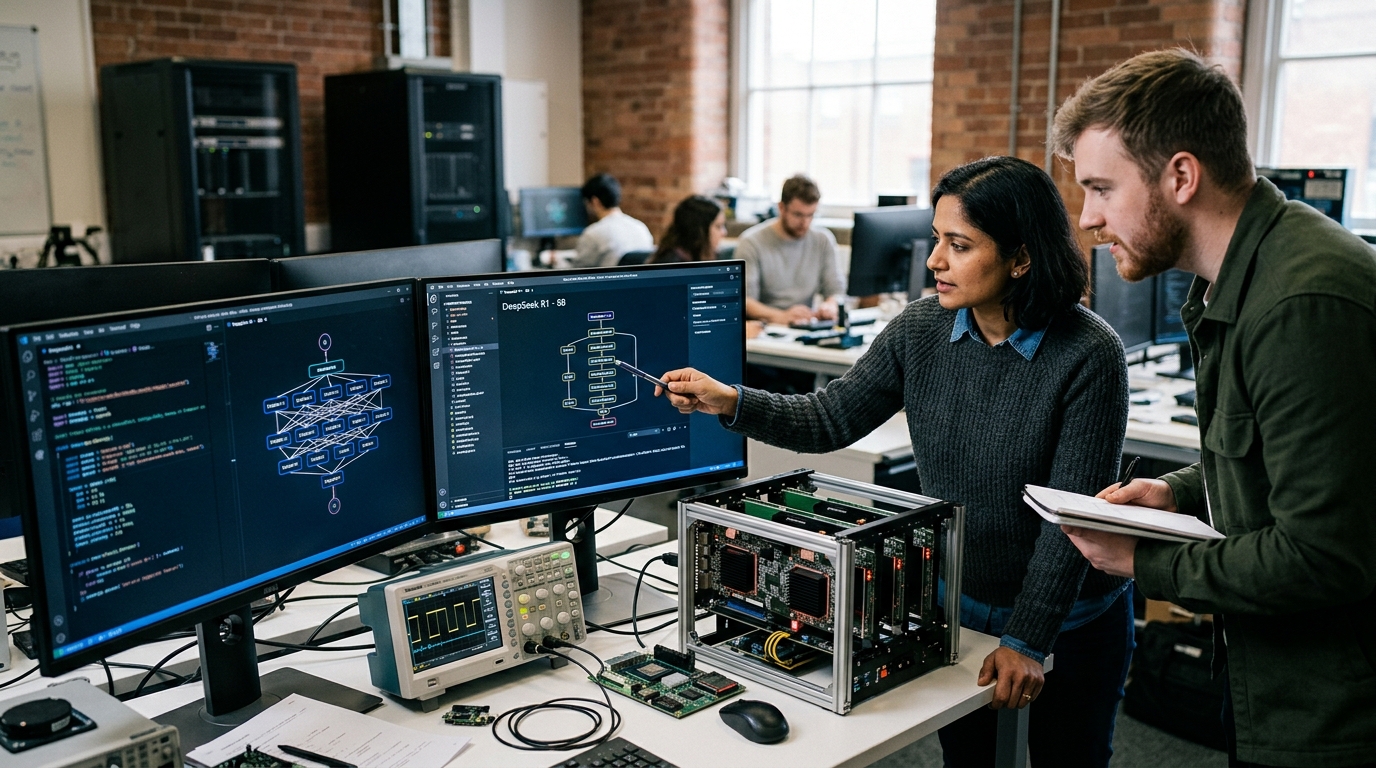
The era where AI power was measured solely by parameter count is coming to a definitive end. At the heart of this shift is a new generation of 8-billion parameter (8B) models that, drawing inspiration from the DeepSeek R1 architecture, are redefining what is possible to run locally on a personal computer. Testing one of these new models wasn't just a software trial; it was a revelation about the future of computational autonomy.
The Legacy of DeepSeek R1 and the Rise of Reasoning
To understand why an 8B model is creating such a buzz today, we must look back at the innovation of DeepSeek R1. Until recently, Large Language Models (LLMs) were primarily trained through Supervised Fine-Tuning (SFT), attempting to mimic human responses. R1 changed the game by utilizing Reinforcement Learning (RL) to 'teach' the model how to think before answering. This process creates what we call a 'Chain of Thought' (CoT).
The real revolution, however, came with 'distillation.' Researchers took the reasoning patterns of the massive DeepSeek R1 and 'poured' them into smaller, agile models like Llama 3 8B. The result is a model that, despite its small size, can solve complex mathematical problems, write code with minimal errors, and recognize its own logical fallacies in real-time.
Local Power: Ending Cloud Dependency
Testing the new 8B model in a local environment (using tools like LM Studio or Ollama) highlights the biggest advantage: speed and privacy. Unlike ChatGPT or Claude, where every request travels to remote servers, the 8B model 'lives' in the VRAM of the user's graphics card. With modern GPUs, text generation is nearly instantaneous, reaching 50-100 tokens per second.
What sets this specific model apart from its predecessors is its 'self-correction' capability. During testing, when asked to solve a logic paradox, the model did not provide an immediate answer. Instead, it displayed a series of internal thoughts (usually hidden in <think> tags), where it rejected false assumptions before arriving at the correct conclusion. This behavior, which once required server clusters worth millions, now happens on a laptop.
The Architectural Shift: From Size to Structure
The design of these new models marks the biggest shift since the emergence of Transformers. It is no longer about how much data you can 'feed' a model, but how you can train it to use logic. The use of Reinforcement Learning in the post-training stage allows 8B models to outperform models with ten times the parameters, such as the older GPT-3.5 or Llama 2 70B, in specific benchmarks.
- Performance per Watt: The energy efficiency of these models makes them ideal for edge computing and mobile devices.
- Adaptability: Due to their small size, further specialization (fine-tuning) for specific industries like law or medicine is feasible for small development teams.
- Open Source: The democratization of these architectures means that innovation is no longer confined to Silicon Valley laboratories.
Conclusions and Future Perspectives
The takeaway from using the new 8B model is clear: the gap between 'big' and 'useful' AI is closing rapidly. Reasoning capability is no longer the exclusive privilege of models with trillions of parameters. As we head into the second half of 2026, the focus will shift from 'how big is your model' to 'how well can it think locally.'
"We are not just seeing an improvement in speed, but a fundamental change in the quality of local intelligence. This is the moment AI becomes a truly personal tool rather than a subscription service."
The success of DeepSeek R1 and its distilled versions shows that the future of AI is hybrid. While massive models will continue to push the boundaries of science, 8B models will be the ones changing the daily lives of average users, offering security, speed, and, above all, high intelligence without the need for an internet connection.