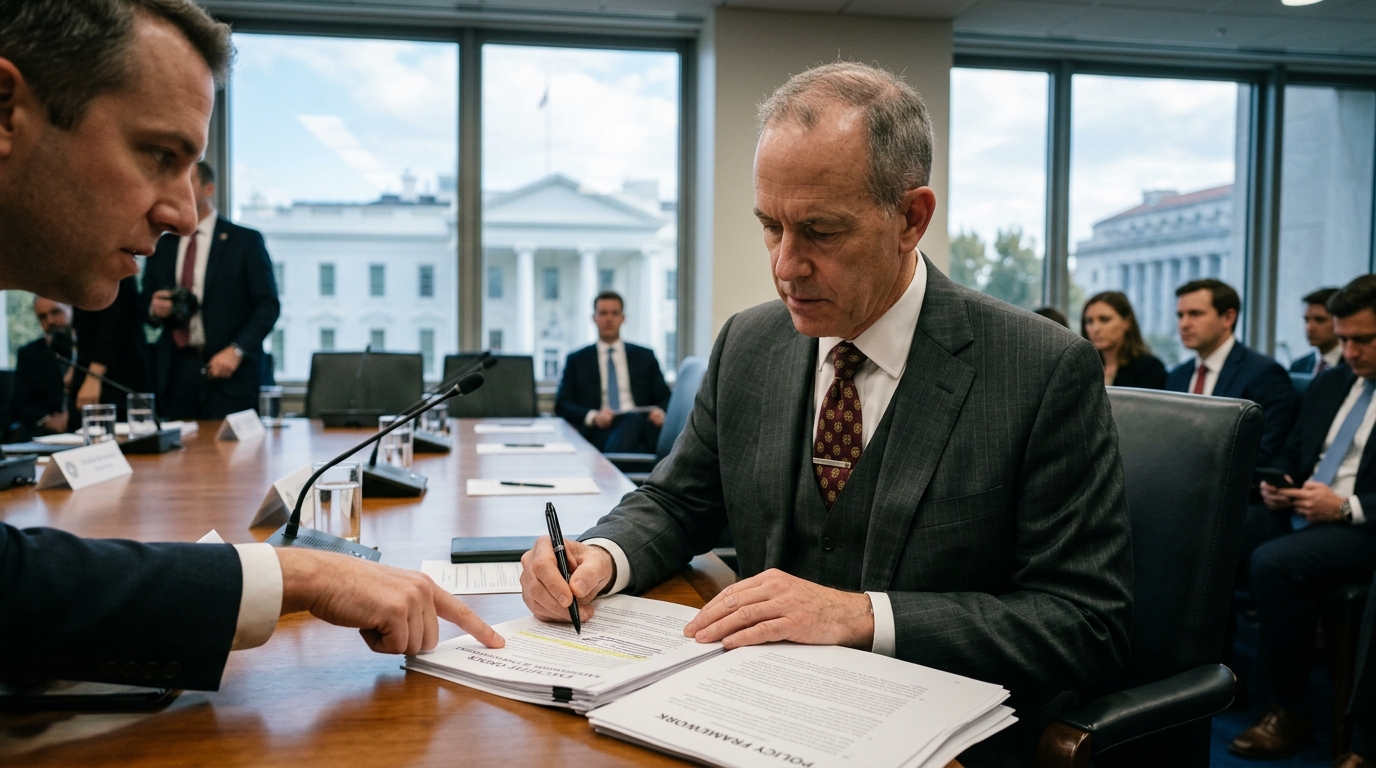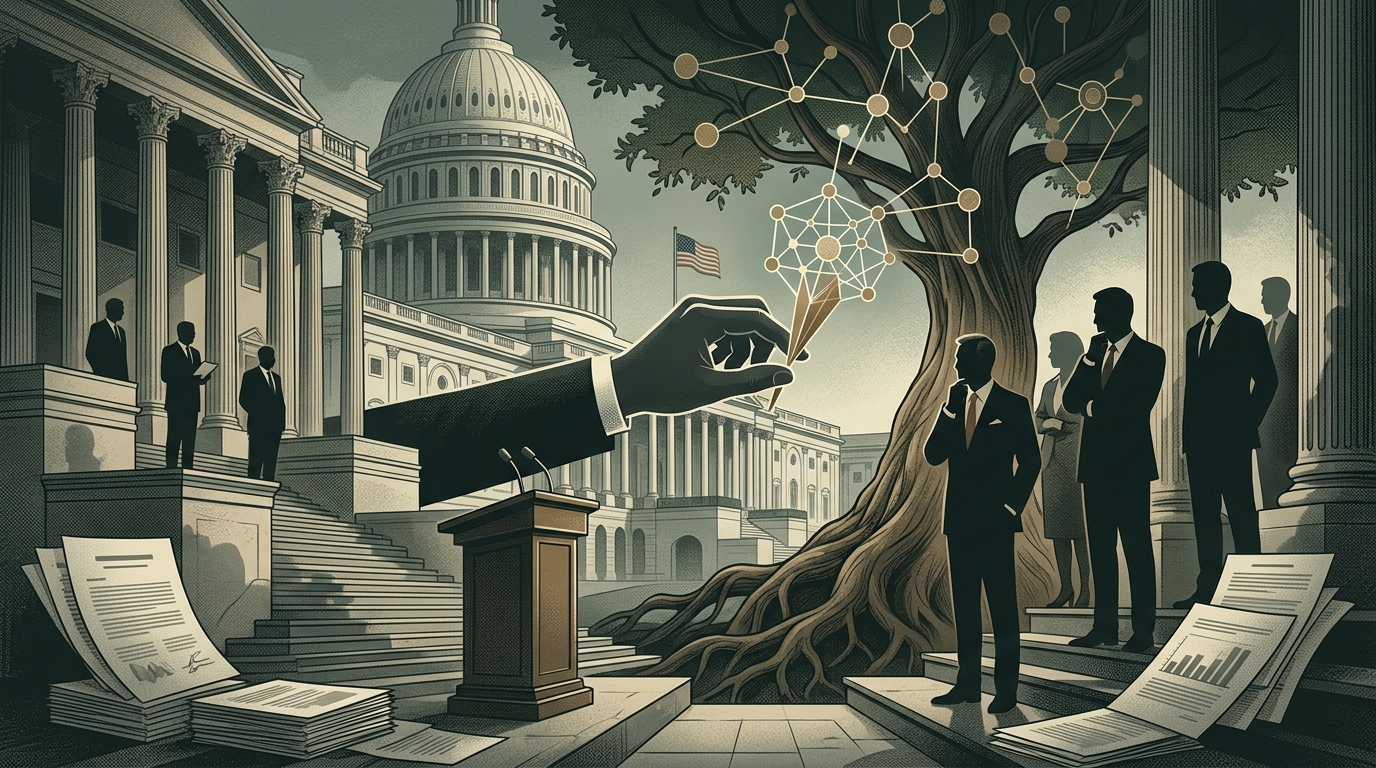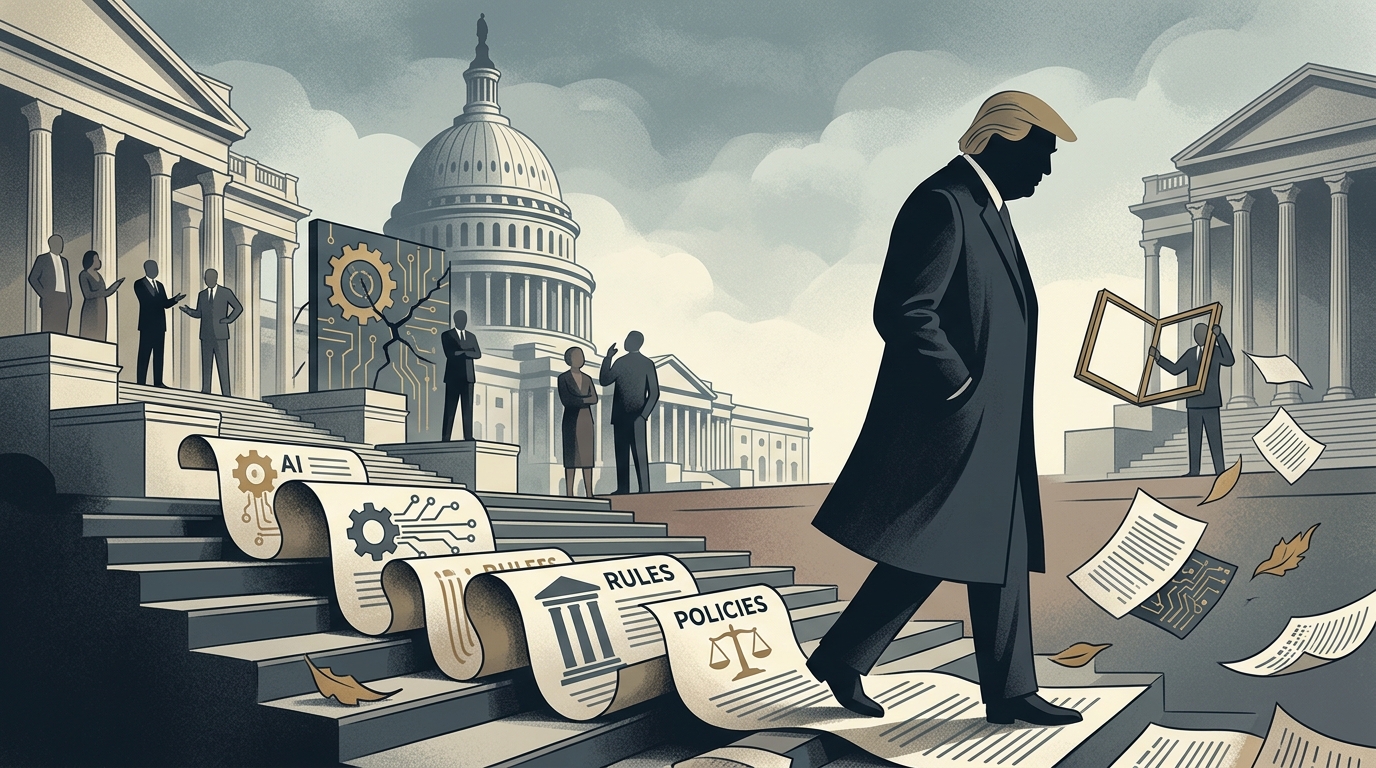
At the very heart of Washington’s power corridors, Artificial Intelligence (AI) has shifted from a Silicon Valley curiosity to a primary battlefield of national policy. Recent reports from Politico indicate that Donald Trump has expressed “many” and substantial concerns regarding a draft executive order on AI policy. This internal friction is more than a mere procedural disagreement; it signals a fundamental clash of civilizations regarding how the most transformative technology of the 21st century should be governed.
According to sources familiar with the matter, Trump’s reservations center on the fear that current regulatory frameworks—largely initiated under the Biden administration’s “safety-first” ethos—could act as a straightjacket for American innovation. In an era where AI is increasingly viewed as the modern equivalent of the nuclear race, the Trump camp views any bureaucratic friction as a strategic concession to the United States’ primary geopolitical rival: China.
The Clash of Philosophies: Safety vs. Velocity
The core of the criticism leveled by Trump and his circle is the perceived restrictive nature of existing draft policies. While the previous administration emphasized risk mitigation—targeting algorithmic bias, misinformation, and long-term existential threats—Trump appears to view these concerns as “ideologically driven hurdles.” The draft that reportedly drew his ire included stringent requirements for model transparency and mandatory data reporting to federal agencies.
For proponents of deregulation, these rules are seen as “regulatory capture” that stifles startups and grants an unearned advantage to nations that operate without such ethical constraints. Trump’s rhetoric suggests a return to a “move fast and break things” approach, but on a national scale. This involves rescinding executive orders that, in his view, impose a “woke” agenda on the development of machine intelligence, thereby hampering the competitive edge of American tech giants.
The Geopolitical Chessboard: Winning the Race Against China
Perhaps the most potent driver of Trump’s concerns is the geopolitical dimension. The conviction that China is utilizing AI to augment its military and surveillance capabilities without moral hesitation is a cornerstone of his policy platform. In this context, any domestic regulation that slows down the training of Large Language Models (LLMs) is viewed not just as an economic burden, but as a national security vulnerability.
- Military Supremacy: Integrating AI into autonomous weapons systems and high-level strategic decision-making.
- Economic Dominance: Ensuring that U.S. companies remain the architects of the global AI infrastructure.
- Energy Independence: Recognizing that AI dominance requires massive power grids, aligning with a pro-fossil fuel and pro-nuclear energy agenda.
This approach heralds a shift toward an aggressive industrial policy where the state does not regulate the technology, but rather acts as its primary accelerant. By removing legal barriers and streamlining infrastructure projects, the goal is to ensure that the “American version” of AI becomes the global standard by sheer force of market and technological velocity.
The Ideological Front: “Woke” AI and the Battle for Free Speech
Another layer to Trump’s skepticism is the cultural and ideological battleground. Trump has frequently asserted that current AI systems, such as OpenAI’s ChatGPT or Google’s Gemini, are programmed with a “left-wing bias.” His concerns regarding the draft policy likely include a fear that government-mandated safety standards are a backdoor for institutionalizing this bias, effectively allowing the state to control the “speech” of machines.
“We cannot allow Artificial Intelligence to become the next tool of censorship in the hands of the radical left,” sources close to the former President have stated.
This creates a fascinating paradox: a call for deregulation on one hand, and a demand for intervention to ensure “ideological neutrality” on the other. Navigating this tension will be the defining challenge for any future administration, especially as AI becomes the primary filter through which the public consumes information and interacts with reality.
Conclusion: A New World Order for Technology
The revelation of Trump’s concerns regarding the AI draft policy is not merely a domestic political story. It has profound global implications. If the United States pivots away from the “Responsible AI” model championed by the European Union and its AI Act, we may see a fragmented digital landscape. On one side, a Europe of rules; on the other, an America of unbridled innovation; and looming over both, a China of state-directed control. Trump’s stance suggests that the battle for the “soul” of Artificial Intelligence—and who controls its trajectory—is only just beginning.