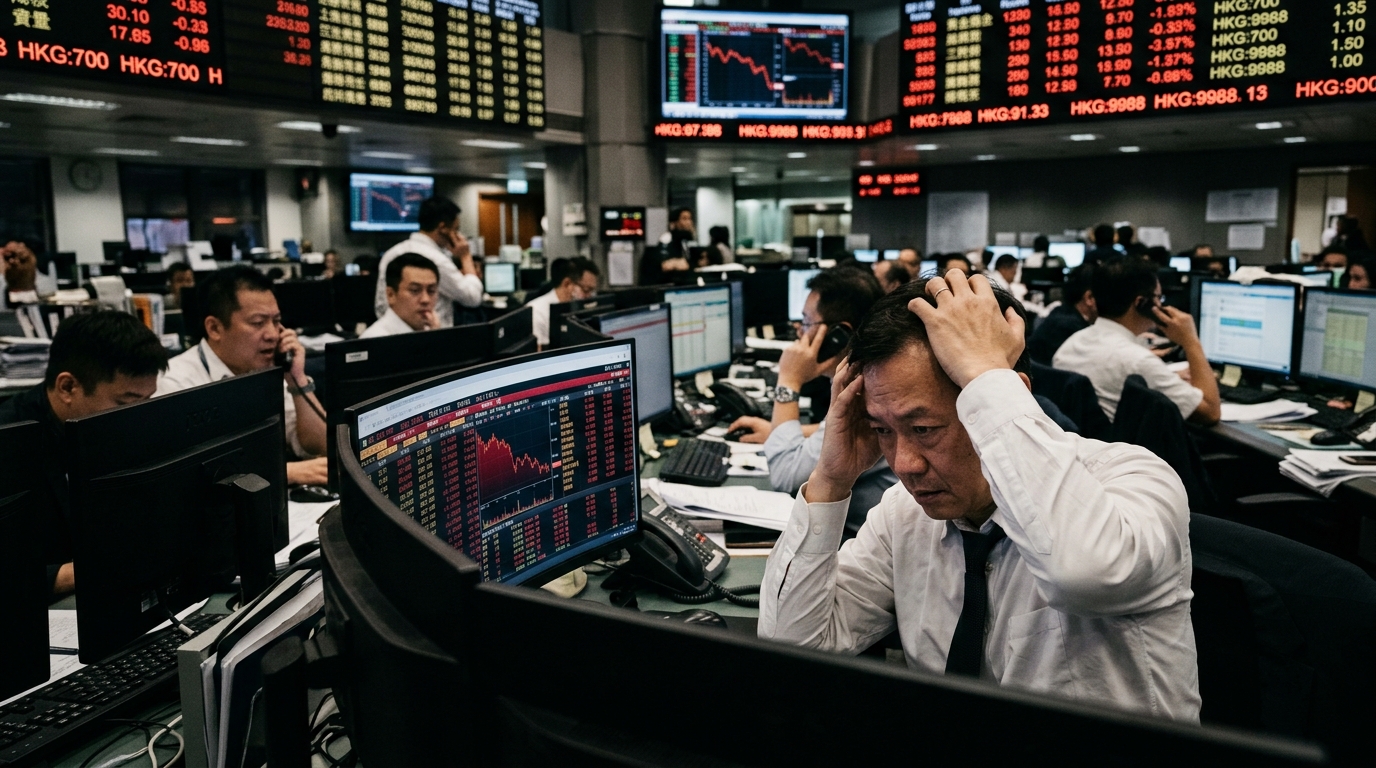
In the global economic landscape of May 2026, the contrast could not be more striking. While Wall Street continues to soar on the wings of the Artificial Intelligence (AI) revolution, the other side of the Pacific is experiencing a harsh reality check. China's so-called 'Seven Titans'—a group comprising Alibaba, Tencent, Baidu, Meituan, Xiaomi, JD.com, and PDD Holdings—are watching their market valuations evaporate as persistent deflation and a property sector crisis prove more powerful than any algorithm.
The Deflationary Drag on Innovation
The Chinese economy stands at a critical juncture. Despite Beijing's efforts to stimulate growth, consumer confidence remains at historic lows. For tech giants, this translates into a painful reality: no matter how sophisticated their new AI models are, they cannot sell services to a population worried about job security and the value of their primary asset—real estate. Deflation acts as a brake, with consumers postponing purchases in anticipation of lower prices, forcing companies into a destructive 'price war'.
Alibaba and JD.com, the titans of e-commerce, have been forced to slash profit margins drastically to maintain market share. Even PDD Holdings (the parent company of Temu), which initially benefited from consumers' shift toward budget products, is beginning to feel the squeeze of diminished purchasing power. AI, which should have been the catalyst for the next growth phase, currently represents more of a capital expenditure (Capex) burden than a revenue stream.
The Semiconductor Hurdle and the Geopolitical Factor
A primary reason why the Chinese 'Titans' are lagging behind their US counterparts (like Nvidia or Microsoft) is access to cutting-edge technology. US export restrictions on advanced AI chips have created a 'compute gap'. Baidu, considered the leader in Chinese AI with its Ernie Bot, is struggling to find alternatives to train its models, while American firms enjoy unfettered access to Nvidia’s latest hardware.
"Technology does not develop in a vacuum. It requires capital, free access to resources, and, above all, a healthy domestic market to absorb innovation," note market analysts in Hong Kong.
Furthermore, the regulatory uncertainty inherited from the tech crackdown of previous years continues to haunt investors. Although Beijing has softened its rhetoric, the possibility of sudden interventions remains a risk factor that deters foreign capital from making a massive return to Chinese equities.
The Xiaomi Exception and Survival Strategies
Amidst this somber landscape, Xiaomi presents an interesting case. Its successful entry into the electric vehicle (EV) market with the SU7 demonstrated that there is still room for disruptive innovation. However, even Xiaomi is not immune to macroeconomic pressures. The smartphone market is saturated, and profit margins in EVs are razor-thin due to intense competition from BYD and Tesla.
The remaining Titans are turning toward international markets for relief. Tencent is expanding its global gaming footprint, while Alibaba is attempting to bolster its Cloud services in Southeast Asia and the Middle East. But global expansion brings new challenges, from data scrutiny to allegations of unfair competition.
Conclusion: A Test of Resilience
The future of Chinese tech giants now depends less on how good their AI is and more on whether the Chinese government can break the deflationary spiral. If domestic consumption does not recover, AI will remain an expensive promise without a reflection in the balance sheets. Investors are closely monitoring stimulus packages from Beijing, but so far, the market remains skeptical. The era of easy growth for Chinese tech has ended, giving way to an era of tough survival and geopolitical isolation.