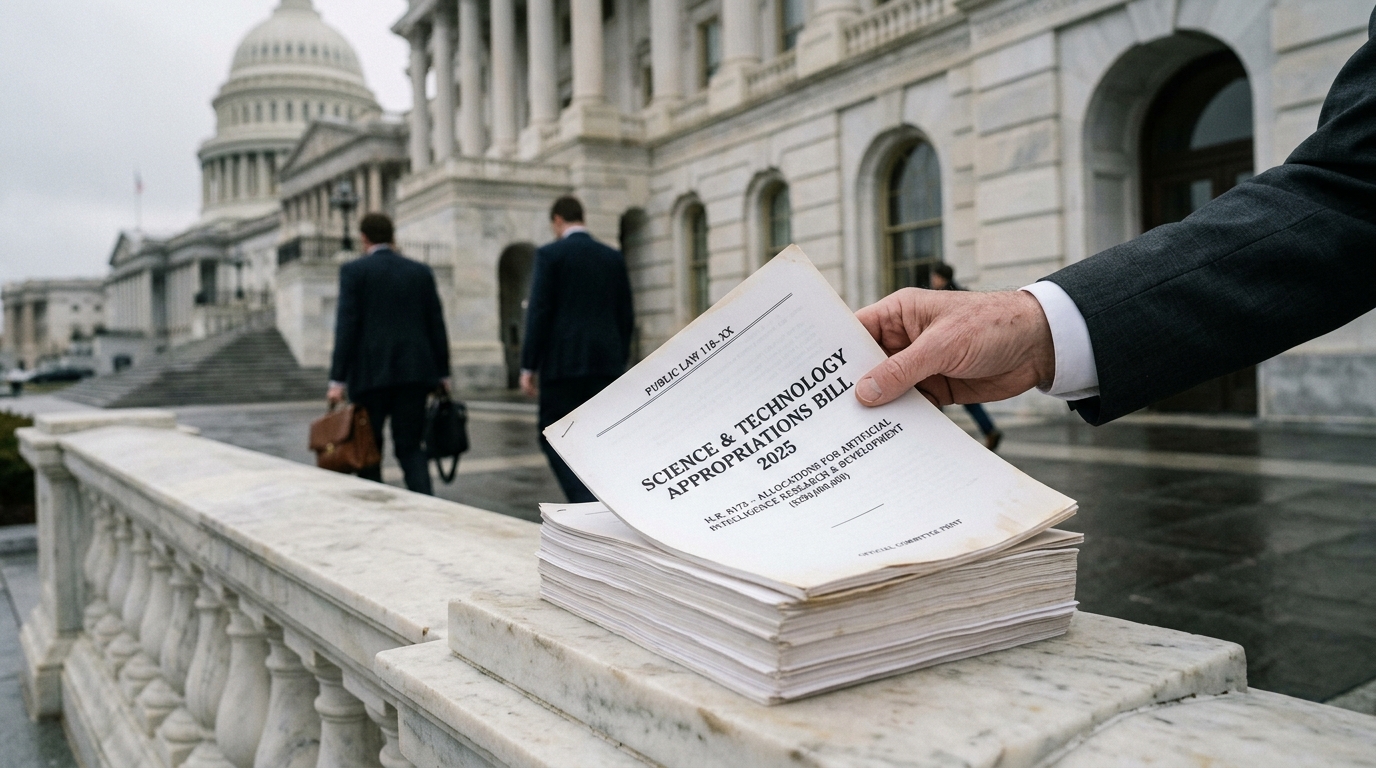
In the heart of Washington, a new conflict is unfolding, testing the relationship between political power and scientific progress. The Trump administration, in a move described by many as an "aggressive national innovation strategy," has announced a $293 million package aimed at accelerating research in critical fields such as artificial intelligence, quantum computing, and biotechnology. However, this "bet" does not seem to have an easy path to realization, as fiscal headwinds blow against the White House's ambitions.
The Strategy of "Scientific Sovereignty"
The logic behind the $293 million investment is clear: maintaining American supremacy over China. In an era where technological power translates directly into geopolitical influence, the administration seeks to bypass the traditional, often cumbersome, bureaucratic processes of federal agencies. This approach emphasizes DARPA-style programs, characterized by high risk but high rewards.
Proponents of the plan argue that traditional science funding in the US has become overly conservative, focusing on incremental improvements rather than revolutionary breakthroughs. By injecting these funds, the White House hopes to spark a new "Sputnik moment," mobilizing the private sector and academia around goals considered vital for national security.
- Focus on applied AI for the defense industry.
- Boosting domestic production of next-generation semiconductors.
- Funding to accelerate clinical trials for personalized medicine.
The Wall of Fiscal Constraints
Despite the grand rhetoric, the plan faces stiff resistance from an unexpected source: the fiscal hawks within the Republican Party itself. At a time when US public debt is at historic highs, many lawmakers are hesitant to approve new spending, even if it concerns science. The creation of the Department of Government Efficiency (DOGE) has fostered a climate of suspicion toward any new government expenditure.
Critics within Congress question why new funds are required instead of redistributing existing resources from agencies like the National Science Foundation (NSF) or the Department of Energy. There is also a deeper ideological conflict: the pro-free-market wing believes the state should not be "picking winners" in the technological race but should limit itself to creating a favorable tax environment for private investment.
"We cannot beat China by copying its state-directed model. Our strength lies in efficiency and private initiative, not in reckless government subsidies," stated a senior member of the budget committee.
Geopolitical Implications and the Future of Innovation
The delay or potential cut of this funding package sends worrying signals to US allies. In Europe and Asia, governments are closely monitoring Washington's moves, trying to balance their own innovation strategies. If the US retreats from its commitments to pioneering research, it creates a power vacuum that Beijing is more than willing to fill.
Furthermore, the scientific community expresses concerns about the politicization of research. Focusing on sectors with immediate military or economic applications may sideline basic research, which is the foundation for all future technologies. History has shown that the most significant discoveries often come from fields initially deemed "unproductive."
The next six months will be decisive. The administration's ability to convince Congress that the $293 million is not just an expense, but a strategic investment in national survival, will determine whether the US remains the global beacon of innovation or enters a period of introversion and technological stagnation.