In a move that fundamentally reshapes the global technological landscape, President Donald Trump signed a pivotal executive order on Tuesday. This new framework, described as "voluntary," aims to establish a collaborative channel between the federal government and AI giants just ahead of the anticipated release of the next generation of frontier models. This decision is not merely an administrative shift but a radical ideological pivot from the previous Biden administration's approach, which centered on regulation and risk mitigation.
The order comes at a moment when Silicon Valley is on the verge of unveiling models with capabilities bordering on Artificial General Intelligence (AGI). According to the text of the order, companies will be able to share data regarding the safety and efficacy of their models with the state without being bound by strict, mandatory audits that could delay their commercial deployment. The philosophy behind the move is clear: America must win the AI race against China, and bureaucracy is viewed as the greatest obstacle to this goal.
From Regulation to Cooperation
The core difference of the new framework lies in the term "voluntary." While the previous Executive Order 14110 imposed strict reporting requirements for models exceeding certain computational power thresholds, the "Trump Framework" promotes an "open door" logic. Companies are encouraged to cooperate with the Department of Commerce and the newly established AI Safety Institute, but penalties for non-compliance are practically non-existent. This has sparked mixed reactions within the scientific community, with some warning of the risk of "regulatory capture."
- Abolition of mandatory third-party safety tests for non-military applications.
- Focus on protecting the intellectual property of American companies from foreign espionage.
- Incentives for building massive data centers on American soil with fast-track permitting.
The administration argues that market self-regulation is the fastest path to safety. "The creators themselves know the risks best," said a senior White House official. However, critics point out that the history of technology has shown that competition often sacrifices safety at the altar of speed.
Geopolitics and the Rivalry with China
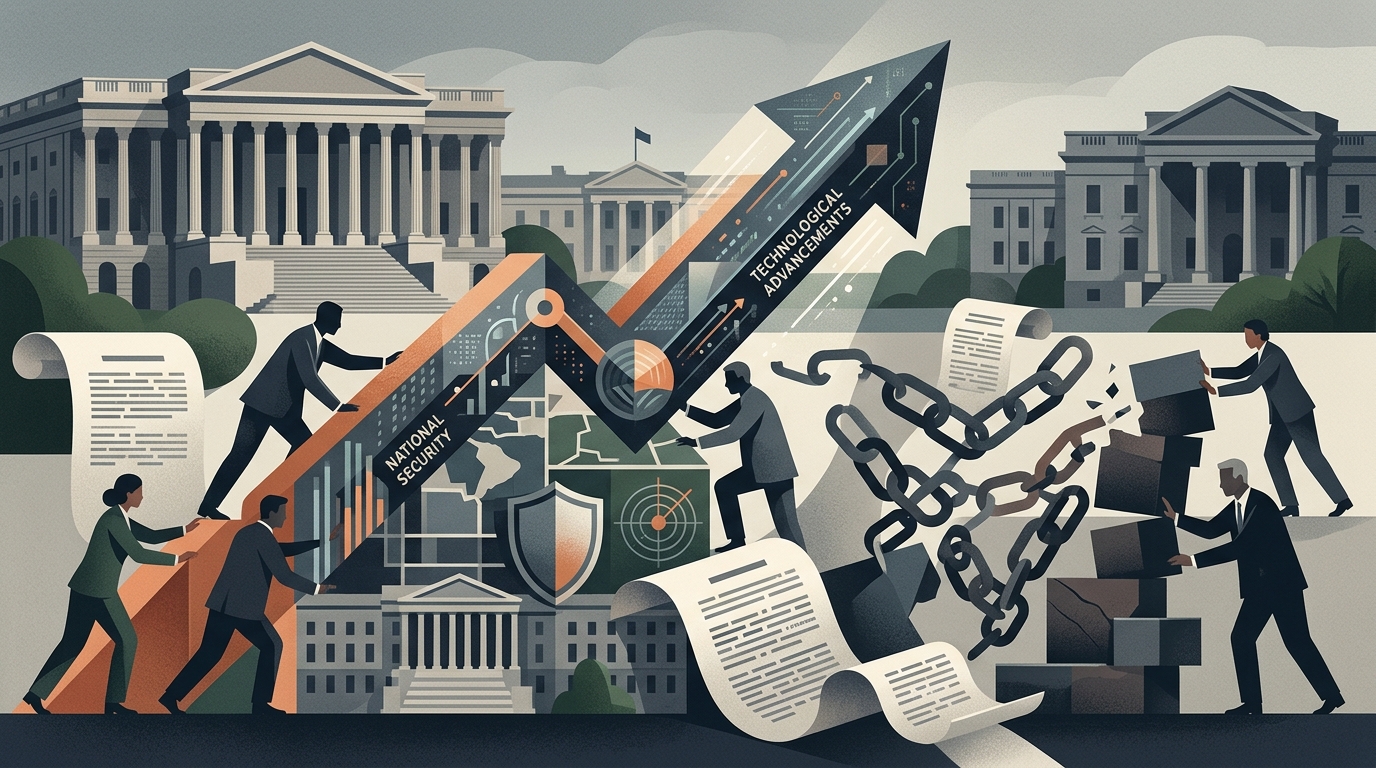
Behind every word of the order lies the shadow of Beijing. For Trump, Artificial Intelligence is not just a productivity tool but the ultimate weapon of the 21st century. The new framework directly links AI development to national defense. It envisions the creation of an "Innovation Shield," where companies that cooperate closely with the government will have preferential access to state contracts and energy resources.
"We cannot allow regulations to become the chains that hold us back while our adversaries run without limits," the preamble of the order states.
This strategy seeks to create an "ecosystem of trust" within the US, while simultaneously excluding any foreign influence in the AI supply chain. This includes stricter controls on chip exports and the access of foreign researchers to American laboratories. The logic is simple: AI supremacy equals global dominance.
Implications for Society and the Labor Market
While the order focuses on innovation, it remains silent on social implications such as job displacement or misinformation. The emphasis is on economic growth, with the belief that new jobs created in the tech sector will offset losses in traditional industries. However, the lack of safeguards for workers is a point of friction with unions and civil society organizations.
The market reacted positively to the news, with shares of major tech companies rising. The prospect of an environment with fewer restrictions gives the "green light" for the release of models that were previously held back in laboratories due to fears of regulatory repercussions. The remaining question is whether this "accelerated innovation" will lead to a new golden age or if it will open a Pandora's box of risks that we cannot yet fully conceive.