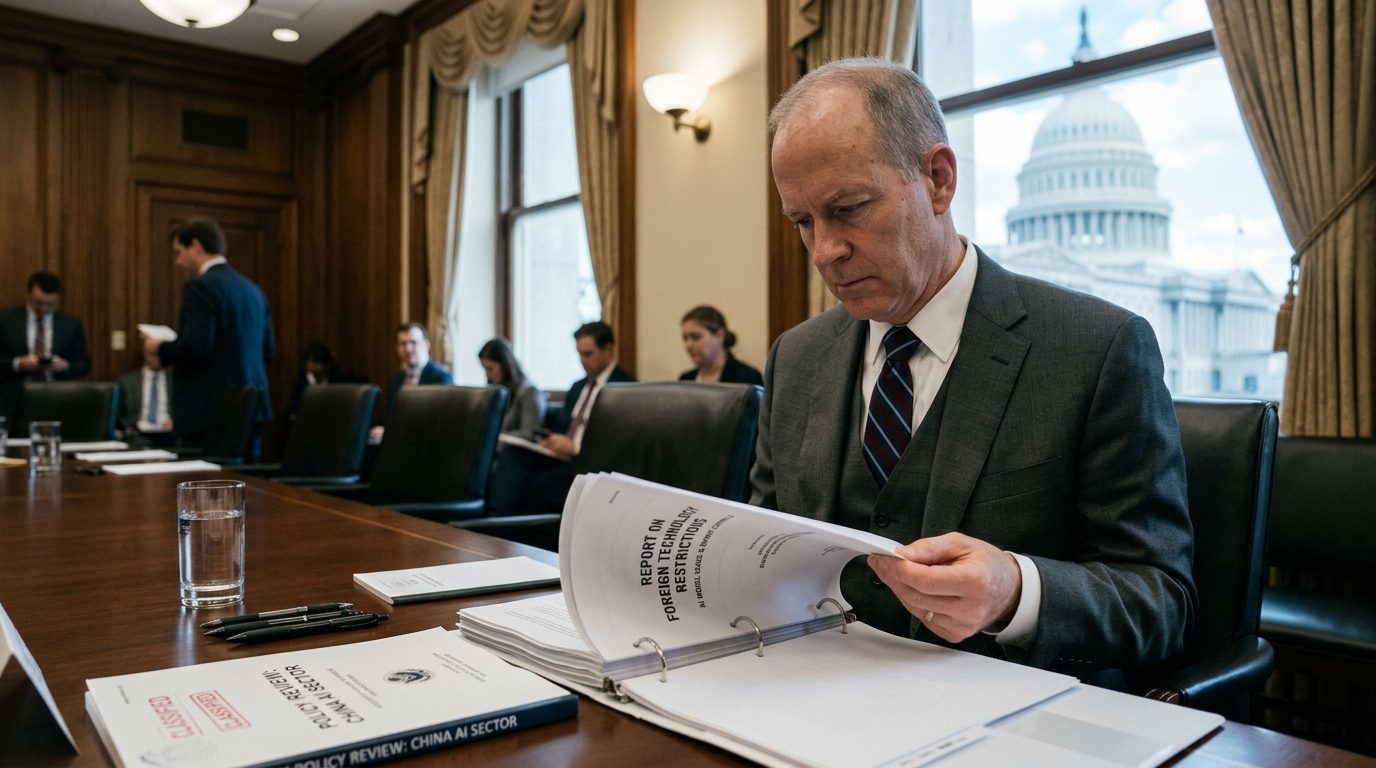
In the spring of 2026, the geopolitical chessboard of technology is being upended by the latest maneuvers of the Trump administration. Through a series of aggressive policy pronouncements and legislative pushes, Washington is signaling that the era of "unfettered access" to American artificial intelligence (AI) innovation by Chinese entities has come to an end. This new strategy no longer focuses solely on hardware—the silicon chips—but on the very "soul" of the technology: model weights and the cloud infrastructure that powers their training.
The Strategy of 'Digital Fencing'
According to sources within the U.S. Department of Commerce, the administration is finalizing a new framework of export controls designed to drastically limit the ability of Chinese firms to utilize advanced AI models developed in the U.S., even those released as open-source. The logic behind this move is straightforward yet contentious: Washington argues that China is "exploiting" American intellectual property to accelerate its own military and espionage capabilities, effectively bypassing years of R&D and billions of dollars in capital investment.
The friction point lies primarily with models like Meta’s Llama series or open-source releases from Mistral and other providers. While these models are intended for the global developer community, the U.S. government views their adoption by Chinese giants like Huawei or Tencent as a direct national security threat. "We cannot allow our primary adversary to build its arsenal on the foundations we laid," a senior national security advisor remarked during a recent briefing.
Open Source as a Trojan Horse?
This policy shift has ignited a firestorm within the global tech community. Many analysts argue that restricting access to open-source models could undermine the very innovation the U.S. seeks to protect. Open-source development thrives on collaboration and transparency. By imposing a "nationality" on code, the U.S. risks isolating its own ecosystem and driving global talent toward alternative frameworks.
Nonetheless, the Trump administration appears committed to implementing what it calls "Know Your Customer" (KYC) regulations for cloud service providers. This would mandate that companies like Amazon (AWS), Microsoft (Azure), and Google verify the identity of foreign users renting compute power to train large language models (LLMs). The goal is to close the loophole that allowed Chinese firms to train their models on American servers, effectively circumventing existing bans on purchasing physical NVIDIA H100 or B200 chips.
Economic and Geopolitical Implications
The ramifications of this policy are profound. Already, major tech stocks are exhibiting volatility as the market attempts to price in the cost of a full-scale digital decoupling. China, for its part, is not standing idly by. Beijing has ramped up subsidies for domestic architectures and is attempting to forge a "Global South Alliance" for AI technology sharing, independent of American influence.
In Europe, the situation is being watched with growing unease. The EU, caught between two superpowers, faces a dilemma: align with the U.S.'s hardline stance and risk trade retaliation from China, or remain committed to the principles of an open internet? The answer is complex, especially as data security and AI sovereignty become the new frontiers of national power.
- Export restrictions on AI model weights and proprietary algorithms.
- New KYC mandates for cloud infrastructure providers targeting foreign entities.
- Increased diplomatic pressure on allies to synchronize tech containment strategies.
- Vetting of Chinese venture capital in U.S.-based AI startups.
Ultimately, the Trump administration's crackdown marks the transition from a trade war to an existential struggle for technological supremacy. Artificial intelligence is no longer viewed as a mere productivity tool, but as the ultimate strategic asset. Access to this asset will likely define the global hierarchy for decades to come.