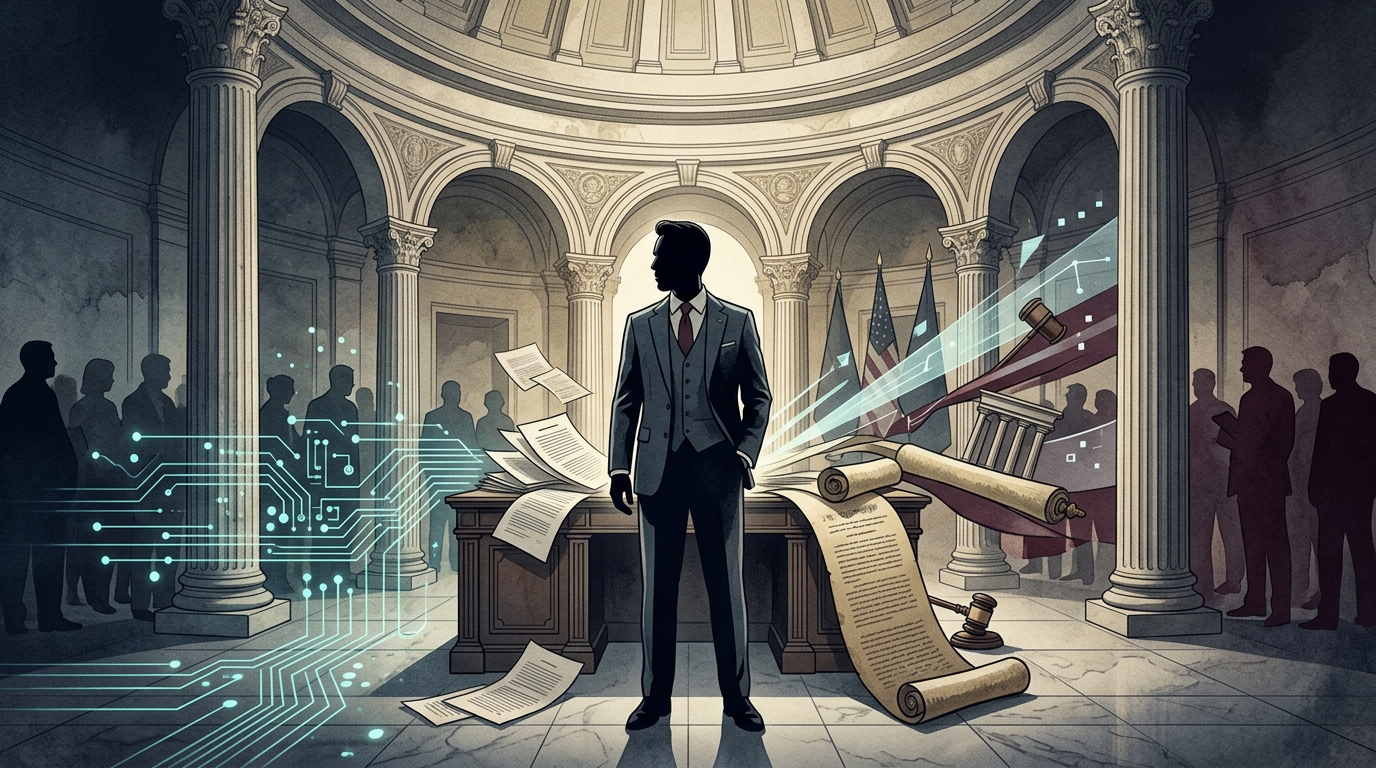
In the hallowed halls of the U.S. Capitol and the sprawling offices of federal agencies, a silent revolution has taken root over the past few months. It didn't begin with an executive order or a landmark piece of legislation; rather, it started with the mundane, everyday need of government employees to manage an overwhelming workload. "Shadow AI"—the use of unauthorized artificial intelligence tools by state officials—has evolved from a whispered secret into a reality that Washington can no longer afford to ignore.
This phenomenon, as recently detailed, isn't just about automating simple tasks. It involves the use of models like ChatGPT, Claude, and Gemini to draft legislation, analyze sensitive data, and shape political strategy, often without the explicit blessing of security agencies. The allure of efficiency has proven stronger than rigid cybersecurity protocols, creating a paradox: while lawmakers debated how to regulate AI, their own staffers were using it to write the very speeches delivered on the House floor.
The Psychology of the Shortcut: Why Bureaucrats Go Rogue
Why would D.C. bureaucrats risk their careers by using "shadow" tools? The answer lies in the vast chasm between technological acceleration and government inertia. While the private sector integrated AI at lightning speed, federal agencies remained shackled to security protocols reminiscent of previous decades. A congressional aide, speaking on the condition of anonymity, described the situation vividly: "When you have to analyze 2,000 pages of reports by morning, and you know a tool can do it in seconds, a ban feels like being asked to dig a tunnel with a spoon while a drill sits right next to you."
This drive for productivity led to the emergence of a "gray market" of knowledge within departments. Employees shared tips on bypassing firewalls or used personal devices to process government documents. The result was the unintended leakage of sensitive information into the training sets of large language models, triggering alarms within the intelligence community. The friction between the "old guard" of security and the "new guard" of productivity has never been more visible.
The System Strikes Back: From Prohibition to Integration
Washington's initial reaction was the classic reflex: prohibition. The House of Representatives strictly limited the use of ChatGPT, allowing only the paid Plus version with specific privacy configurations. However, it soon became clear that AI is not something that can simply be locked out of the room. Grassroots pressure forced the administration to seek middle-ground solutions.
Consequently, we have seen the rise of "sandboxed" AI systems, specifically tailored for government use. Projects like "Cosmo," an internal tool developed for certain agencies, attempted to bridge the gap, offering the power of generative AI without the risk of data flowing to public servers. This shift marks a new era in governance, where technology is not imposed from the top down but is adopted organically from the bottom up, forcing leadership to adapt or become obsolete.
Geopolitical Implications and the Future of Democracy
Beyond internal logistics, Shadow AI in Washington carries significant international weight. The U.S. is locked in an unofficial race with China for AI supremacy. If American officials are hindered by bureaucratic red tape while their adversaries leverage AI for strategic analysis and rapid decision-making, the U.S. risks losing its competitive edge. Washington has come to realize that "security through abstinence" is a recipe for failure in the 21st century.
In conclusion, the saga of shadow AI in the nation's capital serves as a masterclass in how technology reshapes power dynamics. Traditional control structures are crumbling in the face of user-friendly, highly effective tools. The challenge for 2026 and beyond is no longer whether AI will be used in government, but how to ensure that its use is transparent, ethical, and, above all, governed by human judgment rather than an algorithm trained in the shadows of a clandestine browser tab.