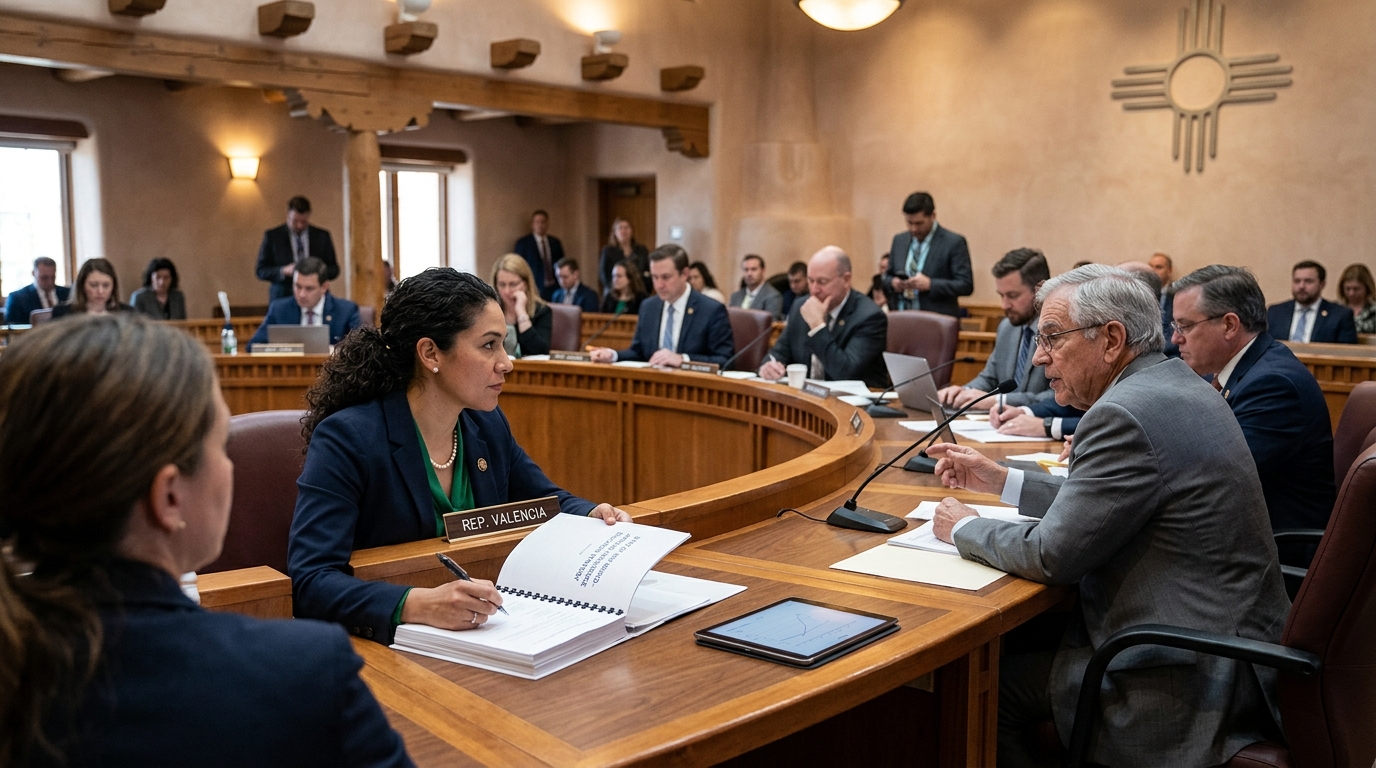
In the heart of Santa Fe, the air within the state committee rooms is thick with urgency. This isn't the usual partisan bickering; it's a race against a technological revolution that is outstripping bureaucracy at every turn. New Mexico lawmakers are facing a coordinated push from educators, tech ethicists, and civil rights advocates to overhaul state education policies, integrating Artificial Intelligence (AI) in a way that safeguards students while preparing them for a volatile future.
The current educational landscape resembles a digital Wild West. While some forward-thinking schools are leveraging generative AI to personalize learning paths, others remain entrenched in a defensive crouch, attempting to ban technologies that students carry in their pockets. The challenge for New Mexico is twofold: ensuring that AI does not exacerbate the existing digital divide and establishing an ethical framework to prevent the exploitation of minors' data.
Beyond the Ban: Redefining Academic Integrity
One of the primary concerns presented to lawmakers involves the collapse of traditional academic integrity models. With the ubiquity of GPT-5 level models and specialized AI agents, the standard homework assignment has become obsolete. Experts argue that policy should not focus on prohibition—which is practically impossible to enforce—but on a fundamental re-evaluation of how we assess knowledge.
"We cannot use 20th-century tools to evaluate 21st-century learners," a consultant testified before the education committee. The proposed shift includes moving toward competency-based assessments, oral examinations, and the critical analysis of AI-generated outputs. Lawmakers are being urged to fund massive professional development programs so that teachers can transition from being 'plagiarism police' to being mentors in AI-augmented inquiry.
- Redefining plagiarism in an era of human-machine collaboration.
- Prioritizing critical thinking as the primary defense against algorithmic misinformation.
- Developing statewide guidelines to replace the current patchwork of district-level policies.
Equity in the Age of Algorithms
New Mexico is a state defined by stark economic disparities and vast rural stretches where high-speed internet is often a luxury. The introduction of AI into the classroom carries the risk of leaving behind students from low-income backgrounds or Indigenous communities who lack access to premium AI models or stable connectivity.
Advocates for reform are calling on the state to invest in "public AI infrastructure." This entails providing free, secure, and state-vetted AI tools to every student in the state, regardless of their zip code. This policy isn't just about technology; it's about social justice. If AI becomes a "private tutor" available only to the affluent, the dream of social mobility will suffer a catastrophic blow. Lawmakers are currently debating a bill that would treat AI access as a fundamental utility for education.
Ethics, Privacy, and Data Sovereignty
Another focal point of the legislative push is the protection of student data. Big Tech companies often utilize student interaction data to refine their models, frequently without explicit or informed parental consent. The proposed legislation in New Mexico aims to set strict boundaries on data harvesting within educational platforms.
"Our children are not a free data source for Silicon Valley," a representative from a parent-teacher association stated. "We need laws that ensure technology serves the student, not the shareholder's bottom line."
Furthermore, there is the pressing issue of algorithmic bias. AI systems used for student assessment or career pathing can inadvertently bake in racial or socioeconomic prejudices. Lawmakers are being asked to mandate transparency audits for any AI software implemented in public schools. The goal is to ensure that the "black box" of AI does not reinforce old systemic inequities under the guise of objective data.
In conclusion, the movement in New Mexico is a microcosm of a global debate. Educational policy can no longer afford to be reactive; it must be anticipatory. The success of this legislative push will be measured by whether it transforms AI from a perceived threat into a tool of empowerment for every student, while fiercely guarding the human element that remains the core of true education.