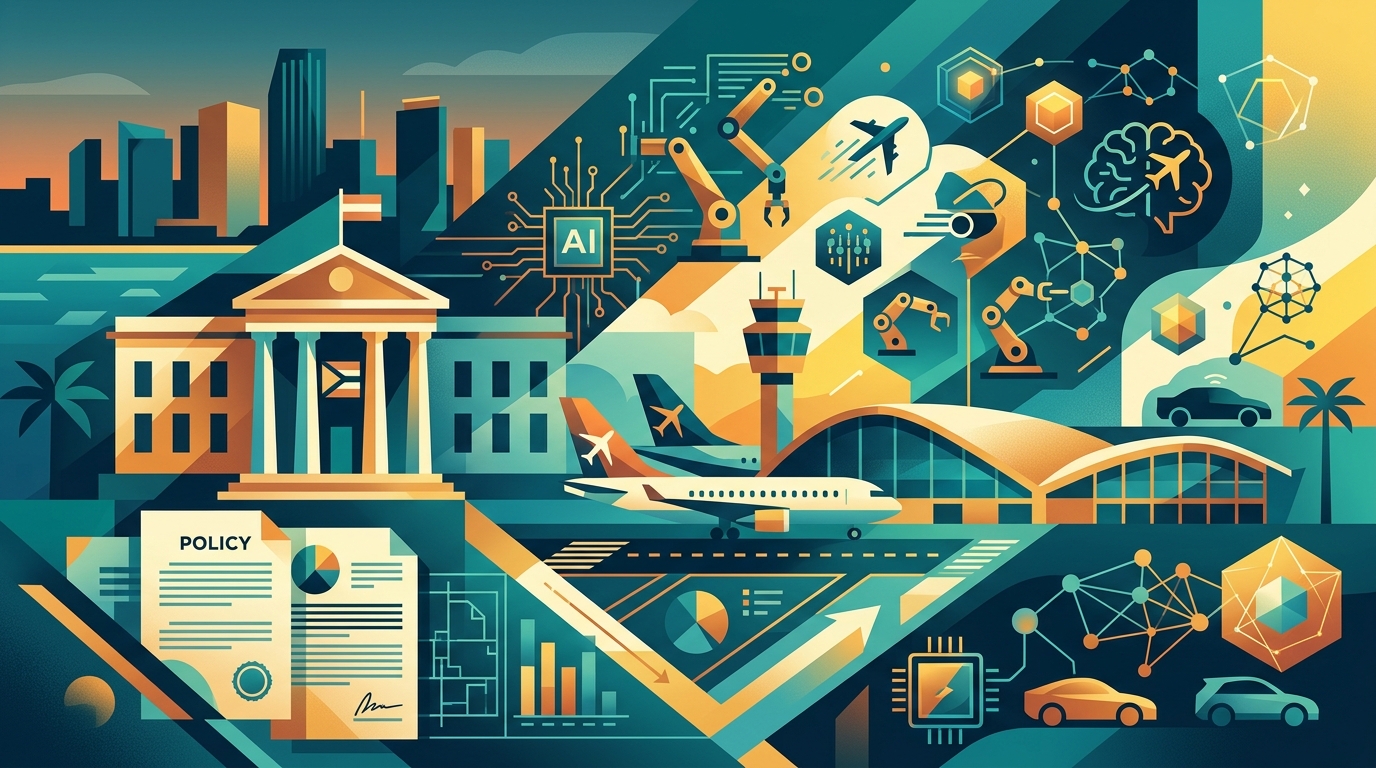
In the vibrant heart of South Florida, where the Atlantic breeze meets an ever-growing digital ambition, Miami-Dade County Mayor Daniella Levine Cava has set the stage for a new era in public infrastructure. During her keynote address at the eMerge Americas 2026 conference, the Mayor unveiled a suite of initiatives integrating Artificial Intelligence (AI) and robotics into the daily operations of Miami International Airport (MIA), one of the world's most critical transit hubs.
This move is more than just a modernization effort; it is a strategic maneuver to solidify Miami’s reputation as the "Silicon Tropics." Supported by tech giants and local startups alike, the airport is being reimagined as a living laboratory for innovation, where efficiency, safety, and passenger experience are redefined through algorithmic precision.
Robotics Redefining the Passenger Journey
One of the most striking announcements involved the deployment of a new generation of autonomous robots. These machines, equipped with advanced LiDAR sensors and computer vision, go far beyond simple floor cleaning. The Mayor showcased robotic luggage assistants capable of guiding travelers to their specific gates while carrying heavy bags, significantly reducing physical strain for both passengers and staff.
Furthermore, MIA is introducing a fleet of autonomous ground support equipment (GSE) for moving cargo and baggage across the airfield. These vehicles operate with zero emissions, aligning with the county’s broader environmental goals for a green transition. The implementation of robotics in baggage handling is projected to reduce wait times at carousels by up to 30%, addressing one of the most common pain points for international travelers.
AI and Predictive Infrastructure Management
Beyond the visible hardware of robotics, the core of this innovation lies in the software. Mayor Levine Cava announced "MIA Alpha," a centralized AI command system that analyzes real-time data from thousands of cameras and IoT sensors. This system can predict the formation of bottlenecks at security checkpoints before they occur, allowing management to dynamically reallocate TSA resources and staff.
"We are not using technology for technology's sake," the Mayor emphasized. "We are using it to give people back their most precious resource: time." Predictive maintenance is another sector where AI is set to play a pivotal role. By analyzing the acoustic signatures and vibration patterns of escalators, moving walkways, and HVAC systems, the AI can identify potential failures before they lead to downtime, ensuring a seamless flow for the 100,000+ passengers who pass through the terminal daily.
Ethics, Privacy, and the Future of Work
However, the integration of such pervasive technology naturally raises questions regarding privacy and the future of the workforce. Mayor Levine Cava was proactive in addressing these concerns, stating that the county has established a rigorous ethical AI framework. This framework ensures that biometric data is used strictly for transit facilitation and is protected by military-grade encryption, preventing unauthorized surveillance or data harvesting.
Regarding the workforce, the county administration has launched extensive retraining programs for airport employees. Rather than replacing human labor, the technology aims to augment and elevate roles. Workers who previously performed repetitive manual tasks are being upskilled to manage and maintain the robotic systems. This social contract seeks to ensure that technological progress does not come at the cost of economic displacement, but rather serves as a ladder for professional growth.
Miami as a Global Beacon of Innovation
The unveiling at eMerge Americas serves as a definitive answer to critics who questioned whether Miami could sustain its tech momentum post-pandemic. With multi-million dollar investments in MIA’s infrastructure, the county is demonstrating that political will can be a powerful catalyst for high-tech adoption.
MIA is no longer just a gateway to Latin America and the Caribbean; it is becoming a blueprint for the future of smart cities. The success of this venture will be measured by the technology’s ability to remain invisible yet indispensable, maintaining the human touch that defines Miami’s hospitality. As Levine Cava concluded, "The future isn’t just happening to us; we are building it right here in Miami-Dade."