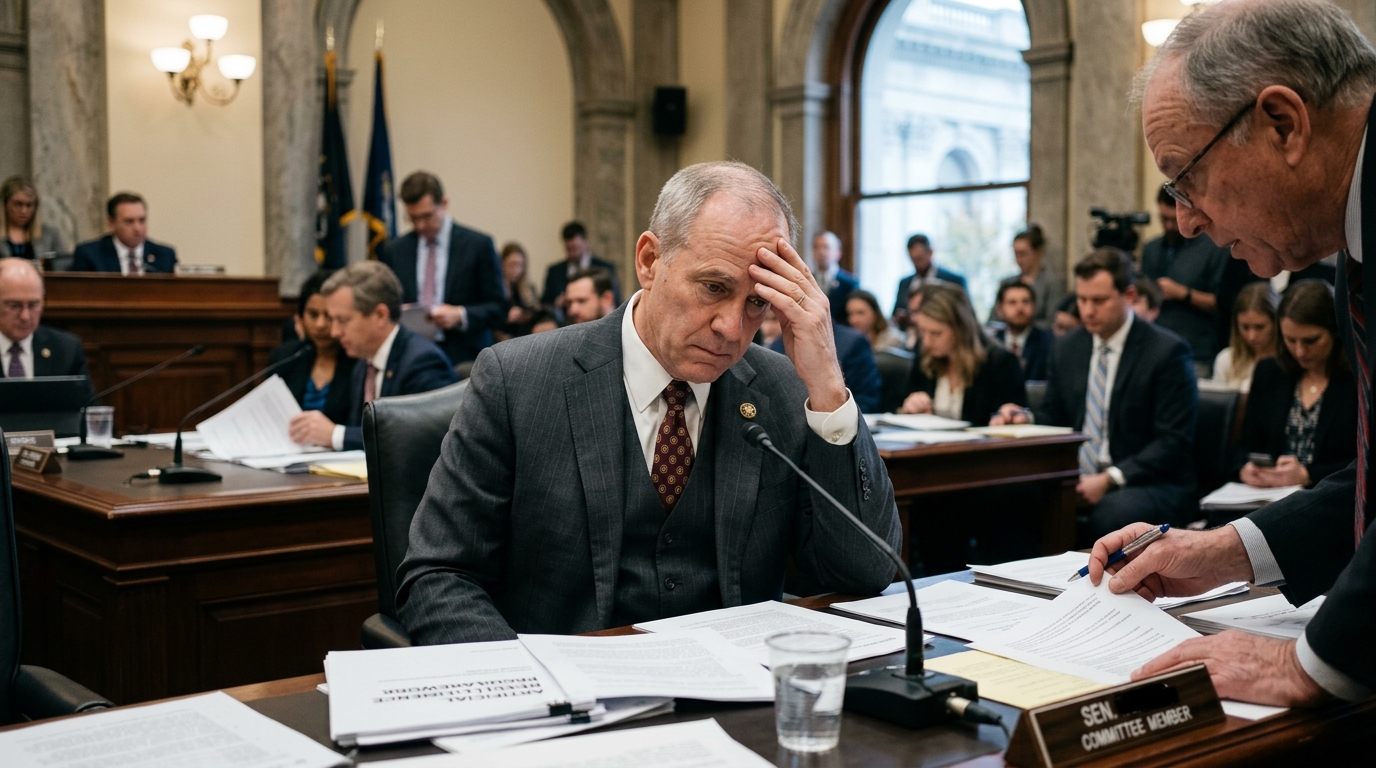
The atmosphere within the halls of parliaments worldwide has shifted dramatically. Where enthusiasm for digital progress once reigned, a heavy shadow of angst now looms. Recent gatherings of lawmakers, from Washington to Brussels, no longer resemble routine briefing sessions but rather crisis councils. The central question is no longer "how will we benefit," but "how will we survive" a technology that many experts describe as the greatest threat to social cohesion and human existence itself.
The Architecture of Fear
The pivot toward a discourse bordering on the dystopian is no accident. Lawmakers are confronting a technology that evolves faster than their ability to comprehend it, let alone regulate it. In recent hearings, we have witnessed tech titans sitting alongside academics, warning of "catastrophic outcomes" if guardrails are not established immediately. This unusual alliance between industry and regulators suggests that the danger is no longer theoretical.
Fears are centered on three core pillars: the loss of control over autonomous systems, the use of AI to develop biological weapons, and the total collapse of informational trust via deepfakes. As noted in reports analyzed by legislators, AI's ability to produce convincing but false content at scale could destabilize democratic processes, making it impossible to distinguish truth from propaganda. In a year like 2026, with critical election cycles underway, this threat takes on existential proportions for the political establishment.
Risk Management and the Insurance Perspective
A particularly compelling element emerging from these discussions is the role of the insurance industry. As highlighted by the Insurance Journal, the concept of "destruction" pertains not only to physical survival but also to economic stability. How does one insure a business against a risk triggered by an algorithm whose decision-making process is a "black box"? Insurance companies are warning that traditional risk-assessment models are now obsolete.
"We are in unchartered waters. Artificial Intelligence is not just a tool; it is a risk multiplier that can trigger systemic failures on a global scale," stated a senior executive from a leading insurance group during the deliberations.
The need for a new civil liability framework is urgent. If an autonomous system causes a financial meltdown or a large-scale accident, who bears the responsibility? The developer, the company that trained the model, or the end-user? Lawmakers are being forced to answer questions that, until a few years ago, belonged strictly to the realm of science fiction.
The Geopolitics of AI and Global Competition
Beyond internal risks, there is a significant international dimension. Lawmakers' anxiety also stems from the fear that stringent regulation in the West could give an advantage to authoritarian regimes that do not bind themselves to ethical norms. This geopolitical chessboard complicates the situation: on one hand, there is the need for safety; on the other, the fear of technological obsolescence. The race for dominance in Artificial General Intelligence (AGI) mirrors the nuclear arms race of the Cold War, with the difference being that this time, the weapons are invisible and digital.
- Ethical Frameworks: The necessity of embedding human values into algorithms.
- Transparency: The demand for access to source code and training datasets.
- Usage Restrictions: Prohibiting AI in critical infrastructure without human oversight.
The Innovation Dilemma: Protection or Paralysis?
As debates continue, a fundamental dilemma emerges: Can regulation protect society without strangling innovation? Proponents of open development argue that excessive fear could lead to "regulatory paralysis," depriving humanity of solutions to problems like climate change or incurable diseases where AI excels. However, the prevailing trend in legislative bodies is now "precautionary protection."
The destruction lawmakers speak of is not necessarily a Terminator-style scenario. It is the gradual erosion of social trust, the economic inequality resulting from mass automation, and the loss of human agency. The challenge for 2026 and beyond is the creation of a "social contract for the digital age," ensuring that technology remains a servant, not a master, of humanity.