April 20, 2026, marks a watershed moment in the evolution of modern warfare. As the conflict involving Iran and its regional proxies continues to simmer, a groundbreaking report from the Foundation for Defense of Democracies (FDD) highlights a chilling transformation: Artificial Intelligence (AI) has moved from the laboratory to the literal front line. The Middle East has become the world's premier testing ground for algorithmic combat, where the speed of silicon often dictates the fate of flesh and blood.
The Acceleration of the Kill Chain
The core takeaway from the Iran conflict is the radical compression of the "kill chain"—the process of identifying, tracking, and engaging a target. Historically, this cycle relied on human intelligence and manual verification, processes that took significant time. Today, AI-driven systems like Israel's "Gospel" and advanced U.S. predictive analytics have automated these steps. By synthesizing vast datasets from satellite imagery, signal intelligence, and drone feeds, AI can identify potential threats with a speed and volume that no human staff could ever match. However, this efficiency comes with a profound cost: the erosion of the human decision-making window.
"We are no longer on the brink of algorithmic warfare; we have crossed the threshold. The question is no longer whether AI will be used, but whether humans can still control the velocity of the escalation it demands," the FDD report warns.
Drone Swarms and the Democratization of Lethality
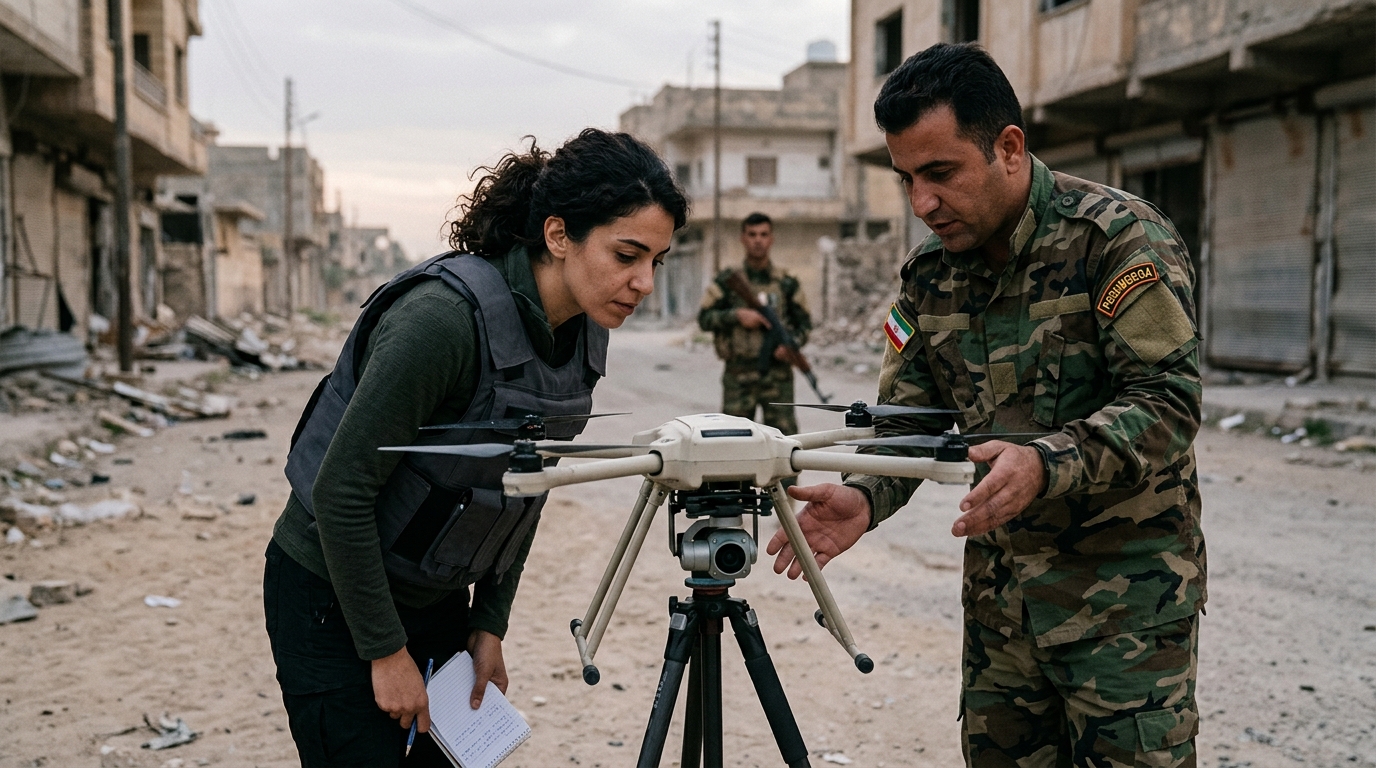
Conversely, Iran has demonstrated how AI can be leveraged by less technologically advanced actors to create asymmetric advantages. By deploying swarms of low-cost loitering munitions, Tehran and its proxies have challenged sophisticated Western air defenses. These swarms don't rely on the brilliance of a single unit but on collective coordination and overwhelming numbers. This forces defenders to employ their own AI systems to manage the saturation of the battlefield, leading to a scenario where machines fight machines at speeds that render human intervention decorative at best. This "democratization" of high-tech lethality means that even non-state actors can now project power that was once the exclusive domain of superpowers.
The Ethical Abyss and the Accountability Gap
The use of AI in the Iran conflict raises harrowing ethical questions. Proponents argue that AI's precision reduces collateral damage by ensuring only legitimate military targets are hit. Yet, the reality on the ground suggests a more complex picture. The reliance on algorithmic recommendations can lead to "automation bias," where human operators defer to the machine’s judgment without sufficient skepticism. When an algorithm misidentifies a civilian gathering as a military target, who is held responsible? The programmer? The commander? Or the machine itself? Current international law is woefully unprepared for this shift, leaving a legal and moral vacuum in the wake of automated strikes.
- AI compresses decision-making cycles from minutes to milliseconds, risking rapid escalation.
- Low-cost drone swarms represent a paradigm shift in asymmetric warfare.
- The "black box" nature of military AI creates a significant accountability gap.
- Regional conflicts are serving as live-fire data collection for global AI superpowers.
Strategic Implications for Global Security
The lessons from the Iranian front are clear: technological superiority is no longer a static shield but a dynamic race. The FDD emphasizes that the West must not only lead in AI development but also in the creation of norms for its use. As we move further into 2026, the global balance of power is increasingly defined by computational capacity and algorithmic resilience. The conflict in the Middle East is a preview of a future where wars are won or lost in the digital ether before the first shot is even fired. The challenge for the international community is to ensure that as we teach machines to fight, we do not forget how to maintain the peace.