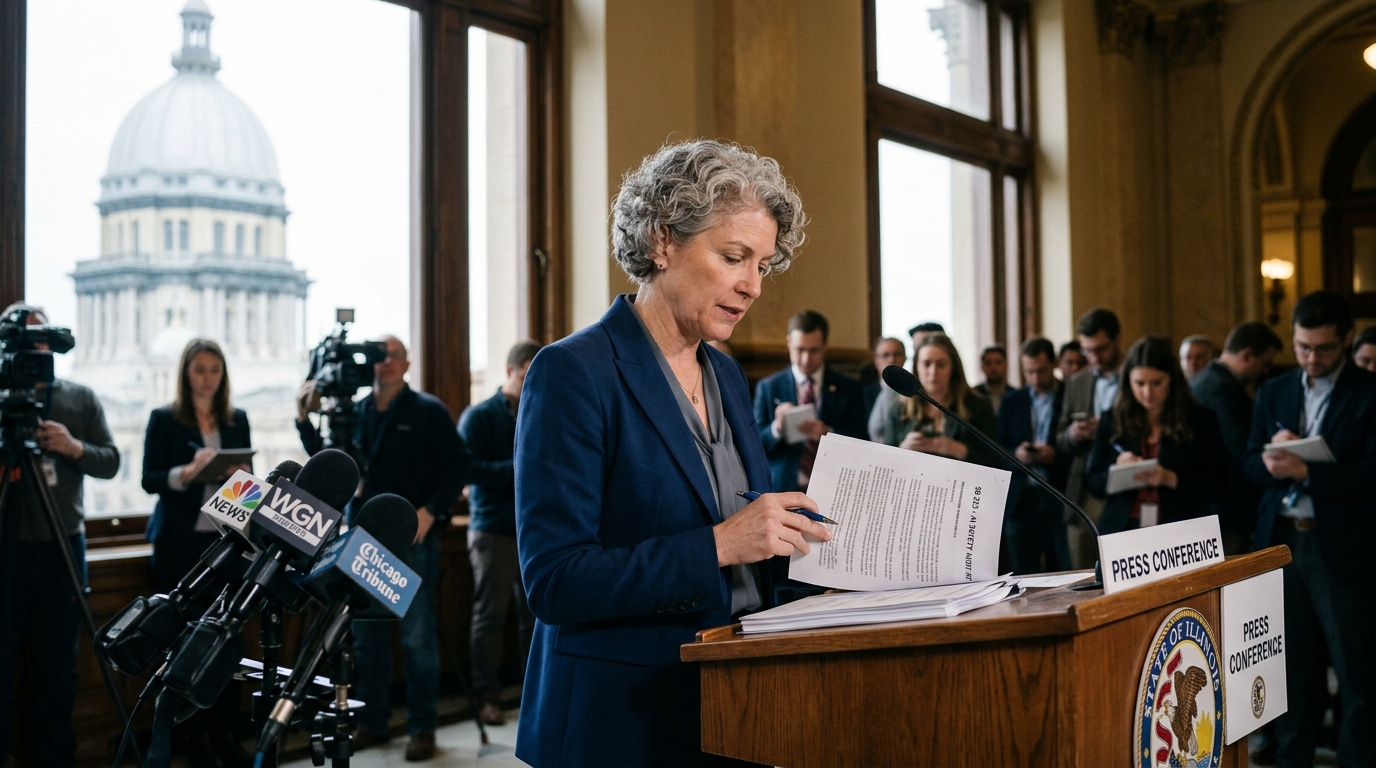
In a move poised to redefine the landscape of technological governance in the United States, Illinois is advancing legislation that makes it the first state to mandate compulsory safety audits for Artificial Intelligence (AI) systems. This initiative, arriving at a moment when the federal government in Washington D.C. appears hesitant, aims to address the inherent risks posed by the unbridled use of algorithms in critical sectors of human life.
The Legacy of Data Protection in Illinois
This is not the first time Illinois has taken the lead in tech regulation. With the landmark Biometric Information Privacy Act (BIPA), the state has already established one of the world's most rigorous frameworks for protecting biometric data, causing significant legal challenges for giants like Meta and Google. The new AI legislation is the natural evolution of this tradition, shifting focus from raw data to the processing mechanisms of algorithmic "black boxes."
The core of the bill focuses on "high-risk" AI systems. These include algorithms used for decision-making in employment, credit scoring for loans, housing allocation, and healthcare delivery. Tech critics have warned for years that these algorithms often inherit and amplify human biases, leading to systemic discrimination against minorities and vulnerable populations.
What the Compulsory Audits Entail
The new law requires companies developing or deploying these systems to undergo annual audits conducted by independent third parties. These audits will not be limited to technical performance but will scrutinize several key areas:
- Algorithmic Bias: Assessing whether the system favors or disadvantages specific demographic groups.
- Transparency: The degree to which AI decisions can be explained in an understandable manner to the public.
- Data Security: How the information feeding the model is protected.
- Risk Management: Protocols in place for malfunctions or unintended consequences.
Furthermore, companies will be required to publish summaries of these reports, allowing the public and regulators to have a clear view of how the tools affecting their lives operate. This level of accountability is unprecedented in the American context and brings Illinois closer to the standards set by the European Union's AI Act.
Reactions and Economic Implications
Unsurprisingly, the tech industry has expressed strong reservations. Representatives from major corporations argue that such regulations could stifle innovation and lead to a flight of capital toward states with more relaxed legislative frameworks. Additionally, the cost of annual audits by specialized firms could be prohibitive for startups, potentially creating an unfair advantage for established market players.
"Regulation is not the enemy of innovation, but the guarantee of its sustainability," say supporters of the bill. "Without public trust, Artificial Intelligence will never be able to reach its full potential."
On the other hand, civil rights organizations hail the move as a necessary victory. They argue that the "self-regulation" touted by companies has repeatedly failed and that only state intervention can ensure that technology serves humanity rather than the other way around.
Conclusion: The "Illinois Effect"
This move by Illinois may trigger a domino effect. As major companies operate across multiple states, they often find themselves forced to comply with the strictest available standard to simplify their operations. If Illinois succeeds in implementing these audits, we might see a de facto national standard emerge, forcing Congress to act more swiftly to avoid a legal patchwork of varying state rules. In any case, the era of the "Wild West" for AI in the U.S. seems to be drawing to a close, with Illinois holding the reins of change.