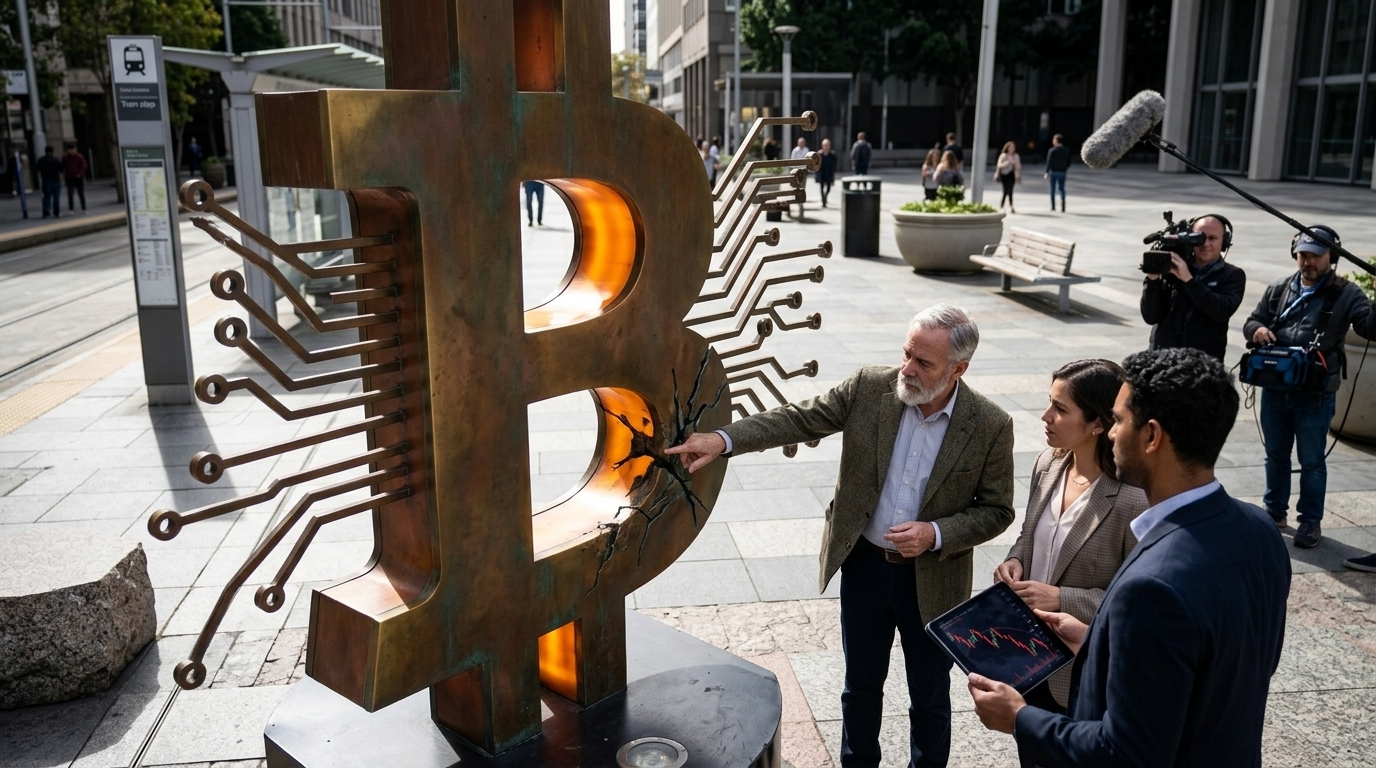
The intersection of high-stakes politics and decentralized finance (DeFi) has never been a tranquil affair, but the latest clash surrounding World Liberty Financial (WLFI) – the crypto venture backed by Donald Trump’s family – threatens to send shockwaves through the ecosystem. Recent reports of legal maneuvers by billionaire investors against the project's management are not merely a financial dispute; they touch upon the very core of ethics and governance in the Web3 era.
The Anatomy of a High-Stakes Conflict
World Liberty Financial launched with grand promises of "liberating" the average American from the traditional banking system. However, the reality has proven far more convoluted. According to court filings and leaked communications, at least one prominent billionaire investor, linked to significant tech capital, is accusing WLFI leadership of "dictatorial practices." The central allegation concerns the freezing of WLFI tokens, which, despite being sold under the guise of governance and utility, have remained locked without a clear roadmap for liquidity.
The plaintiffs argue that this tactic was not a simple precautionary measure against market volatility, but rather a tool for "digital blackmail." They claim that the Trump camp and their inner circle utilized the locking of funds as leverage to ensure political loyalty or to extract more favorable terms in other business dealings. Conversely, the WLFI team maintains that these restrictions are essential for compliance with SEC regulations and to prevent the kind of rampant speculation that could sink a nascent project.
Politics Casting a Long Shadow over the Blockchain
The issue takes on massive proportions due to Donald Trump's unique status. This marks the first time in history that a former (and potentially future) U.S. President is so directly tethered to a crypto asset. This creates an unprecedented "political risk." Critics argue that WLFI functions more as a "political vehicle" than a technologically innovative product. The use of tokens as a means of influence echoes old-school political patronage, now transcribed into the opaque code of smart contracts.
- Lack of transparency in the platform's decision-making processes.
- Concerns regarding the diversion of funds toward political campaigning.
- The inherent conflict of interest between regulatory policy and personal investment.
The fact that WLFI tokens are non-transferable in their current phase has incensed market "whales." When an investor commits millions, they expect liquidity. When that liquidity is withheld under ambiguous justifications, the term "blackmail" begins to resonate more frequently in the courtrooms of Delaware and New York.
A Regulatory Storm on the Horizon
The SEC, even in the shifting political landscape of 2026, is keeping a watchful eye. If it is proven that token freezes were used to coerce investors into specific actions, WLFI could face charges of fraud and market manipulation. The question arises: can a blockchain truly be "decentralized" when its central figure is a man with Trump's singular gravity?
"This isn't DeFi. This is CeFi (Centralized Finance) wearing a mask of freedom," says a market analyst who requested anonymity. "It is a closed system where the rules change according to the leader's requirements."
The resolution of this dispute will define the future of celebrity-backed tokens. If Trump emerges unscathed, he will have pioneered a new model for financing political activities. However, if the allegations of blackmail hold weight, World Liberty Financial will go down in history as one of the most glaring examples of poor governance in the crypto space, undermining the trust the community has worked so hard to build.