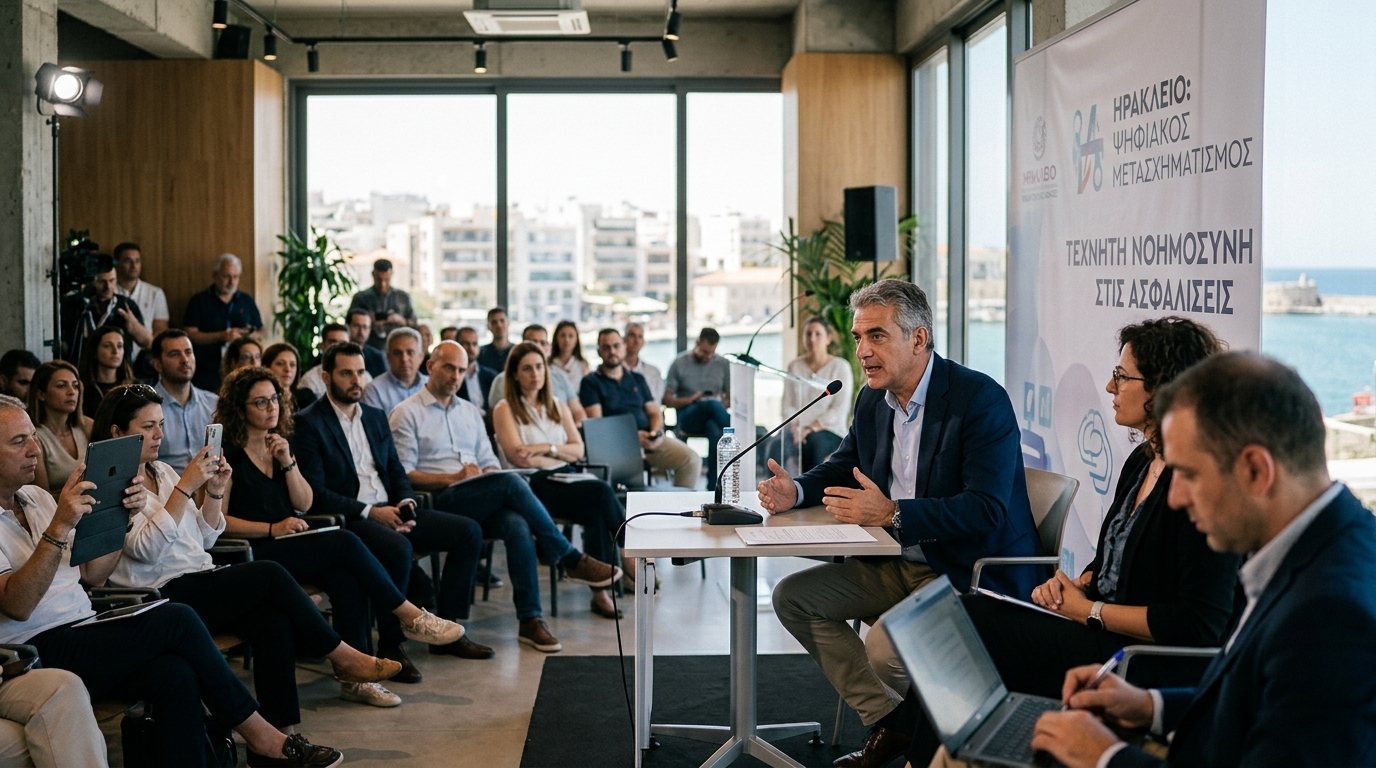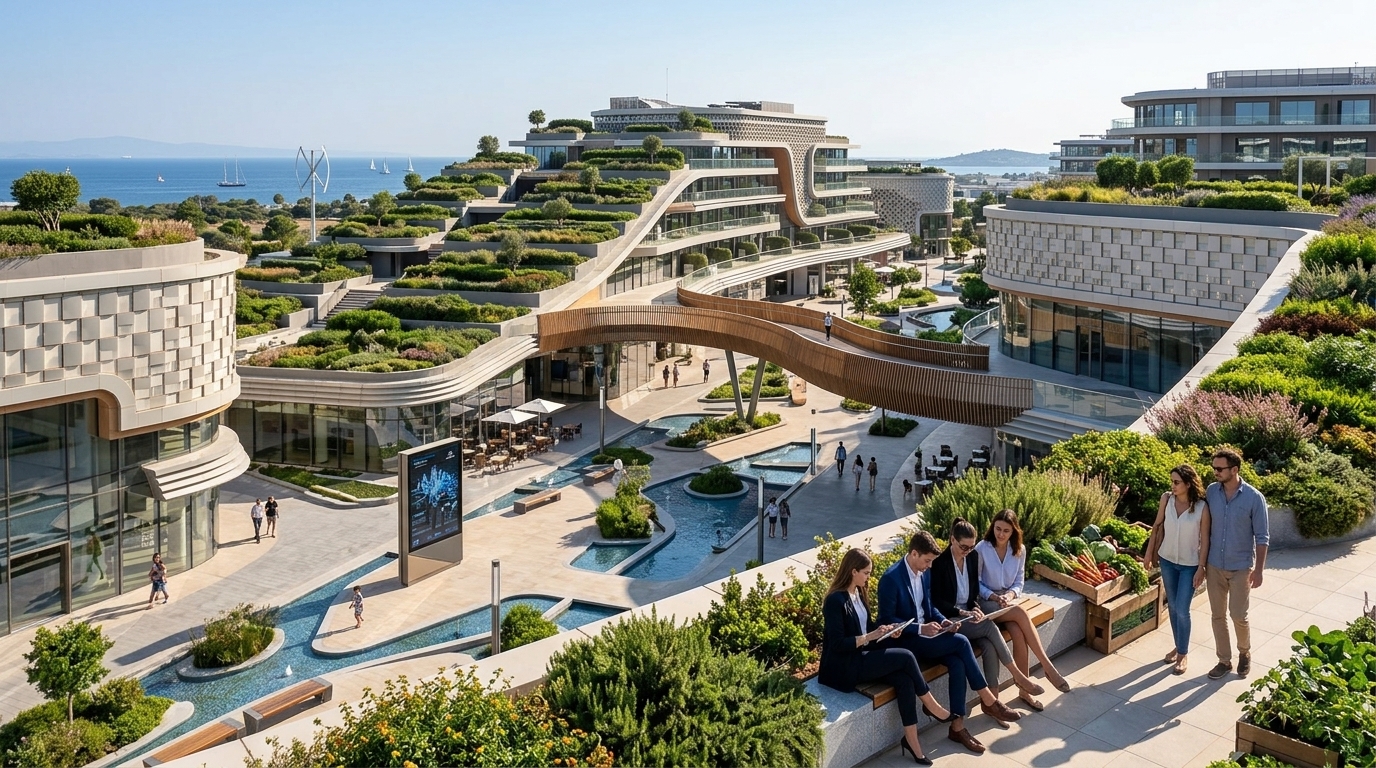
The discussion about the future of cities is no longer a theoretical exercise on paper, but an urgent necessity dictated by the climate crisis and the digital revolution. Within the framework of the recent Delphi Economic Forum, the Ellinikon project emerged not merely as a massive real estate investment, but as a global experiment on how 'smart' cities can combine technological superiority with environmental sensitivity and human scale.
The Digital Backbone of a Smart City
The Ellinikon is being designed from the ground up with the integration of advanced technologies that will make it one of the most digitally advanced areas worldwide. The use of IoT (Internet of Things) sensors in every corner of the city will allow for real-time data collection on energy consumption, water management, air quality, and vehicle traffic. This 'Digital Twin' of the city will enable managers to predict problems before they occur, optimizing services for residents.
- Full coverage with 5G and future 6G networks.
- Smart lighting systems that adapt to human presence.
- Waste management with fullness sensors and automated collection.
- Citizen-facing applications offering direct access to all urban services.
Green Growth and Sustainability
At the heart of the project lies the Metropolitan Park, which, spanning 200 hectares, will be one of the largest coastal green spaces in the world. Its significance is not just aesthetic; it functions as a massive 'lung' that will improve Attica's microclimate, reducing the urban heat island effect. Sustainability at The Ellinikon is not limited to greenery but extends to circular economy practices and energy autonomy.
"The Ellinikon is not just a collection of buildings, but a new ecosystem where technology serves nature and not the other way around," stated Lamda Development executives during the Delphi discussions.
All buildings are constructed under the strictest international certifications (such as LEED and WELL), ensuring low energy consumption and high indoor environmental quality. Furthermore, the use of recycled water for irrigating green spaces and the creation of infrastructure for electromobility are integral parts of the design.
The 15-Minute City Concept
One of the most interesting aspects of The Ellinikon is the adoption of the '15-minute city' philosophy. This is an urban planning model where all basic citizen needs—work, education, health, entertainment, and shopping—are accessible within 15 minutes by foot or bicycle. This approach drastically reduces car dependency, limits pollutant emissions, and returns to residents their most valuable resource: time.
The creation of extensive networks of bicycle paths and pedestrian walkways, combined with the undergrounding of Poseidonos Avenue, creates a unified space connecting the city with the coastal front, restoring Athens' lost relationship with the sea. This human-centric approach is considered the 'key' to upgrading the quality of life in the capital.
Economic and Social Implications
Beyond technology and the environment, The Ellinikon serves as a powerful growth engine for the Greek economy. With an estimated contribution of 2.4% to the country's GDP and the creation of over 75,000 jobs, the project acts as a magnet for foreign investment and talented human capital. However, the challenge remains social inclusion: the goal is for The Ellinikon not to become a 'gated community' for the few, but an open, accessible space for all citizens and visitors of Attica.
In conclusion, The Ellinikon aspires to become the blueprint for 21st-century cities. By combining digital innovation with ecological consciousness, it points the way for how urban areas can evolve into spaces that promote prosperity, health, and social cohesion, serving as a shining example for the entire Mediterranean region.