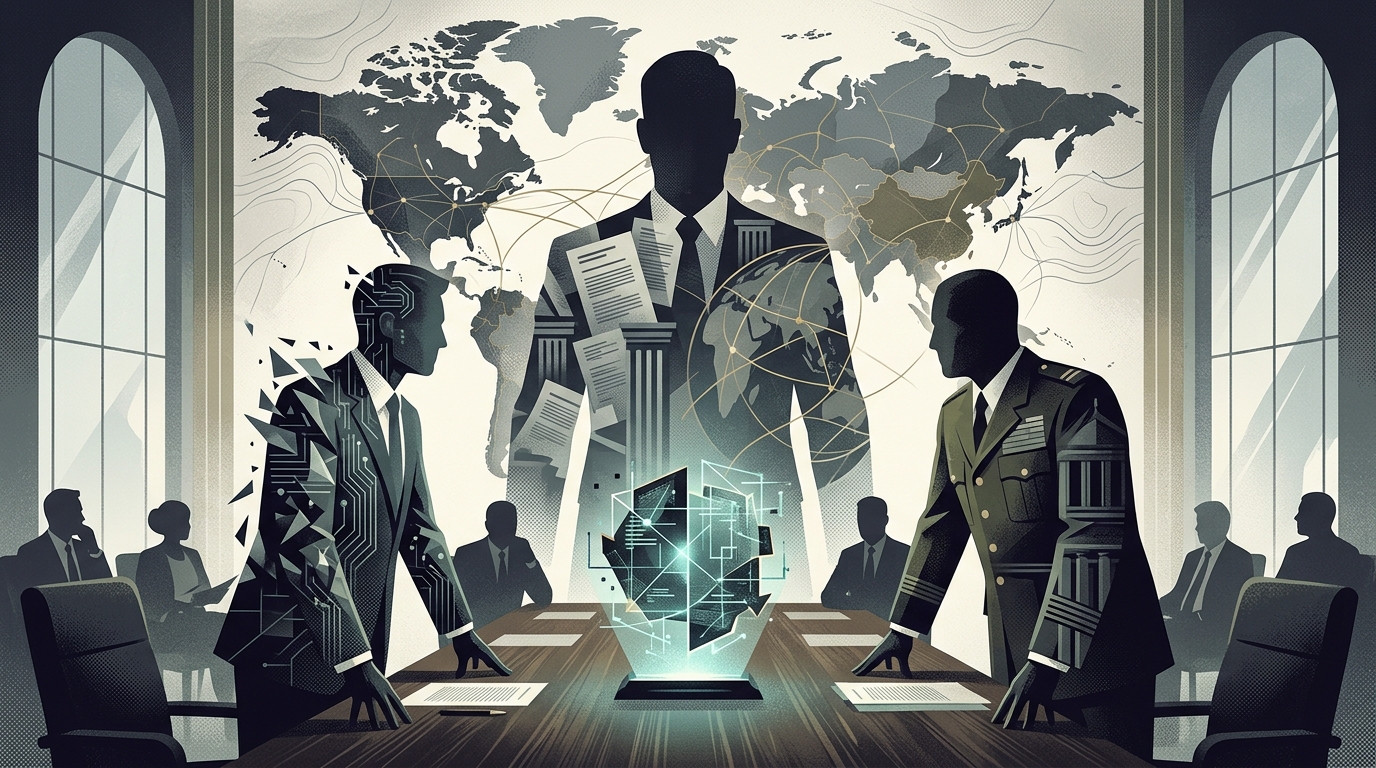
In the spring of 2026, the geopolitical chessboard is no longer vibrated by conventional threats, but by the invisible lines of code that define the future of humanity. In a formal briefing that sent shockwaves through diplomatic circles, the White House launched a scathing attack on the Chinese government, accusing it of systematic "copying" and "architectural mirroring" of the most advanced AI models developed on American soil. This accusation is not merely about industrial espionage; it concerns the very essence of strategic autonomy in the 21st century.
The Anatomy of the Accusation: From Distillation to Duplication
According to the U.S. National Security Council report, Beijing is no longer limited to traditional data theft. Instead, it employs sophisticated techniques such as "model distillation" and "reverse engineering" to replicate the capabilities of top-tier systems like GPT-5 and Claude 4. U.S. officials argue that Chinese tech giants, under the direct guidance of the Chinese Communist Party, are utilizing the publicly available APIs of American companies to train their own domestic models, effectively "stealing" the logic and reasoning structures that cost billions of dollars in R&D.
"This is not healthy competition," said a senior tech advisor to the U.S. administration. "This is an attempt to bypass years of innovation through digital parasitic behavior. When Beijing develops models that exhibit identical error patterns and logical chains as ours, coincidence ceases to be an explanation."
The Strategic Significance of Model Weights
The central issue in this standoff involves the so-called "model weights" of neural networks. Weights are the parameters that determine how an AI model makes decisions. For the US, these weights are now considered classified national secrets, equivalent to nuclear launch codes or the blueprints of advanced fighter jets. The allegation that China has found ways to "export" this information through indirect methods is a red flag for Washington.
- Cyber Espionage: Reports of targeted attacks on cloud computing servers hosting the models.
- Academic Infiltration: Utilizing researchers in joint programs to gain access to unpublished architectures.
- Economic Coercion: Pressuring US companies operating in Asia to share technical details as a prerequisite for market access.
Beijing's Response and International Reaction
For its part, the Chinese Ministry of Foreign Affairs dismissed the accusations as "groundless and politically motivated," arguing that China now leads in AI research due to its own investments and vast data resources. Beijing accuses the US of "technological hegemony" and attempting to suppress the development of the Global South through export restrictions on semiconductors and software.
"Innovation is not the property of any single nation. The US is trying to build a digital wall around knowledge, but progress cannot be contained," a Beijing spokesperson stated.
This conflict places the European Union in a difficult position, as it tries to balance the need for security with the desire for open innovation standards. While Brussels shares concerns over intellectual property, there is a fear that a total "decoupling" of AI ecosystems will lead to global instability and incompatible technologies that hinder international trade.
The Future: Closed Systems and Digital Sovereignty
As we move into the latter half of the decade, the trend is clear: the era of "open" AI seems to be waning for large-scale models. The US is now considering stricter regulations that would require AI companies to report any contact with foreign entities, while simultaneously strengthening the protection framework for "foundation models" as critical infrastructure.
This confrontation is not just about who has the best chatbot. It is about who will control the algorithms that manage the power grids, financial markets, and defense systems of the future. In this race, "copying" is not just flattery—it is an act of digital warfare that is fundamentally reshaping international relations.