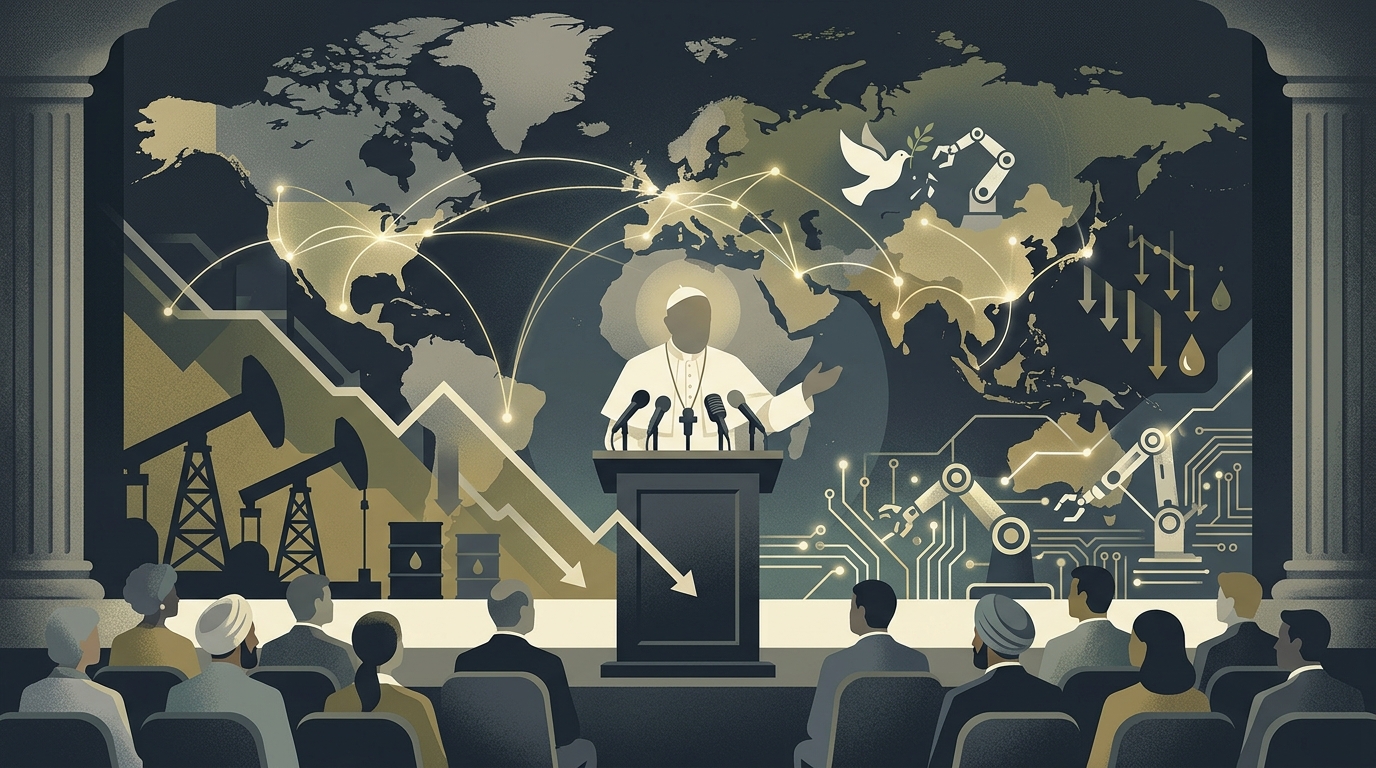
In an era where the geopolitical chessboard is shifting faster than ever, Pope Francis has made a resonant appeal that connects two seemingly disparate fields: the ethics of Artificial Intelligence and the global energy market. As oil prices record a free fall in international markets, the Pontiff used his platform to warn that humanity risks replacing its dependence on fossil fuels with an even more dangerous reliance on algorithmic weapon systems.
This intervention is no coincidence. With crude oil prices pressured by the accelerated transition to green energy and falling demand in major economies, capital appears to be migrating en masse toward defense technology and AI. The Pope, who has made "algorethics" a central pillar of his papacy, argues that AI disarmament is a moral imperative for the survival of human civilization.
The Ethics of 'Algorethics' and the Danger of Autonomous Weapons
The core of the Vatican's argument focuses on the loss of human agency. Pope Francis emphasized that the ability of a machine to decide on the life or death of a human being constitutes the ultimate denial of human dignity.
"No algorithm should have the power to end a life. Peace cannot be built upon code that lacks conscience and mercy,"he stated during a recent address.
The call for disarmament specifically targets Lethal Autonomous Weapons Systems (LAWS), often referred to as "killer robots." Unlike traditional weaponry, these systems can select and engage targets without human intervention. The Vatican's concern is that the slump in oil prices may drive states that previously relied on these resources to invest in cheaper, automated forms of warfare to maintain their strategic relevance.
The Economic Paradox: Oil vs. Data
The connection to the oil price slump is particularly analytical. For decades, oil was the primary driver of geopolitical conflicts. Today, data and computational power have taken its place. The Pope argues that the current economic volatility in the energy sector presents an opportunity for humanity to reassess its priorities. Instead of the resources saved from cheaper oil being funneled into a new digital arms race, they should be utilized to eradicate hunger and protect the environment.
- The shift of investment from fossil fuels to AI creates new centers of power.
- The lack of a regulatory framework allows private tech companies to dictate global security.
- The risk of an "algorithmic war" is now greater than that of a nuclear accident due to the ease of accessing the technology.
Analysis from StartupHub.ai highlights that defense technology startups (DefenseTech) are experiencing unprecedented growth at the same time traditional energy giants are seeing their profits shrink. This structural shift in the global economy requires, according to the Pope, a new "global treaty for AI" that ensures technology serves humanity and not the other way around.
The Geopolitical Dimension and the Stance of Major Powers
The Pontiff's appeal comes at a time when the US, China, and Russia are locked in a relentless competition for AI supremacy. While the European Union has made strides with the AI Act, military applications remain largely in a "gray area." Pope Francis calls on the G7 nations to lead the effort for a universal ban on autonomous weapons, using their influence in energy markets to enforce ethical standards.
The drop in oil prices reduces the revenue of states that traditionally invested in conventional arms, making AI an "attractive" and cost-effective alternative. This is precisely what worries the Vatican: the democratization of destruction through cheap, smart weapons that can be deployed en masse without the overhead of a traditional military force.
Conclusion: Toward a New Humanism
Concluding his intervention, Pope Francis reminded the world that technology is a product of human creativity and, as such, must be guided by human responsibility. The oil price slump is not merely an economic event, but a signal that the old model of growth is ending. The question posed by the Pontiff is whether the new model will be based on algorithmic dominance or a new, digital humanism. AI disarmament is not just a technical issue; it is an act of faith in the future of humanity.