In a region where image and symbolism often carry the weight of survival itself, a digital caricature has proven capable of causing more turmoil than a military communiqué. The recent decision by the Lebanese television station MTV to broadcast a video depicting Hezbollah’s leadership and fighters as characters from the popular game 'Angry Birds' has ignited a new cycle of confrontation in an already fragmented Lebanon. The group’s furious reaction, labeling the content 'offensive' and 'humiliating,' is not merely a protest against a joke; it is a revelation of the deep insecurity traditional powers feel toward the new weapons of digital culture.
Satire as a Tool of Demystification
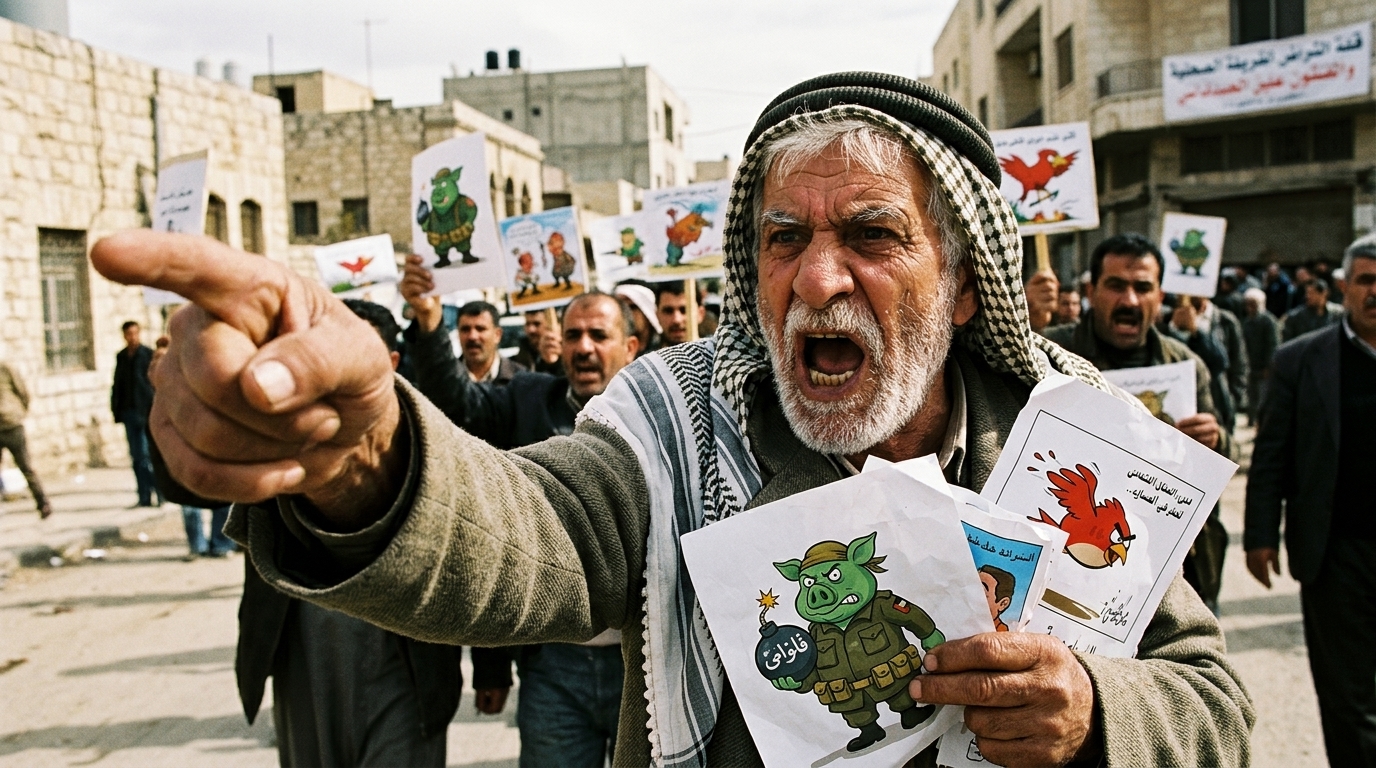
The controversial video, which spread rapidly across social media, uses the aesthetics of Angry Birds—colorful birds launched at fortified targets—to comment on Hezbollah’s tactics in recent conflicts. For many Lebanese who oppose the group’s influence, the use of satire represents a form of peaceful resistance. Transforming 'sacred' figures of the resistance into cartoonish figures strips the organization of the aura of invincibility and gravity it strives to maintain.
However, for Hezbollah’s base, the video was seen as a desecration. The organization, which has built an entire value system around 'sacrifice' and 'martyrdom,' sees in the irony of Angry Birds an attempt to devalue the blood of its fallen. Their reaction was immediate, with statements citing 'psychological warfare serving foreign interests,' demonstrating that in Lebanon, the line between humor and treason is exceptionally thin.
The Role of Media in a Divided Lebanon
MTV Lebanon is not a random player. Historically, it has been the bastion of Christian and liberal voices that fiercely criticize the presence of Hezbollah’s weapons outside state control. The choice of this specific format for satire indicates a shift toward more modern, 'Western-style' communication methods aimed at a youth demographic that is tired of traditional political rhetoric.
- Satire is used to break the fear imposed by armed groups.
- Social media acts as a power multiplier for content that would previously have been censored.
- Hezbollah reacts not just to the content, but to the technological superiority of digital storytelling.
This conflict highlights the paradox of Lebanon: a country with a rich tradition of press freedom that remains under the constant shadow of religious and military dogmatism. When guns fall silent, images take their place, and in this case, a simple animation proved more disruptive than a political speech.
The Digital Age and New 'Red Lines'
As we move through 2026, AI technology and advanced digital graphics make the creation of such content easier than ever. What once required an entire production studio can now be done by a single creator with access to AI tools. This 'democratization' of propaganda and resistance creates a nightmare for organizations that rely on total control over their image.
"The power of the image in the information age is such that a video game character can shake the credibility of an entire army," says a media analyst in Beirut.
Hezbollah, despite having its own sophisticated communication apparatus (Al-Manar), seems to struggle to respond in kind. Its response remains traditional: condemnation, threats of legal action, and mobilizing followers in the streets. This disproportion between the light-hearted digital attack and the heavy, institutional response underscores the generational and mental gap plaguing the region.
Conclusion
The Angry Birds incident in Lebanon is not an isolated case of 'bad taste.' It is a symptom of a global trend where political conflict is moved into the realm of pop culture. For Hezbollah, the offense is deep because it touches their identity. For the creators, it is a victory of creativity over dogmatism. Ultimately, Lebanon remains a laboratory for how technology can be used both to divide and to challenge the establishment, leaving freedom of speech to balance on a tightrope.