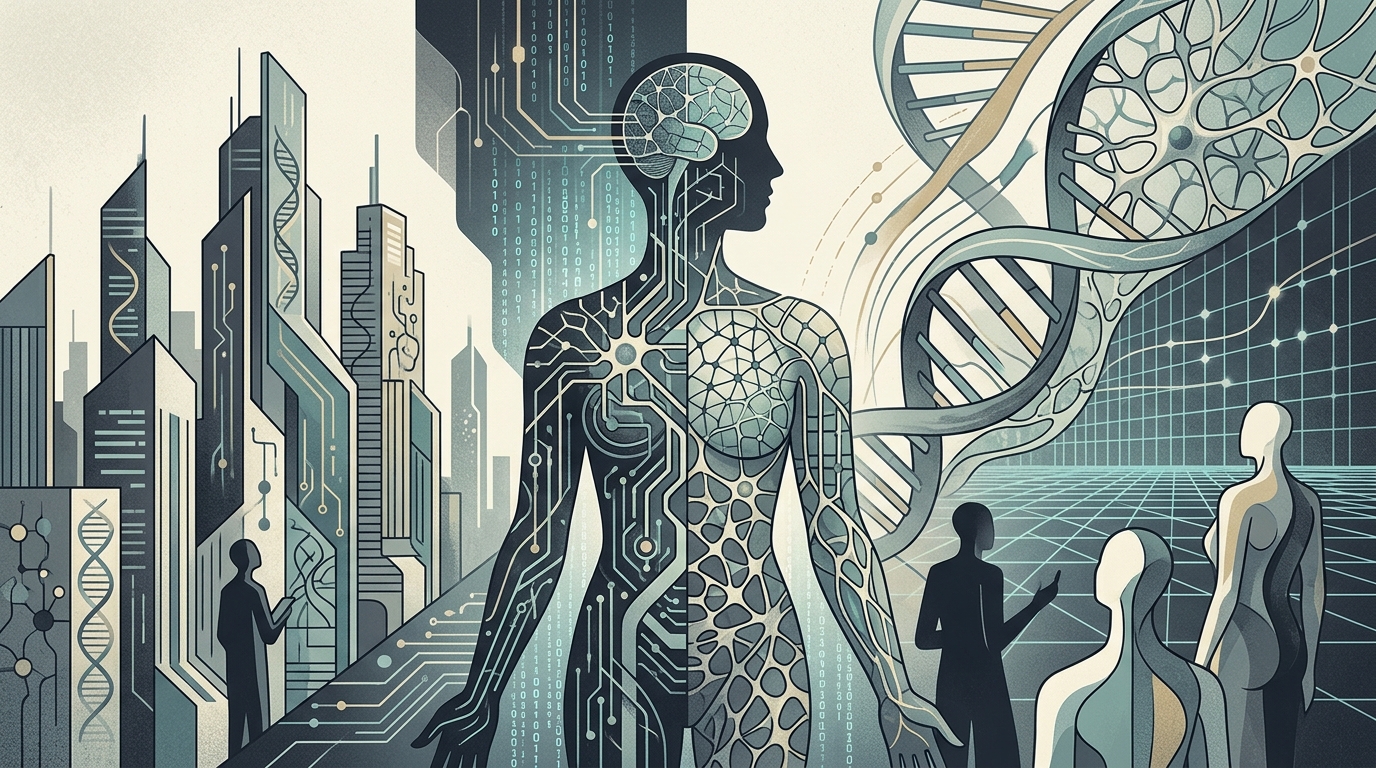
In the wake of the digital revolution that transformed global communication, Mark Zuckerberg and his wife, Priscilla Chan, are now turning their focus to the most complex operating system the world has ever known: the human cell. Through the Chan Zuckerberg Initiative (CZI), the couple is investing billions of dollars into building one of the world's largest AI computing clusters dedicated solely to biological research. The goal is nothing less than the complete simulation of human biology at the cellular level, an endeavor that promises to unlock the secrets of disease, aging, and human potential.
The Birth of the 'Virtual Cell'
The concept of a 'Virtual Cell' represents the Holy Grail of computational biology. Traditionally, biological research has relied on 'wet lab' experiments, where scientists observe reactions in physical samples. However, the sheer complexity of a cell, with its trillions of molecular interactions, makes complete understanding nearly impossible using traditional methods. CZI intends to leverage Generative AI to create models that can predict how an immune cell responds to an infection or how a cancer cell reacts to a new drug candidate.
To achieve this, the initiative is deploying a massive computing infrastructure equipped with thousands of Nvidia H100 GPUs, similar to the hardware Meta uses to train its Llama models. The difference lies in the data: instead of scraping the internet for text, these models are trained on vast datasets of genomics, proteomics, and cellular imaging. This marks a transition from Large Language Models (LLMs) to Large Biological Models (LBMs), shifting the focus from syntax to synthesis.
The Convergence of Tech and Life Sciences
Zuckerberg’s move is not merely a philanthropic gesture; it is a strategic positioning in the burgeoning era of 'digital biology.' As AI becomes more adept at pattern recognition, its ability to 'read' the code of life—DNA and RNA—is beginning to surpass human intuition. The CZI Biohub in San Francisco and collaborations with institutions like Stanford and Berkeley are creating an ecosystem where software engineers work side-by-side with molecular biologists.
- Disease Prediction: The ability to simulate mutations before they manifest in the real world.
- Personalized Medicine: Creating 'digital twins' of patients to test treatments without risk.
- Drug Discovery Acceleration: Reducing the time to develop new therapeutics from decades to months.
However, the challenge remains monumental. Cells are not static systems; they are dynamic, noisy, and influenced by their environment in ways we still don't fully comprehend. Simulating a single cell requires computational power that was unthinkable until very recently. Zuckerberg is betting that the 'scaling laws' which proved successful in AI—where more data and more compute lead to emergent intelligence—will also apply to the biological realm.
Ethical Dilemmas and the Ownership of Life
Despite the optimistic outlook, this venture raises significant questions. Who will own the models that describe the fundamental mechanics of human life? While CZI maintains that its findings will be open-sourced for the scientific community, the concentration of such immense computing power and data in private hands is a cause for concern. Furthermore, the ability to simulate biology brings us closer to a reality where genetic modification can be executed with such precision that it could lead to 'designer' humans or other ethically fraught scenarios.
"If we can understand how cells work at this level of detail, we can start to fix things when they go wrong," Zuckerberg stated in a recent interview.
Ultimately, Zuckerberg’s quest to simulate life serves as a reminder that Silicon Valley is no longer content with controlling our digital data. It seeks to understand, and potentially reprogram, the very essence of our biological existence. Whether this represents the ultimate act of philanthropy or the ultimate hubris, the results of this research will likely define the trajectory of 21st-century medicine.