The advent of Generative AI is no longer a distant theoretical threat; it is a present economic reality that is aggressively reshaping the global employment landscape. While previous technological revolutions focused on automating manual labor, today’s digital transition strikes at the very heart of cognitive work. Recent studies from the European Central Bank, the OECD, and leading American institutions highlight a paradox: the age group once considered the most "secure"—experienced mid-career professionals—is now at the center of the storm.
The Age Paradox: Why the 35-50 Group is Most Exposed
Traditionally, mid-career workers held positions requiring experience, critical thinking, and the synthesis of complex information. However, these are precisely the domains where Large Language Models (LLMs) excel. According to US market data, workers aged 35 to 50 hold the highest percentage of "high exposure" AI roles. These are middle managers, analysts, paralegals, and software developers whose tasks can now be executed in fractions of a second by an algorithm.
In Europe, the situation presents interesting nuances. While labor protections are stronger due to unions and regulation, the relentless drive for productivity is pushing companies to replace "expensive" experienced staff with younger, "AI-native" workers who cost less. The result is a gradual hollowing out of the skills-based middle class, creating a gap in corporate hierarchies that is increasingly difficult to bridge.
The Junior Trap: The Disappearance of Entry-Level Roles
If the middle-aged face the risk of replacement, the youth face the risk of exclusion. In many industries, "junior" positions served as the first rung of the ladder for learning the trade. Today, tasks like drafting basic reports, debugging code, or basic graphic design are performed by AI. This creates a structural problem: if young people cannot find these entry-level roles, how will they acquire the experience necessary to become the leaders of tomorrow?
- Automation of 70% of routine office tasks by 2030.
- Increased demand for "soft skills" such as empathy and ethical judgment.
- A necessity for comprehensive reskilling every 3-5 years.
The Regional Divide: EU Regulation vs. US Innovation
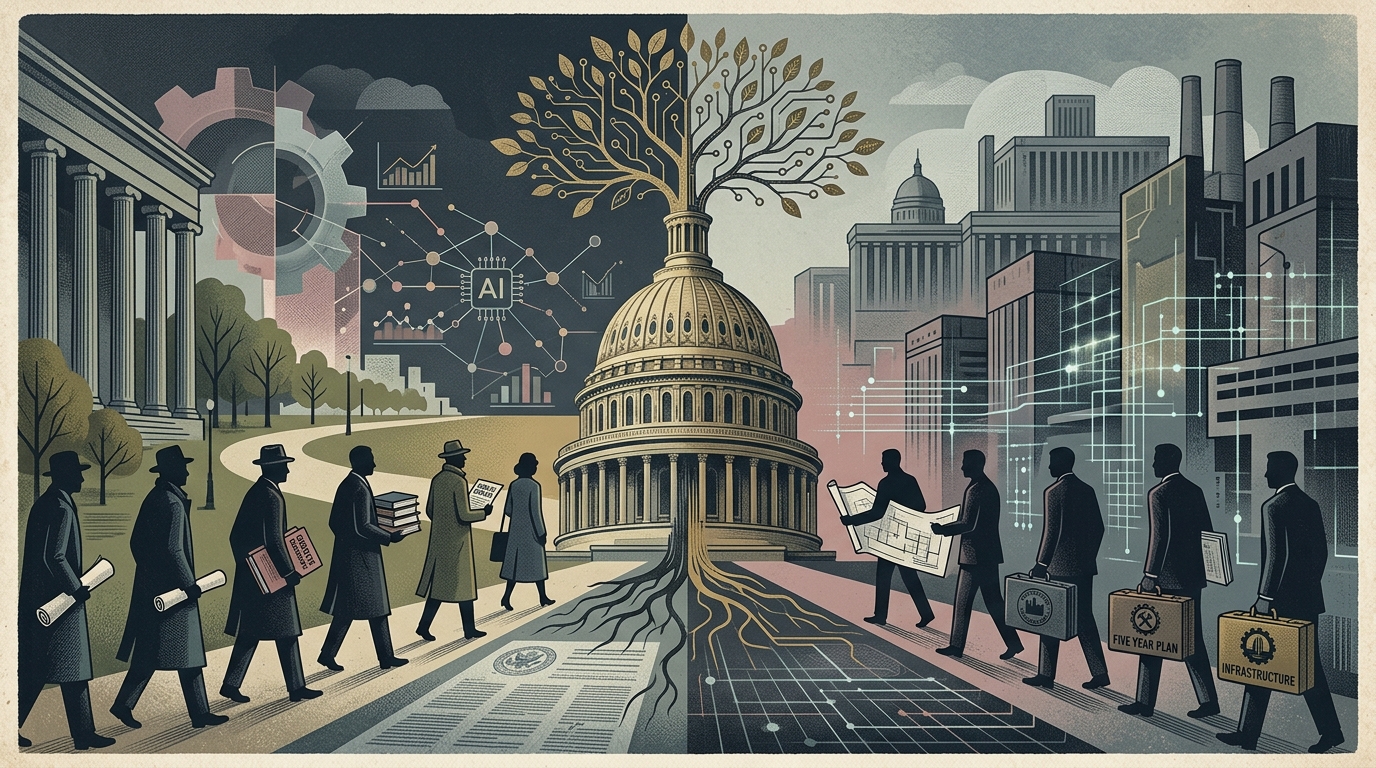
The response to this crisis differs significantly across the Atlantic. The United States continues to prioritize rapid adoption and efficiency, often at the cost of job security. Conversely, the European Union, through the AI Act and social welfare models, is attempting to create a "human-centric" framework. However, critics argue that Europe's regulatory caution might lead to a competitive disadvantage, further impacting the employment rates of its aging population.
"AI will not replace humans, but humans using AI will replace those who do not," notes the latest OECD report on the future of work.
In this context, the "silver economy" faces a daunting challenge. Workers over 50 are often the most resistant to changing their workflow, yet they possess the institutional knowledge that AI lacks. The key to future labor stability lies in merging this veteran wisdom with AI-driven efficiency, rather than choosing one over the other.
Conclusion: Reskilling as the New Social Contract
The struggle for labor in the AI era is not a battle of man vs. machine, but a test of adaptability. Governments in Europe and the US are being called upon to redesign education systems and social safety nets. The concept of "lifelong learning" must transform from a hollow slogan into a subsidized, accessible reality for all ages. The generational rift can only be closed if technology is used to unlock human creativity rather than render it obsolete.