As we navigate the first half of 2026, the discourse surrounding Artificial Intelligence has shifted from the novelty of early chatbots to an existential inquiry into what comes next. Sam Altman, the visionary who altered the course of technological history with ChatGPT, has returned with a prediction that is as awe-inspiring as it is daunting: 2029 is not merely a year on the calendar, but the tipping point where Artificial General Intelligence (AGI) ceases to be a sci-fi trope and becomes our new reality.
The Shift from Tools to Autonomous Agents
The core of Altman’s vision lies in the evolution of AI from a passive tool into an active "agent." To date, we have used AI to draft emails or generate images. By 2029, AI is expected to perform complex tasks with near-total autonomy. Imagine a system that doesn't just suggest a travel itinerary but books the flights, negotiates prices, manages cancellations, and organizes your entire professional schedule while you sleep.
This autonomy requires a fundamental shift in model architecture. The transition from GPT-4 and GPT-5 toward systems possessing true "reasoning" capabilities is already well underway. The 2029 prediction suggests that AI will be capable of solving previously intractable mathematical problems and synthesizing new scientific theories, moving far beyond the mere mimicry of human syntax.
The Economy of Abundance and the End of Work
Perhaps the most shocking aspect of Altman’s forecast concerns the global economy. If AI can perform any cognitive task better than a human, the marginal cost of intelligence trends toward zero. This could usher in an "economy of abundance," where goods and services become incredibly inexpensive. However, it simultaneously poses a painful question: What is the role of the human being in a world where their labor is no longer a necessity?
- A collapse in production costs through end-to-end automation.
- The urgent necessity for a Universal Basic Income (UBI) funded by taxing AI compute.
- The rise of "human touch" and emotional labor as the ultimate luxury commodities.
"This is not just another technological revolution. It is the first time we are creating something that may surpass us in the very thing that defines us: our ability to think," industry analysts observe.
The Infrastructure Hurdle and the Energy Crisis
To reach the 2029 milestone envisioned by Altman, a massive physical obstacle remains: energy. Training and operating AGI models require quantities of electricity that today’s infrastructure simply cannot provide. Investments by Microsoft and OpenAI into nuclear fusion and Small Modular Reactors (SMRs) indicate that the road to AGI is paved with a total reinvention of the global energy grid.
Furthermore, the geopolitical race for advanced semiconductors will only intensify. The nation or corporation that achieves AGI first will gain a strategic advantage often compared to the Manhattan Project—but with the difference that this power has the potential to build and optimize rather than just destroy.
Conclusion: Toward a New Humanity?
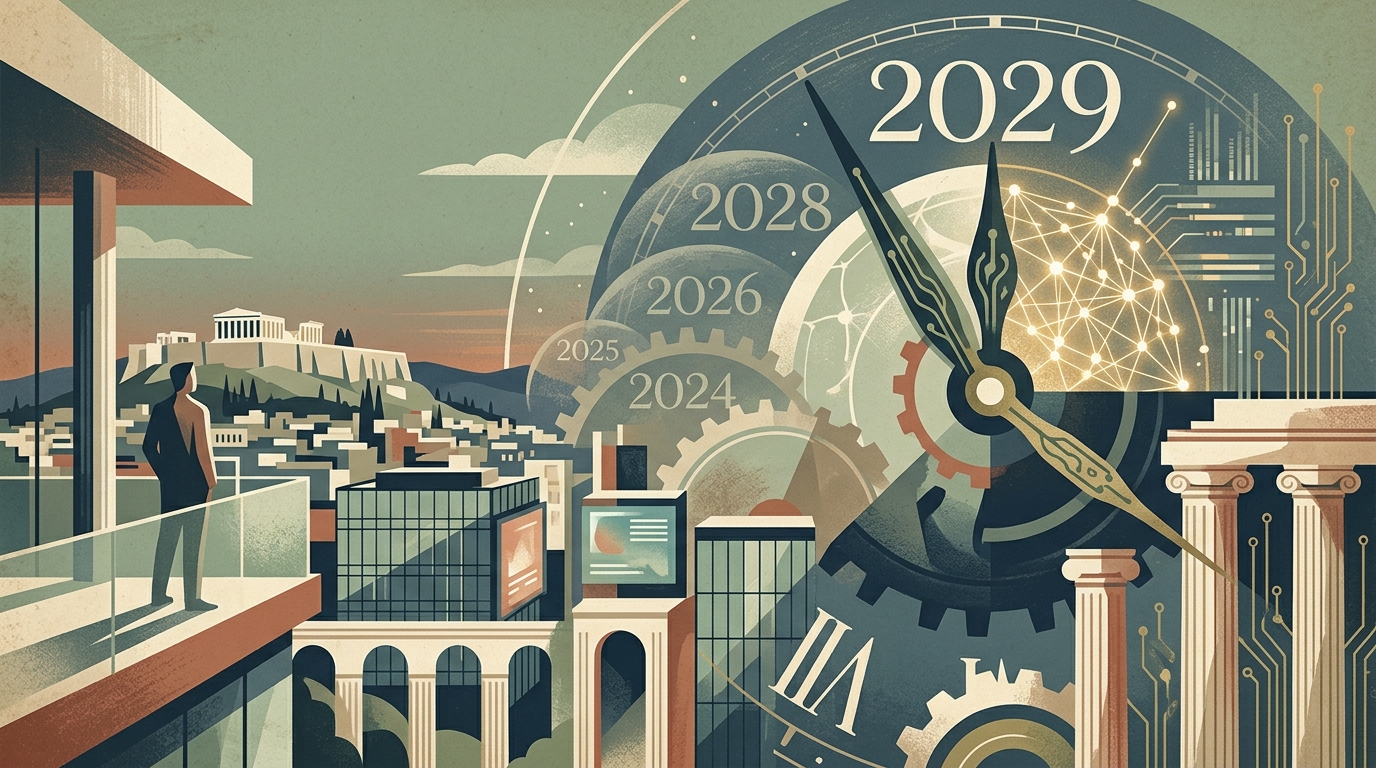
The year 2029 is now only three years away. If these predictions hold true, we are living through the final chapters of the "pre-AGI" era. The challenge ahead will not be purely technical; it will be moral and societal. Can we integrate a superior intelligence into our civilization without losing the essence of human agency? Sam Altman believes we can, provided we begin preparing now for the shock of the future.