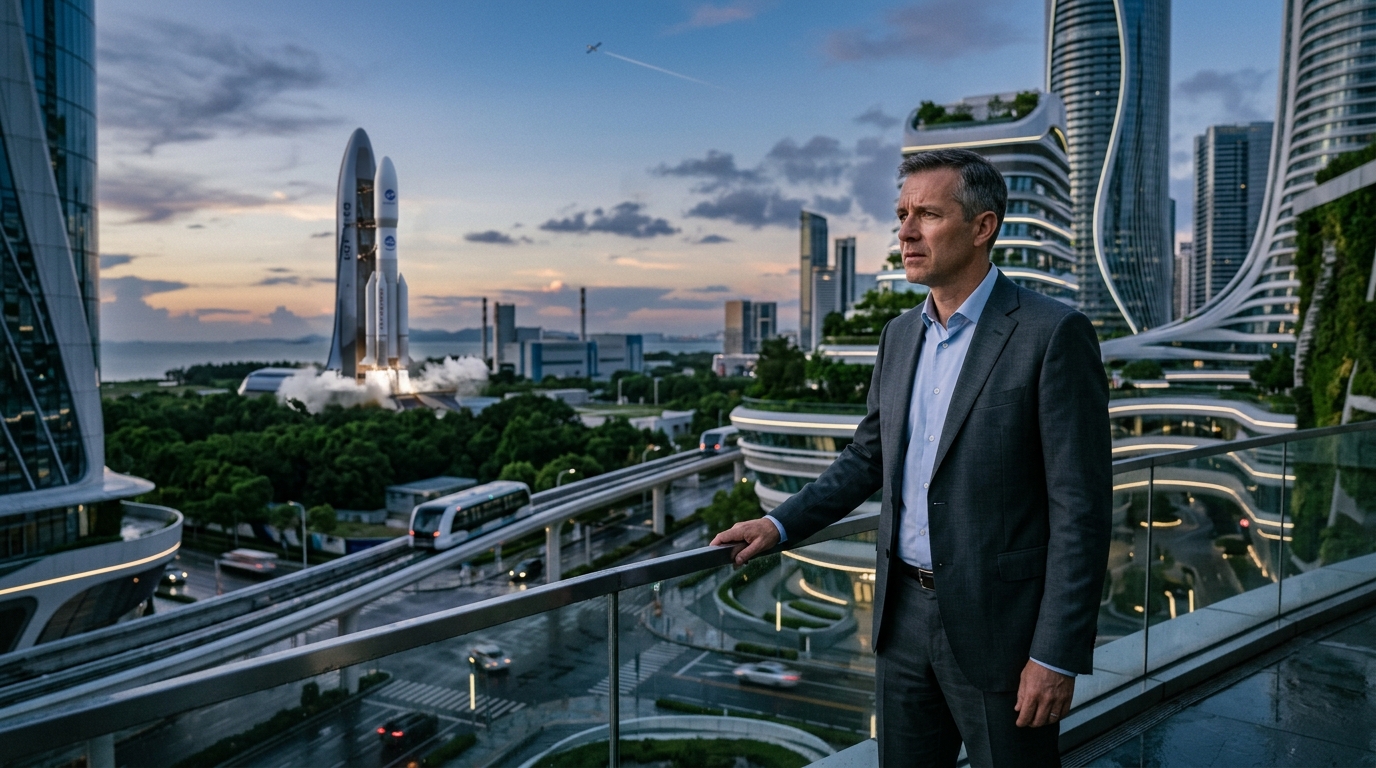
In Elon Musk’s perpetual quest to conquer the next technological frontier, SpaceX appears to be looking beyond merely providing satellite internet. The new ambition involves deploying artificial intelligence data centers directly into orbit around the Earth. However, a recent briefing to investors, brought to light by Decrypt, sounds a clear alarm: this massive investment may never yield the expected returns.
The Vision of Computing in the Vacuum
The idea of moving computing power into space is not entirely novel, but SpaceX is taking it to an unprecedented scale. The rationale is built on three pillars: cooling, energy, and geopolitics. On Earth, AI data centers consume staggering amounts of water and electricity to stay cool, sparking environmental backlash. In space, the absolute cold of the vacuum (theoretically) and the abundance of solar energy offer a tempting alternative. Furthermore, data residing in orbit could potentially bypass national regulations and the red tape associated with terrestrial facilities.
However, SpaceX is now publicly acknowledging that theory is vastly different from practice. Launching heavy hardware, such as Nvidia’s high-end GPUs, into orbit is an expensive endeavor, even with the reusable technology of Falcon 9 and the upcoming Starship. The company warns that the sheer cost of launch and maintenance might make the service prohibitively expensive for most clients, perhaps excluding only the wealthiest governments or military organizations.
Technical Hurdles: Radiation and Latency
One of the most significant barriers is cosmic radiation. AI chips are incredibly sensitive, and exposure to high-energy particles outside the atmosphere can cause permanent hardware damage or frequent calculation errors known as 'bit flips.' Shielding these systems adds significant weight, which in turn drives up launch costs. SpaceX admits that the operational lifespan of these 'orbital servers' will be substantially shorter than their terrestrial counterparts, necessitating a cycle of continuous and costly replacement.
Then there is the issue of latency. While Starlink has proven it can provide high-speed internet, processing AI workloads requires immense bandwidth. Sending massive datasets from Earth to space for processing and waiting for the results to return can create delays that make the AI useless for real-time applications, such as autonomous driving or high-frequency financial trading.
Economic Reality and Investor Sentiment
SpaceX’s warning arrives at a time when the AI market is undergoing a 'correction of expectations.' While Musk often promises the future today, institutional investors are becoming increasingly cautious with their capital. SpaceX, despite being one of the world's most valuable private companies, must prove that Starlink and its spin-offs can generate consistent cash flows rather than just burning through them.
- The cost per FLOP (floating-point operation) in space is currently many times higher than on the ground.
- The lack of on-site repair capabilities means any hardware failure results in a total loss of the asset.
- The growing density of space debris poses an existential threat to any permanent infrastructure in Low Earth Orbit (LEO).
In conclusion, SpaceX’s move to caution investors is a necessary dose of realism in a world saturated with hype. While the concept of a 'space brain' is exhilarating, the economic and physical realities may force Musk to keep his AI efforts, at least for now, firmly grounded. The battle for AI supremacy will be fought first in terrestrial data centers; space will remain the 'final frontier' only when the laws of physics and economics finally align.