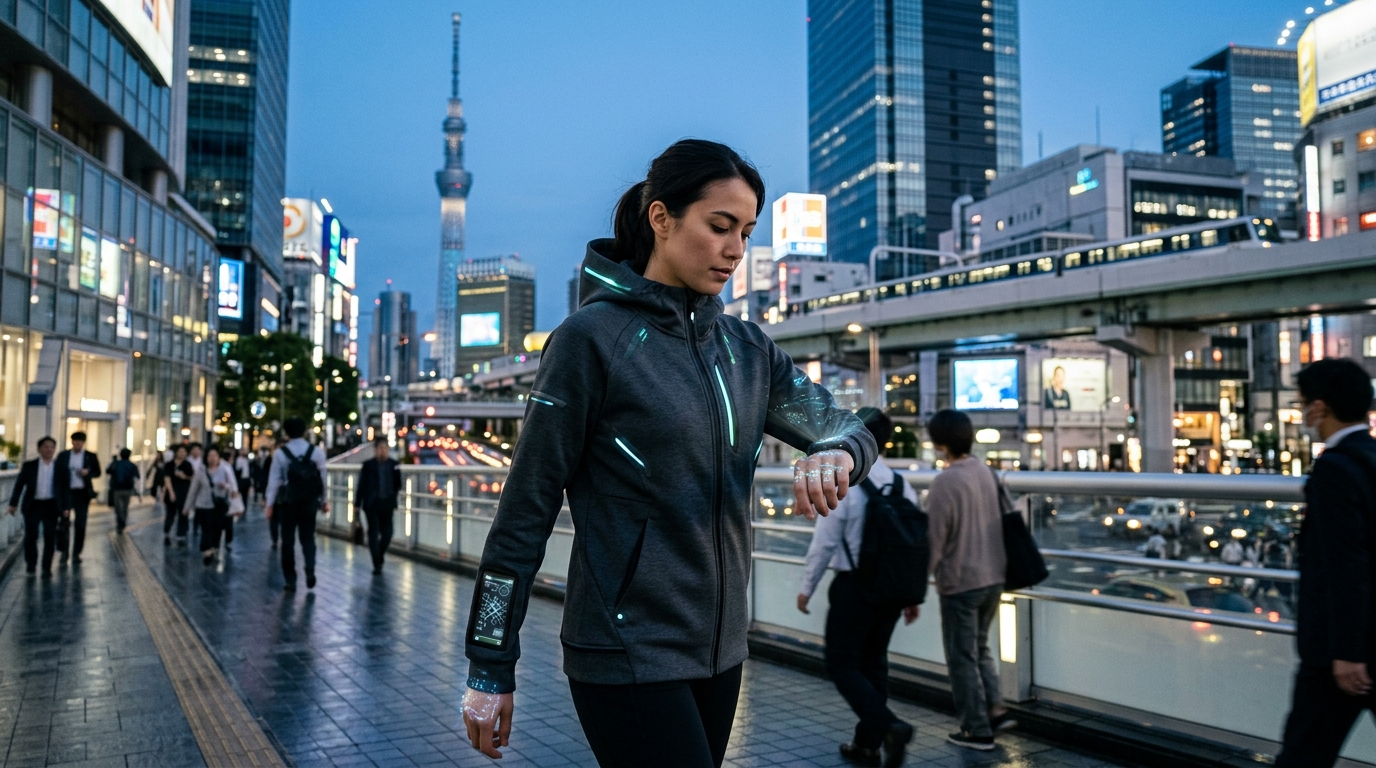
As we navigate the second quarter of 2026, the convergence of fashion and artificial intelligence has transcended experimental prototypes, entering the era of mass adoption. The "AI Hoodie," a concept that once sounded like science fiction, is now the center of a new industry combining personal mobility, health, and digital interaction. Recent analysis from The Detroit Bureau highlights that clothing is no longer just a matter of style, but an extension of our digital selves.
The Sensory Intelligence Revolution
The first and most significant factor driving this trend is the integration of Edge AI. Unlike older devices that required a constant cloud connection, 2026's AI hoodies feature low-power neural processing units woven directly into the fibers. This allows for real-time data processing without latency. For example, biometric sensors can detect the onset of a panic attack or cardiac arrhythmia and adjust the fabric's temperature or send an emergency alert instantly.
Furthermore, smart textile technology has matured. Utilizing piezoelectric materials, these garments can generate energy from body movement, powering their own sensors. The hoodie's ability to "feel" the environment—from pollution levels to UV radiation—makes it an essential tool for the modern urbanite. AI-driven personalization allows the garment to learn the user's habits, adjusting insulation based on walking pace or external conditions.
Safety and Mobility: The Detroit Connection
It is no coincidence that the automotive industry is showing intense interest in AI hoodies. Pedestrian safety is a critical issue in modern smart cities. The AI hoodies of 2026 function as V2P (Vehicle-to-Pedestrian) hubs. Through short-range communication protocols, the hoodie "talks" to approaching autonomous vehicles, warning both the driver (or the car's system) and the pedestrian of a potential collision via haptic feedback in the sleeves.
- Integrated low-resolution LiDAR systems for obstacle detection for the visually impaired.
- Electronically activated reflective materials that adjust based on ambient light.
- Automatic emergency call systems in case of a fall or accident.
This integration into the mobility ecosystem transforms the hoodie from a simple garment into a personal protection device. Detroit-based companies are already experimenting with selling these garments as safety accessories for new vehicle buyers, creating a new market that bridges the gap between apparel and transportation.
Ethics, Privacy, and the Future of Fashion
However, the rise of AI hoodies brings serious questions about privacy to the forefront. When your clothing constantly records your location, heart rate, and movements, who has access to that data? Manufacturers promise end-to-end encryption, but the possibility of "hacking" a hoodie is no longer a joke. The industry is responding by developing "Privacy Modes" that deactivate sensors in sensitive areas or use AI to blur the user's biometric footprint on public networks.
In conclusion, the 2026 AI Hoodie represents the ultimate expression of "wear and forget" technology. It is no longer a screen we look at, but an environment we inhabit. As these 15 factors—from health to road safety—converge, the hoodie becomes the symbol of a new era where artificial intelligence is as invisible and essential as the seams in our clothes. The challenge for the future will be maintaining our human autonomy within a garment that knows everything about us, perhaps even before we do.