In an era where the lines between physical and digital reality are becoming increasingly blurred, the Vatican is intervening decisively. Far from being an anachronistic institution fearing progress, it is acting as a moral guardian seeking to place a "brake" on the irrational expansion of Artificial Intelligence (AI). The Holy See, under the guidance of Pope Francis, has developed a comprehensive strategy focused on "reality control," warning that the loss of human oversight over algorithms threatens the very core of social cohesion and truth.
The Emergence of 'Algor-ethics'
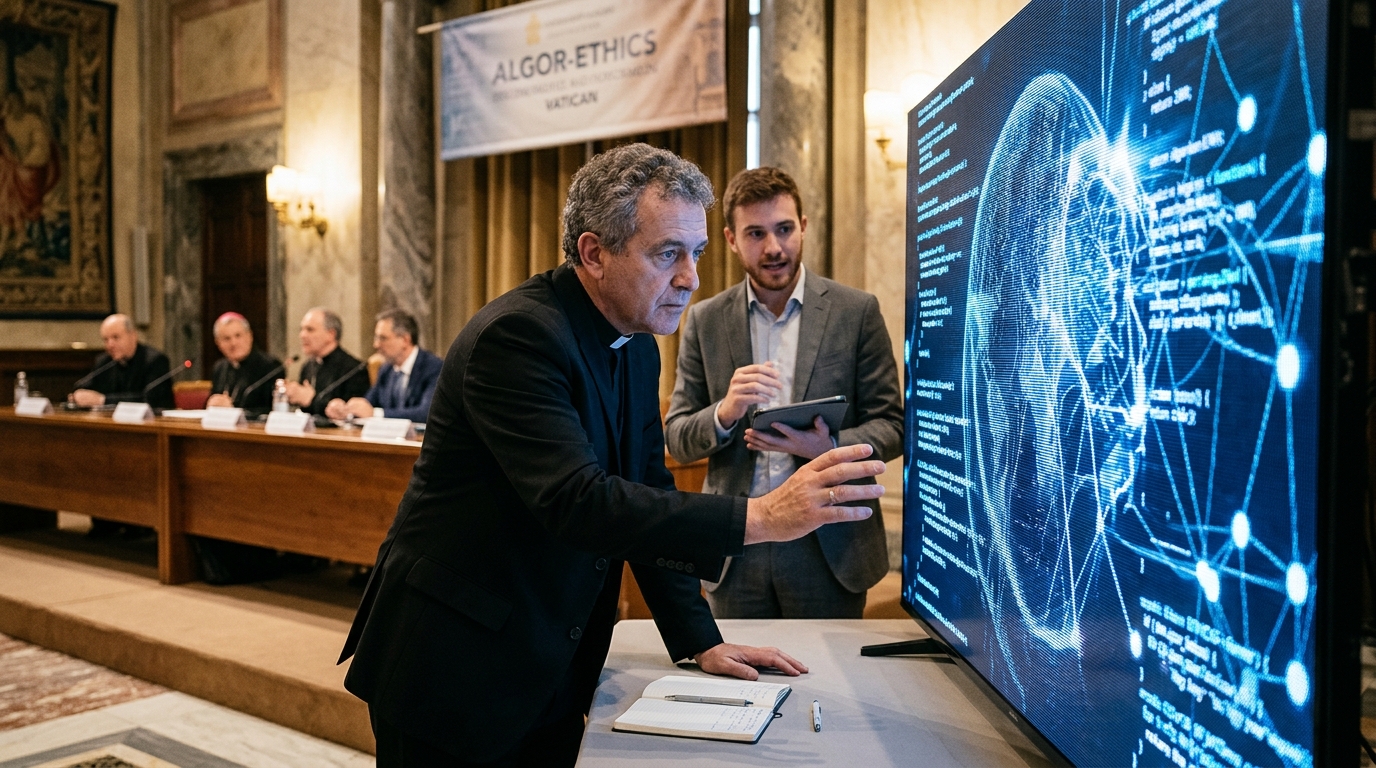
The term "Algor-ethics," introduced by the Vatican through the Pontifical Academy for Life, is the cornerstone of its strategy. This is not merely a theoretical approach but a call to tech companies and governments to integrate ethical principles directly into the code of AI systems. According to the Vatican, technology is not neutral; it carries the values and biases of its creators. Therefore, the need for "ethics by design" is imperative.
This strategy focuses on six core principles: transparency, inclusion, accountability, impartiality, reliability, and security. The Vatican argues that if AI is left solely to the laws of the market and profit, the result will be further marginalization of vulnerable social groups and the creation of a "dictatorship of algorithms" that decides human fates without any possibility of appeal or human understanding.
The Battle for Truth and Reality Control
One of the greatest concerns expressed by the Holy See in 2026 is the erosion of the concept of reality. With the explosive rise of deepfakes and Generative AI, the ability to distinguish between truth and falsehood is becoming nearly impossible for the average citizen. The Vatican describes this situation as a "cognitive crisis," where information is transformed into a tool for mass manipulation.
"Technology must serve the human person, and not the human person technology. When virtual reality begins to replace human contact and objective truth, then we are heading toward a spiritual and social disorientation," a recent Holy See statement reads.
The strategy for "reality control" includes the demand for clear labeling of all AI-generated content, as well as the creation of international regulatory frameworks that hold companies accountable for the hallucinations and fake news spread by their models. The Vatican is not calling for a ban on AI but for the imposition of "digital borders" that protect human dignity.
The 'Rome Call' and Global Alliances
The Vatican has achieved something few political organizations have: bringing Silicon Valley giants to the same table. The "Rome Call for AI Ethics," which began in 2020, has now been signed by behemoths such as Microsoft, IBM, and Cisco, as well as representatives of the three major Abrahamic religions. This interfaith and multidisciplinary alliance serves as a strong bulwark against unchecked technological dominance.
In 2026, this effort is expanding by pressuring the UN to create a global AI oversight body, similar to the International Atomic Energy Agency (IAEA). The logic is simple: AI, like nuclear energy, has the power to benefit humanity but also to destroy it if there is no international consensus and control.
- Protection of human rights in the digital space.
- Ensuring that algorithms do not reinforce social inequalities.
- Promoting media literacy to combat disinformation.
- Requirement for "human-in-the-loop" in critical decisions.
Conclusion: A Moral Compass for the Future
The Vatican's intervention in the AI issue highlights the need for a moral compass in a world changing at breakneck speed. The "brake" strategy is not about halting progress but about ensuring that this progress is human-centric. In a world where machines can "think," the Vatican reminds us that only humans can feel, judge ethically, and seek the meaning of existence. The success of "Algor-ethics" will be judged by whether the creators of technology choose to listen to this ancient voice of reason amidst the noise of processors.