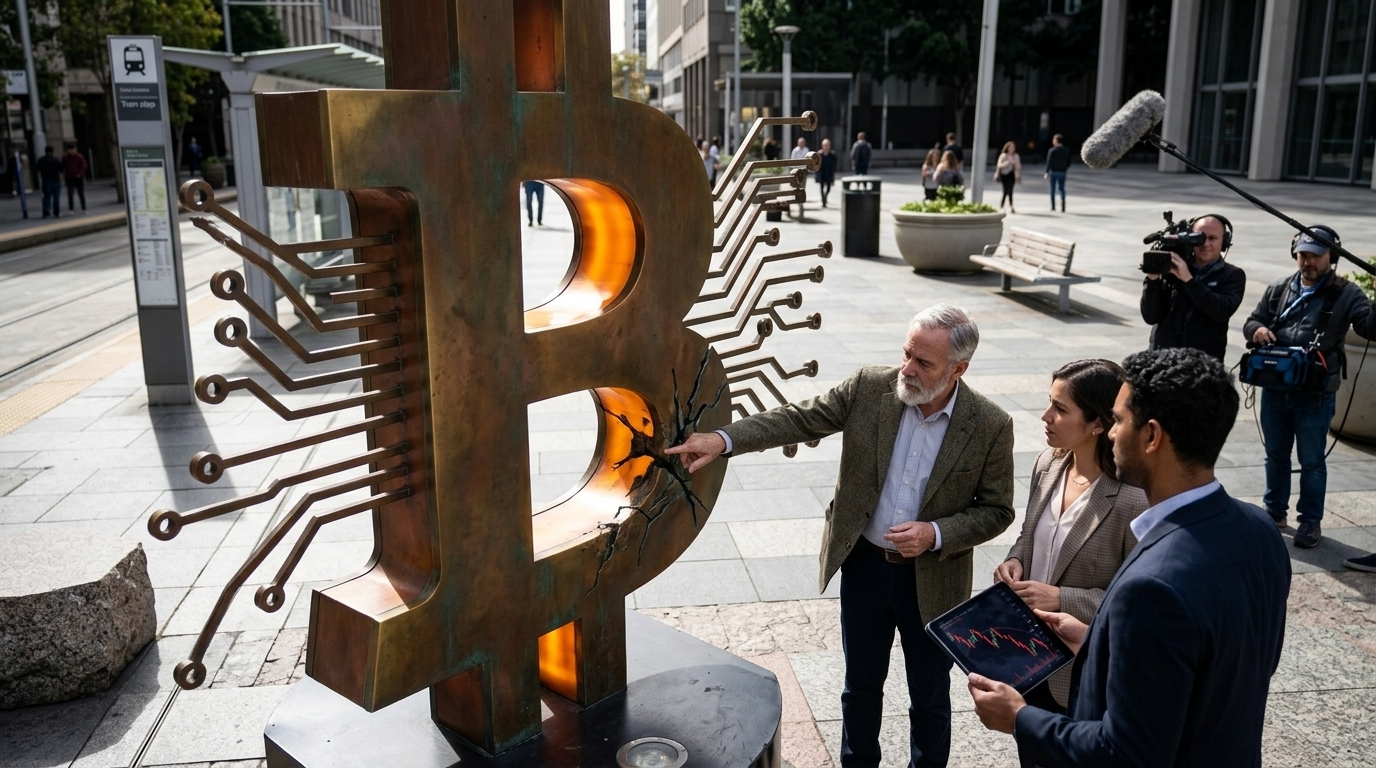
In the traditional world of law enforcement, a police blotter is a daily record of arrests and occurrences—a mirror reflecting social disorder. Today, in June 2026, the need for a similar record in the digital realm is no longer a theoretical exercise in ethics; it is a necessity for societal survival. Artificial Intelligence (AI), despite its promises of utopian efficiency, is increasingly being "caught" committing errors that range from the comical to the catastrophic.
The question posed by Bob Sullivan and the broader tech ethics community is simple: How can we trust systems that are not held accountable for their mistakes? The answer lies in initiatives like the AI Incident Database (AIID), a collaborative project that serves as the global "black box" for the algorithmic age. In this digital archive, every AI misstep—from facial recognition errors leading to wrongful arrests to financial flash crashes triggered by trading bots—is meticulously documented.
Learning from Failure: The Aviation Model for AI
The concept of an AI police blotter is deeply rooted in the safety culture of the aviation industry. When a plane crashes, an independent body investigates, the data is recorded, and the entire industry learns from the failure to ensure it never happens again. For too long, the software industry has operated under the mantra of "move fast and break things," often ignoring the human wreckage left in the wake of "broken" algorithms.
An AI incident database fulfills three critical functions:
- Institutional Memory: It prevents tech companies from burying their failures under the rug of new software updates or marketing hype.
- Proactive Prevention: It allows engineers and researchers to study failure patterns, helping them design more resilient and ethical systems.
- Regulatory Evidence: It provides the necessary empirical data for regulators, such as those enforcing the EU AI Act, to impose meaningful sanctions and standards.
"We cannot fix what we do not measure. Recording algorithmic failures is the first act of resistance against unchecked technological power," notes a prominent AI safety researcher.
The Taxonomy of Harm: Beyond Simple Glitches
Analyzing the "blotter" entries from the past year reveals a disturbing trend. AI failures are no longer confined to harmless chatbot hallucinations. We have documented cases where Generative AI produced fraudulent legal citations used in high-stakes litigation, leading to the disbarment of attorneys. We have seen credit-scoring algorithms systematically deny loans to marginalized communities without any clear justification, perpetuating systemic inequality under the guise of mathematical objectivity.
The problem is exacerbated by the integration of AI into critical infrastructure. In 2026, as AI manages power grids and urban traffic flows, a "bug" is not just a nuisance—it is a public safety hazard. The police blotter serves as an early warning system. If a Large Language Model (LLM) begins to exhibit unpredictable behavior in a low-stakes customer service environment, it serves as a red flag for the potential risks of deploying that same architecture in medical diagnostics or autonomous defense systems.
Corporate Accountability vs. Algorithmic Autonomy
Resistance to this level of transparency naturally comes from Big Tech. For Silicon Valley, every entry in the AI police blotter is a stain on their brand equity and a potential catalyst for a stock price dip. However, civil society and independent auditors are increasingly vocal: safety must take precedence over quarterly earnings. The establishment of independent observatories, free from the financial influence of the companies they monitor, is the next great frontier in tech governance.
In the United States and Europe, this debate is reaching a fever pitch. With the full implementation of the EU AI Act and similar frameworks in other jurisdictions, companies are now legally mandated to report "serious incidents." The police blotter is evolving from a grassroots volunteer effort into a formal state function. Transparency is no longer an optional feature; it is the law. As we move forward, our ability to effectively police the algorithms will determine whether AI remains a beneficial tool or becomes an unaccountable force of disruption.