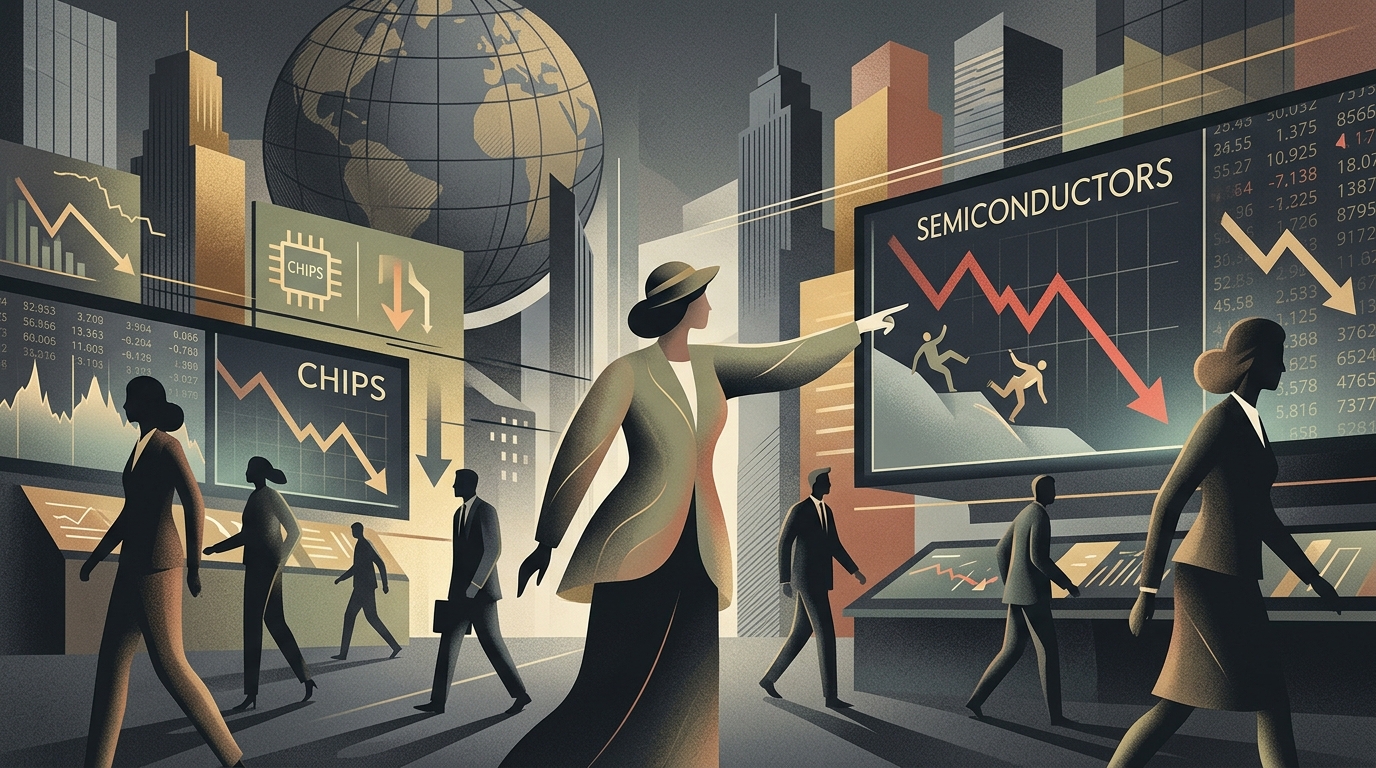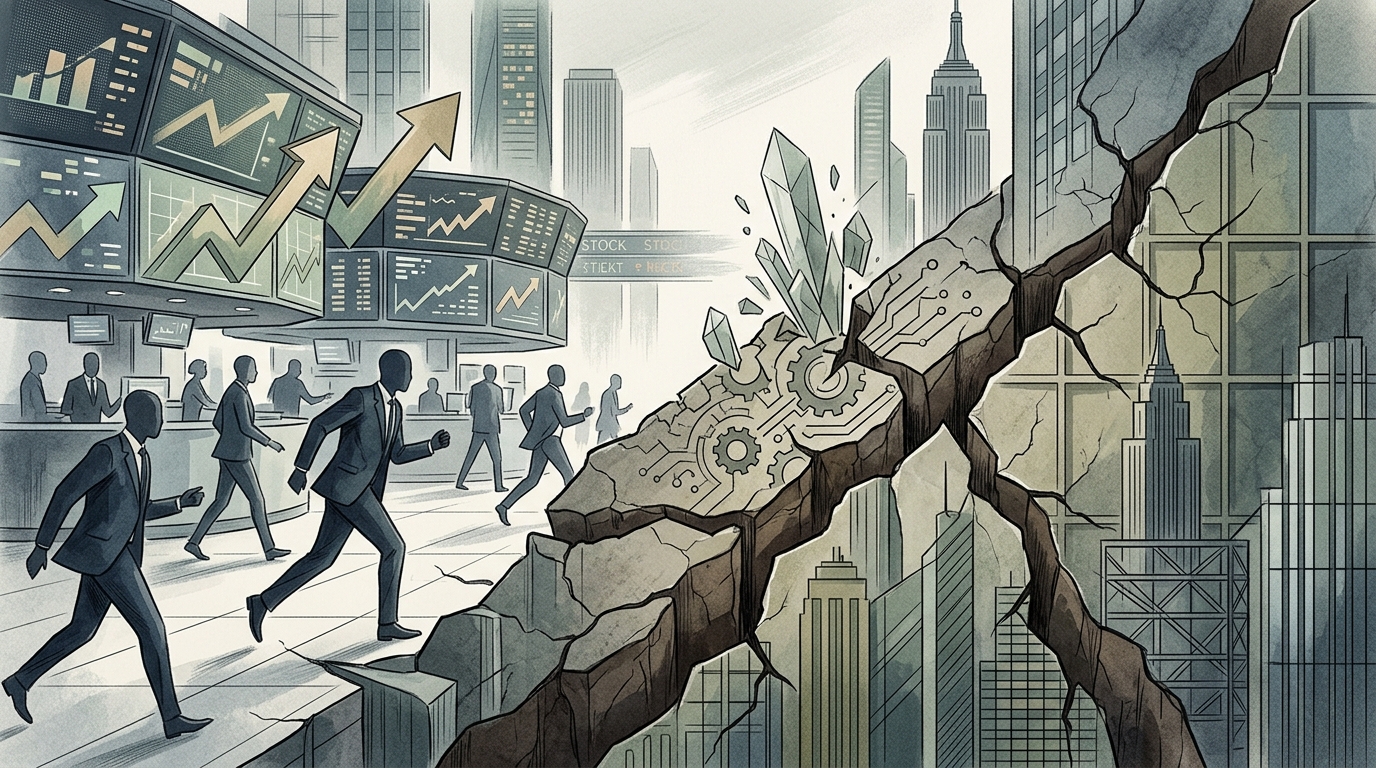
As we navigate through the first half of 2026, the global economy stands at a critical juncture where Artificial Intelligence (AI) serves as both the primary engine of growth and the leading source of analytical concern. Ruchir Sharma, Chairman of Rockefeller International and founder of Breakout Capital, has issued a stark warning through Bloomberg and his Financial Times op-ed. Despite the staggering profits of tech giants, the US market is exhibiting 'fault lines' that can no longer be ignored by the prudent investor.
The Illusion of Universal Growth
Sharma’s central thesis posits that the current AI-driven euphoria has created a dangerous concentration of power and capital. While the S&P 500 continues to touch new heights, this ascent is fueled by an exceptionally small cohort of companies—the evolution of the 'Magnificent Seven.' This phenomenon has birthed a two-tier market: on one side, the AI pioneers enjoying unprecedented wealth; on the other, the 'real economy' struggling with high borrowing costs and cooling consumer demand.
Sharma points out that history is repeating itself with a new mask. Much like the dot-com bubble of the early 2000s, the promise of a technological revolution is driving hyperbolic valuations. However, the distinction today is that the current market leaders possess massive actual earnings and cash reserves, making the situation more complex than a mere speculative bubble. The problem isn't a lack of value, but a profound lack of market breadth.
Fault Lines Beneath the Optimism
According to Sharma’s analysis, the fault lines in the US market are visible in three key areas: sovereign debt, consumer resilience, and the decoupling of stock indices from macroeconomic realities. AI acts as a shimmering veil, masking the erosion of fundamentals. The cost of servicing US national debt has reached levels that threaten fiscal stability, while the middle class sees its purchasing power dwindle despite the surrounding technological marvels.
- Market capitalization concentration in the top 5-7 firms is at historic extremes.
- Service-sector inflation remains sticky, despite the theoretically deflationary nature of AI.
- The divergence between mega-cap earnings and small-cap performance (Russell 2000) is widening dangerously.
"Artificial Intelligence is a genuine revolution, but markets have a tendency to discount the future too fast and too selectively," Sharma notes.
The Investor's Challenge in 2026
For Sharma, the 'buy and hold' strategy focused exclusively on the US tech sector now carries significant systemic risk. He advocates for a pivot toward emerging markets and sectors that have been left behind, seeking value where others see stagnation. The global growth's dependence on the performance of Nvidia, Microsoft, and Apple creates a single point of failure: if these firms miss their projections even slightly, the domino effect will be global.
Furthermore, the geopolitical dimension cannot be overlooked. The race for AI supremacy in chips and infrastructure has led to a new era of protectionism. The US, in its bid to maintain an edge, is imposing restrictions that might eventually backfire by limiting American companies' access to global markets. Sharma concludes that the current momentum is unsustainable without a broader economic recovery that encompasses more sectors and more geographies.
Conclusion and Outlook
Ruchir Sharma’s analysis serves as a sobering reminder that technological euphoria does not always equate to economic health. As 2026 progresses, the ability of AI to translate into actual productivity gains for the entire economy—rather than just the technology providers—will determine if these 'fault lines' lead to a controlled adjustment or a full-scale fracture. Investors are urged to remain vigilant, recognizing that the glare of Silicon Valley can often blind one to the growing shadows on Main Street.