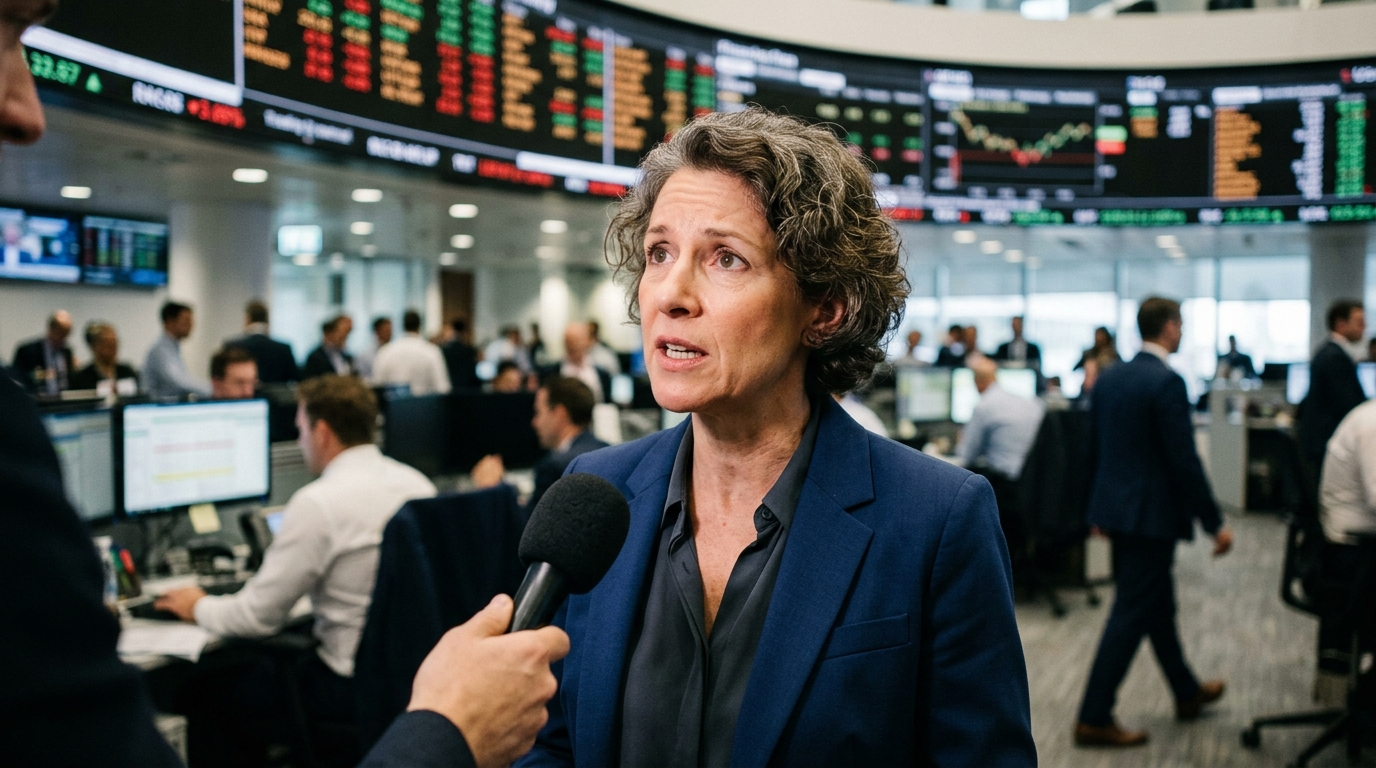
As we navigate the summer of 2026, the conversation surrounding Artificial Intelligence has shifted from the theoretical capabilities of large language models to the raw reality of infrastructure. Robert Cohen, Director of Global Developed Credit at DoubleLine, in a recent analysis on Bloomberg Tech, pinpointed the critical junction: AI is no longer a software play; it is a massive, capital-intensive enterprise reshaping the foundations of corporate finance.
According to Cohen, we are in a phase where high-quality companies maintain strong balance sheets, but the demand for financing the data centers and energy grids required by AI is pushing the debt market into uncharted waters. Traditional bank lending appears to be receding in the face of the surging rise of private credit, which offers the flexibility and speed demanded by the pace of technological evolution.
The Hunger for Capital: From Cloud to Concrete
Cohen's first major observation concerns the scale of capital expenditure (Capex). In 2026, investments in AI hardware are no longer measured in billions, but in trillions. This "thirst" for liquidity has forced even tech giants to rethink their strategies. While S&P 500 companies hold significant cash reserves, the scale of required infrastructure is such that borrowing becomes inevitable.
Cohen points out that debt quality remains high for major players; however, the market is beginning to see a clear dividing line. On one side are companies that can self-fund their growth, and on the other are those dependent on capital markets to avoid falling behind in the AI arms race. This polarization creates new opportunities and risks for fixed-income investors.
The Dominance of Private Credit
Perhaps the most compelling point in Cohen’s analysis is the role of private credit. In an environment where interest rates remain at levels that would have been considered "high" five years ago, private debt markets have become the sanctuary for many businesses. Private credit is no longer an alternative for distressed companies but a strategic tool for AI expansion.
- Speed of Execution: Private deals close much faster than public bond issuances.
- Structural Flexibility: Lenders can tailor their requirements to the long-term returns of AI projects.
- Stability: During periods of public market volatility, private credit provides a more predictable source of capital.
Cohen emphasizes that DoubleLine is closely monitoring this transition. Private credit now provides the backbone for constructing the GPU clusters and cooling systems essential for the next generation of AI models.
Leverage Risks and Balance Sheet Resilience
Despite the optimism regarding growth, Cohen warns of the risks of over-leverage. If the returns from AI do not materialize within the timeframe predicted by business plans, the debt burden could become unbearable for less-capitalized companies. However, the current state shows that most large enterprises have learned the lessons of the past.
"The balance sheets of high-quality companies are perhaps the strongest we've seen in decades," Cohen notes. "This allows them to absorb the costs of innovation without jeopardizing their creditworthiness."
The challenge for the latter half of 2026 will be managing refinancing. With many bonds issued during the low-interest-rate era approaching maturity, companies' ability to roll over their debt in a higher-cost environment will determine the winners and losers of the digital economy.
Implications for Investors
For investors, Robert Cohen’s message is clear: AI is a long-term debt and infrastructure cycle. The focus must remain on credit quality and understanding new financing mechanisms. Private credit will continue to gain ground, offering attractive yields for those who can manage the lack of liquidity, while traditional bond markets will remain the playground for large, established players.
Artificial intelligence is not only changing the way we work but also the way we finance our future. DoubleLine's analysis reminds us that behind every algorithm, there is a balance sheet that must strike a balance between ambition and financial prudence.