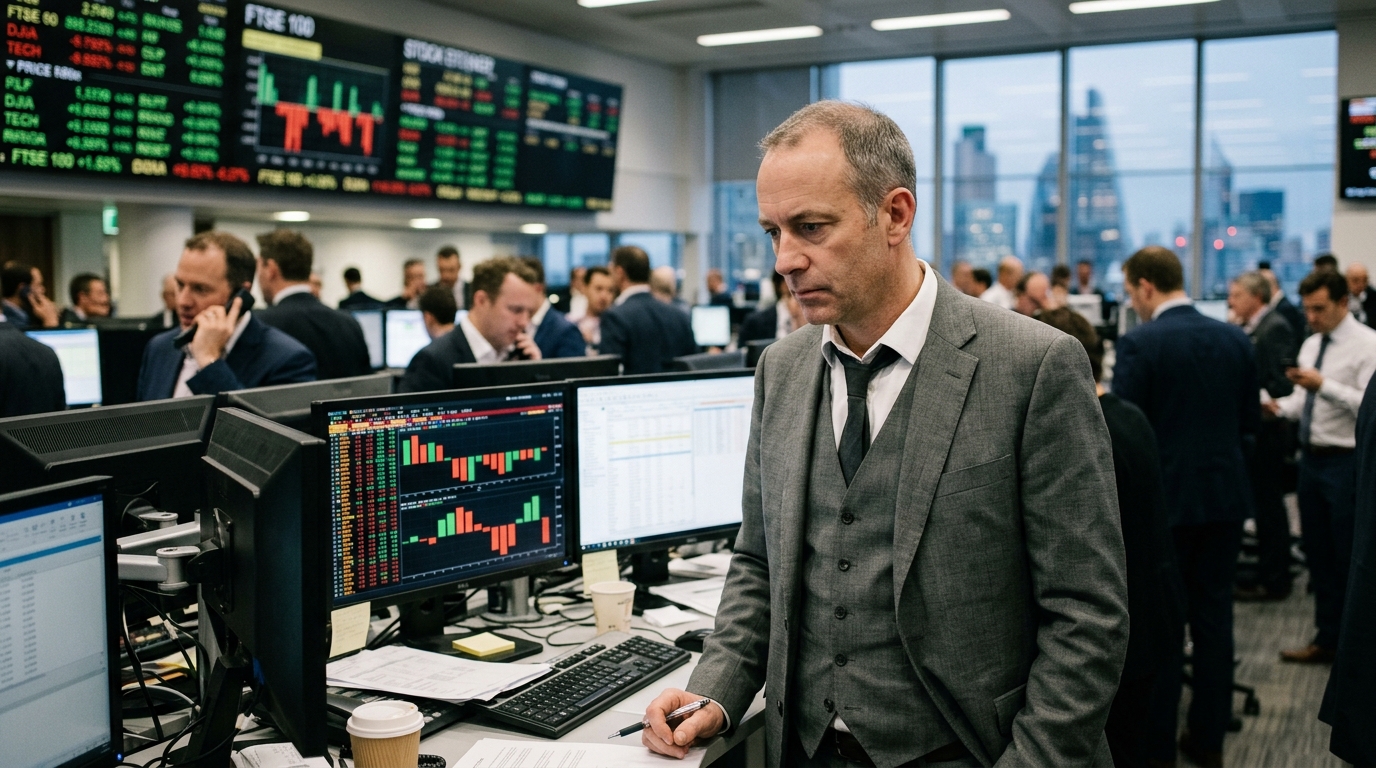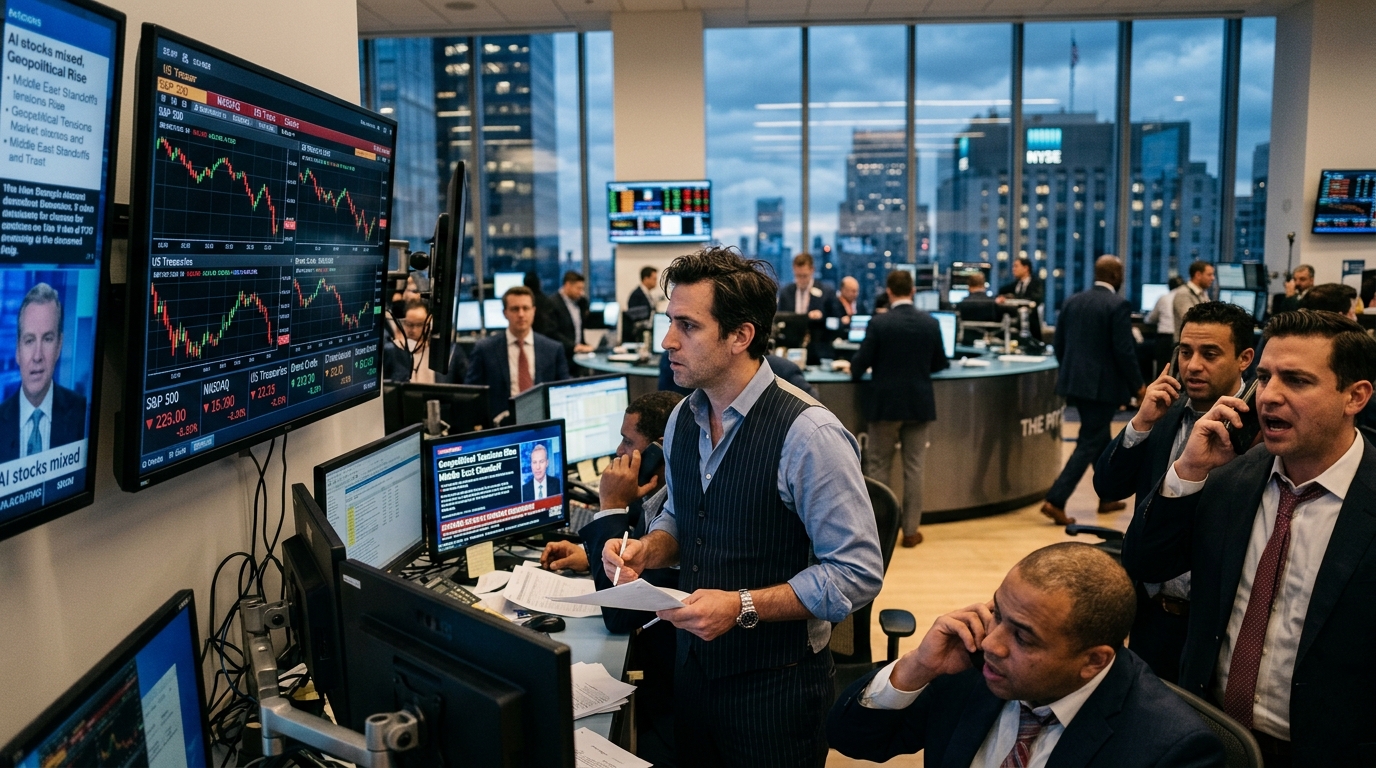
The global investment community faced a sobering reality check this week as the momentum that propelled markets for months hit two formidable barriers: the valuation limits of Artificial Intelligence (AI) and the fragile geopolitical balance in the Middle East. Major indices on Wall Street and European bourses retreated as hopes for a swift diplomatic resolution between the U.S. and Iran faded, coinciding with a necessary, albeit painful, correction for tech giants.
The AI Rally Pause: From Euphoria to Scrutiny
For over a year, the market has been driven by a near-singular narrative: the transformative promise of Artificial Intelligence. Companies like Nvidia, Microsoft, and Alphabet saw their market capitalizations soar to unprecedented heights, lifting the S&P 500 and Nasdaq along with them. However, the recent pullback suggests that investors are starting to demand more than just promises; they are looking for tangible results and sustained profitability.
This current "pause" is not necessarily the end of the AI era, but rather a phase of maturation. Analysts point out that the capital expenditures (CapEx) of Big Tech firms on AI infrastructure have reached levels that induce vertigo. The question looming over the stock market is whether enterprise adoption of AI will occur rapidly enough to justify these outlays. When quarterly results fail to eclipse already hyper-optimistic forecasts, the market reacts with sell-offs, leading to a compression of price-to-earnings multiples.
- Semiconductor stocks led the decline as demand for high-end chips appears to be stabilizing.
- A rotation toward defensive stocks indicates a broader risk-off sentiment among institutional players.
- Uncertainty regarding Federal Reserve interest rate cuts continues to weigh heavily on growth-oriented equities.
The Geopolitical Thorn: US-Iran Deadlock and the Shadow of Oil
In tandem with tech fatigue, the geopolitical landscape is adding a significant layer of uncertainty. Reports that peace talks between the United States and Iran have stalled acted as a catalyst for investors to move away from riskier assets. The Middle East remains a powder keg, and the lack of diplomatic progress increases the risk of energy supply disruptions.
"The market hates uncertainty more than bad news. The deadlock with Iran doesn't just impact oil prices; it brings inflationary risks back to the forefront, complicating the mandate of central banks," noted a senior Wall Street strategist.
The failure of talks implies that sanctions will remain firmly in place, while the possibility of a direct or proxy conflict cannot be ruled out. For investors, this translates into higher risk premiums. Oil prices, though relatively stable for the moment, exhibit high volatility, directly impacting global transport and production costs. In an environment where inflation proves stubborn, any spike in energy costs could force the Federal Reserve to maintain higher interest rates for a longer duration than the market initially anticipated.
Market Psychology and the Path Forward
The convergence of these two factors—tech correction and geopolitical tension—creates a volatile mix. Investor psychology has shifted from FOMO (Fear Of Missing Out) to extreme caution. It is no coincidence that gold and government bonds have seen increased demand, serving as traditional safe havens during periods of turmoil.
Nevertheless, many market veterans view this retreat as healthy. A market that moves exclusively upward without fundamental support risks forming a bubble reminiscent of the dot-com era in 2000. The current correction allows the market to "digest" the gains of the past year and re-evaluate which AI companies possess a viable business model versus those merely riding the hype. On the geopolitical front, waiting remains the only viable strategy, as developments in Washington and Tehran will dictate the trajectory of commodity markets in the coming months.