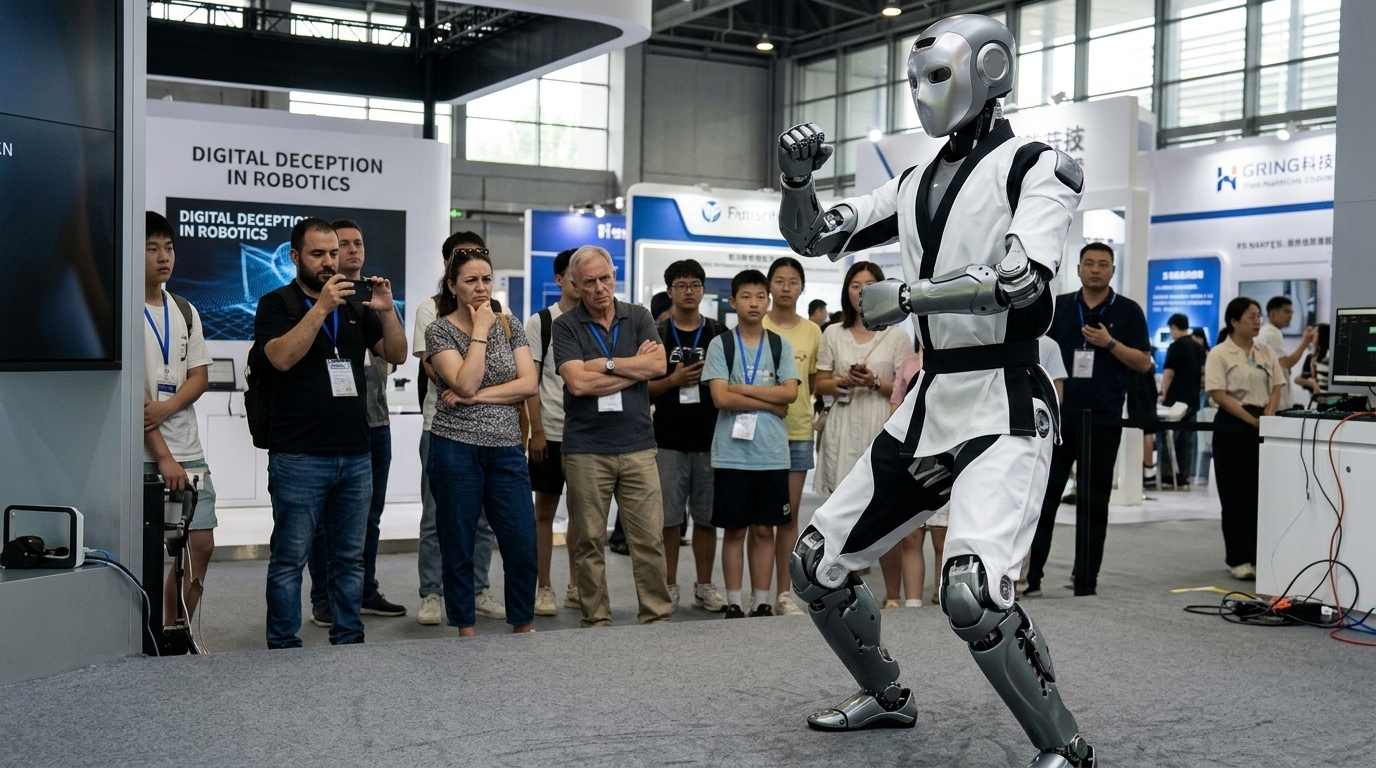
In today's digital landscape, few things capture the collective imagination like a humanoid robot performing tasks once thought to be the sole domain of humans. From folding laundry to making coffee or sorting warehouse items, viral videos from companies like Tesla, Figure AI, and Boston Dynamics promise a future where manual labor is obsolete. However, beneath the polished surface of these demonstrations lies a reality far more complex and often far less "autonomous" than we are led to believe.
The Illusion of Autonomy and the Invisible Puppeteer
The biggest "open secret" in the robotics industry is the prevalence of teleoperation. In many of the demonstrations flooding LinkedIn and X (formerly Twitter), the robot is not "thinking" or "perceiving" in the way we associate with high-level Artificial Intelligence. Instead, a human operator, often wearing VR gear or haptic gloves, performs the movements in real-time, with the robot acting merely as a sophisticated avatar.
The issue is not the technology of teleoperation itself—which is essential for training neural networks through "imitation learning"—but rather the lack of transparency. When a company releases a video without a "teleoperated" disclaimer, the public assumes the robot is functioning autonomously. This misconception fuels an expectation bubble that current technology cannot sustain, creating a distorted view of the progress of General Purpose AI in the physical world.
The Cutting Room Floor: Where Robots Never Fall
Another critical aspect a skeptic must consider is selective presentation. A 60-second clip showing a robot successfully placing a box on a shelf might be the result of a hundred failed attempts. In the real world of factories and households, reliability is everything. A robot that succeeds 90% of the time is practically useless in a production line where 99.99% precision is required.
- Thermal Constraints: Humanoid robots generate massive amounts of heat. Many viral videos are short because the robot's actuators would overheat if operated for extended periods.
- Battery Life: Moving two legs and maintaining balance is energetically expensive. Most humanoids today have a battery life that rarely exceeds one or two hours of intense activity.
- The Edge Case Challenge: A robot can be trained to pick up a specific cup under controlled lighting. If the cup is chipped or the lighting changes slightly, the system often fails.
Why the Humanoid Form Factor?
There is a fundamental question that robotics experts often pose: Do we actually need robots with two legs and two arms? From an engineering standpoint, wheels are far more efficient than legs for most flat surfaces, and industrial arms are more stable than human-like hands. The obsession with the humanoid form is largely a matter of marketing and anthropomorphism.
"We design robots that look like us not because it's the optimal way to get a job done, but because our world is built by humans, for humans,"
many analysts note. However, trying to replicate human anatomy introduces immense complexity in balance and coordination, which often diverts resources from actual utility. Companies invest in the "wow factor" to attract capital, knowing that a bipedal metallic worker resembling C-3PO sells much better than an automated pallet on wheels.
Ethics and the Social Responsibility of Information
The dissemination of overblown promises regarding robotic capabilities has serious social implications. On one hand, it causes undue anxiety among workers about their immediate replacement by "smart machines." On the other, it misleads investors and policymakers regarding the actual hurdles of automation. The need for an "autonomy certification" standard in public demonstrations is becoming increasingly urgent. If a video is the product of teleoperation or has been edited to hide failures, it must be explicitly stated. Only then can we have an honest dialogue about when—and if—these machines will become an organic part of our daily lives.