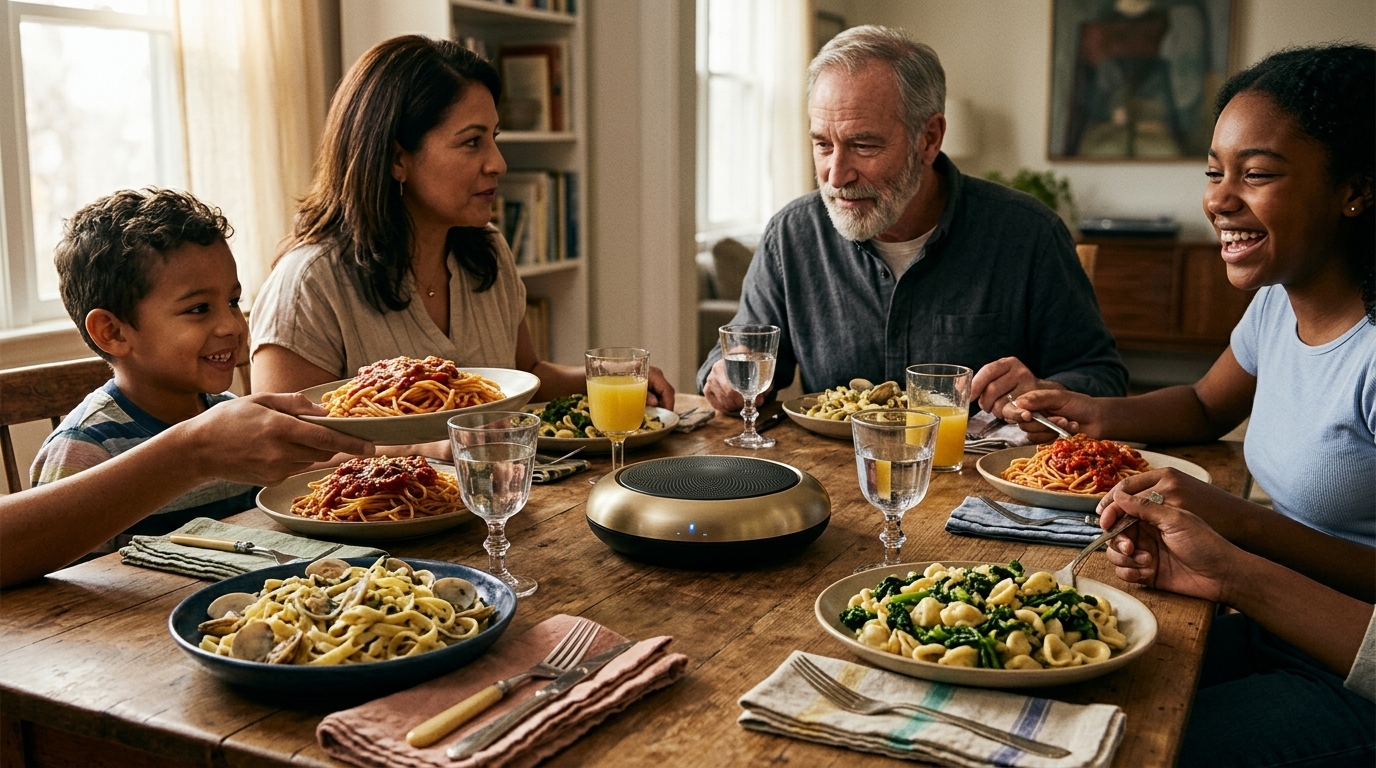
In an era where smart devices have already occupied every corner of our homes, from the living room to the bedroom, the latest "invasion" comes from an unexpected place: the kitchen pantry. Prego, the well-known American pasta and pizza sauce brand, recently announced the release of the "Connection Keeper." It is a device that resembles an oversized pasta jar lid, but instead of sealing in freshness, it aims to capture the conversations shared around the family dinner table.
Technology in the Service of "Nostalgia"
The Connection Keeper is the result of a collaboration between Prego and StoryCorps, a non-profit organization dedicated to preserving and sharing humanity’s stories through audio recordings. The central idea is seemingly noble: to record the stories, laughter, and memories families share during dinner, so they can be preserved for future generations.
The device operates with the press of a button, initiating a voice recording. The resulting audio file can then be uploaded to the StoryCorps platform, creating a digital archive of family legacy. However, the choice of a food company to enter the data recording space triggers immediate skepticism. Is this a sincere attempt to connect people, or another move to commodify our most private moments?
The Ethics of "Smart" Surveillance
The primary issue raised is that of privacy and consent. Although the device requires manual activation, the presence of a microphone at the center of the table fundamentally alters communication dynamics. Spontaneous conversation gives way to a "performance" for the future. Furthermore, there are pressing questions regarding data management. In a world where data is the new oil, who guarantees that personal confessions shared over a plate of pasta won't be used for consumer habit analysis?
Prego argues that the device aims to combat the loneliness and alienation brought about by the digital age. Yet, there is a profound irony in using more technology to "cure" the isolation that technology itself helped create. As many ethics analysts point out, the sanctity of the dinner table relies precisely on it being a space free from external observation and corporate mediation.
- Does the device record background noise when not active?
- Who owns the copyright to the recorded family stories?
- Can the data be subpoenaed or sold to third-party advertisers?
"When a corporation asks you to record your memories, they aren't offering a service; they are asking you to hand over your private life in the form of content."
The Commodification of Intimacy
This move is part of a broader trend known as "emotional marketing." Brands no longer want us to just buy their products; they want to be part of our identity and our memories. By linking its name to the preservation of family history, Prego is attempting to build a bond that transcends the utilitarian value of a jar of sauce.
However, the technological invasion of the kitchen brings with it the risk of "surveillance fatigue." Consumers are now forced to ask whether every object in their home—from the refrigerator to a sauce lid—needs the ability to listen. The thin line between "convenience" and "surveillance" is becoming increasingly blurred. The home, once a fortress of privacy, is being transformed into a data collection node for consumer brands.
Conclusion: The Value of the Unrecorded Moment
Ultimately, perhaps the most precious memories are those that were never recorded. The drive to digitize every facet of our existence may be robbing us of the ability to live in the present. The Connection Keeper may promise eternity for our stories, but true connection happens when our eyes are fixed on the people across from us, not on the blinking light of a device waiting to upload our lives to a server.