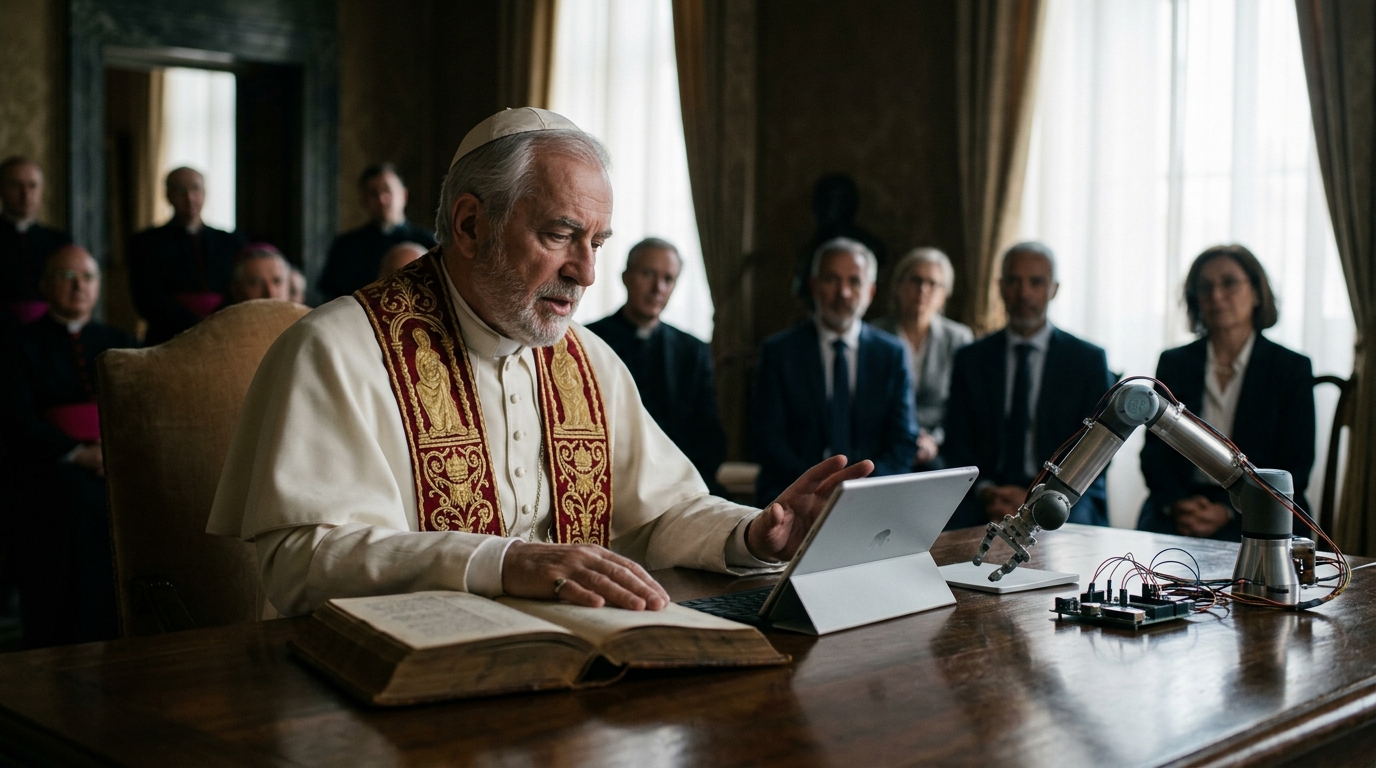
In an era where technological progress seems to move at speeds exceeding human processing capacity, the Vatican raises a cautionary voice that resonates far beyond the walls of Rome. Pope Leo, continuing the Church's tradition of intervening in critical social issues, has issued a comprehensive call for the ethical framing of Artificial Intelligence (AI). His intervention is not merely religious advice but a profound political and philosophical analysis of the dangers lurking in automated decision-making and digital surveillance.
The Pontiff's central argument revolves around the concept of 'algorethics'—a term combining algorithms with ethics. According to the Pope, Artificial Intelligence is not a neutral tool. On the contrary, it carries the biases of its creators and the inequalities of the data it is trained on. The warning is clear: if we allow algorithms to determine human fate without human oversight, we risk sacrificing human dignity on the altar of efficiency.
The Threat of Dehumanization and Social Justice
One of the most concerning aspects of Pope Leo's address pertains to AI's impact on social cohesion. The Pontiff highlighted that algorithms used for credit scoring, recruitment, or even predicting criminality tend to further marginalize the already vulnerable. "Technology must serve the human person, not classify them into categories of value," he stated. The concern here is that AI could encode and institutionalize existing social injustices, making them invisible behind a cloak of mathematical objectivity.
Furthermore, the Pope touched upon the issue of 'digital colonialism.' He warned that the concentration of AI power in the hands of a few tech giants and wealthy nations creates a new global hierarchy. Developing nations risk becoming mere consumers or data sources, without a voice in shaping the tools that will define their future. This power imbalance constitutes, in the Pope's view, a moral crisis requiring immediate international cooperation and regulatory frameworks that protect the common good.
Free Will in the Age of Data
Beyond social implications, Pope Leo delved into existential questions. Artificial Intelligence, through recommendation systems and personalized information, has the potential to manipulate human will. When our choices—from what we buy to whom we vote for—are guided by opaque algorithms, the concept of free will is called into question. The Church views freedom as a divine gift and a constituent element of human nature; therefore, any technology that undermines this autonomy is considered a threat to our very humanity.
- The need for 'transparent algorithms' that allow for societal audit and oversight.
- Ensuring that the final decision in critical matters (justice, health, war) remains with a human.
- The protection of privacy as a fundamental human right, not a tradable commodity.
- Educating younger generations in critical thinking against digital manipulation.
"We cannot allow a code to replace a conscience. Ethics is not a parameter added at the end, but the foundation upon which every innovation must be built," the Pope declared.
Toward a Global Framework for Algorethics
This intervention does not remain solely in the realm of theory. Pope Leo called upon state leaders, scientists, and tech CEOs to sign a global commitment to the responsible use of AI. His vision is the creation of an international body, under the auspices of the UN, to oversee the development of these technologies, ensuring they are not used for warfare or the suppression of human rights.
In conclusion, the Vatican's stance highlights a crucial shift in the global dialogue. Artificial Intelligence is no longer just a matter of engineering or economics, but a test for our civilization. The challenge posed by the Pope is clear: to prove that our intelligence, whether biological or artificial, remains in the service of love, justice, and human fraternity. History will judge whether we heeded the warning in time or allowed our creations to become our new, faceless masters.