In the rapidly accelerating landscape of artificial intelligence, "cultural intelligence" is emerging as the next critical frontier. While Large Language Models (LLMs) have demonstrated staggering capabilities in information processing, they often suffer from a profound Western bias, mirroring the values and social norms of the datasets they were primarily trained on. The recent collaboration between NVIDIA and the Hugging Face community, centered on the Nemotron model family, brings a revolutionary method to the fore: using "synthetic personas" to ground AI agents in real-world South Korean demographics.
The Challenge of Cultural Homogenization
Until recently, creating an AI agent that truly understands a local market required vast amounts of authentic user data—a process that is expensive, time-consuming, and often fraught with privacy concerns. Models trained predominantly on English content tend to translate not just the language, but the Western worldview, failing to capture the subtle nuances of Korean social hierarchy, honorifics, and local consumer habits.
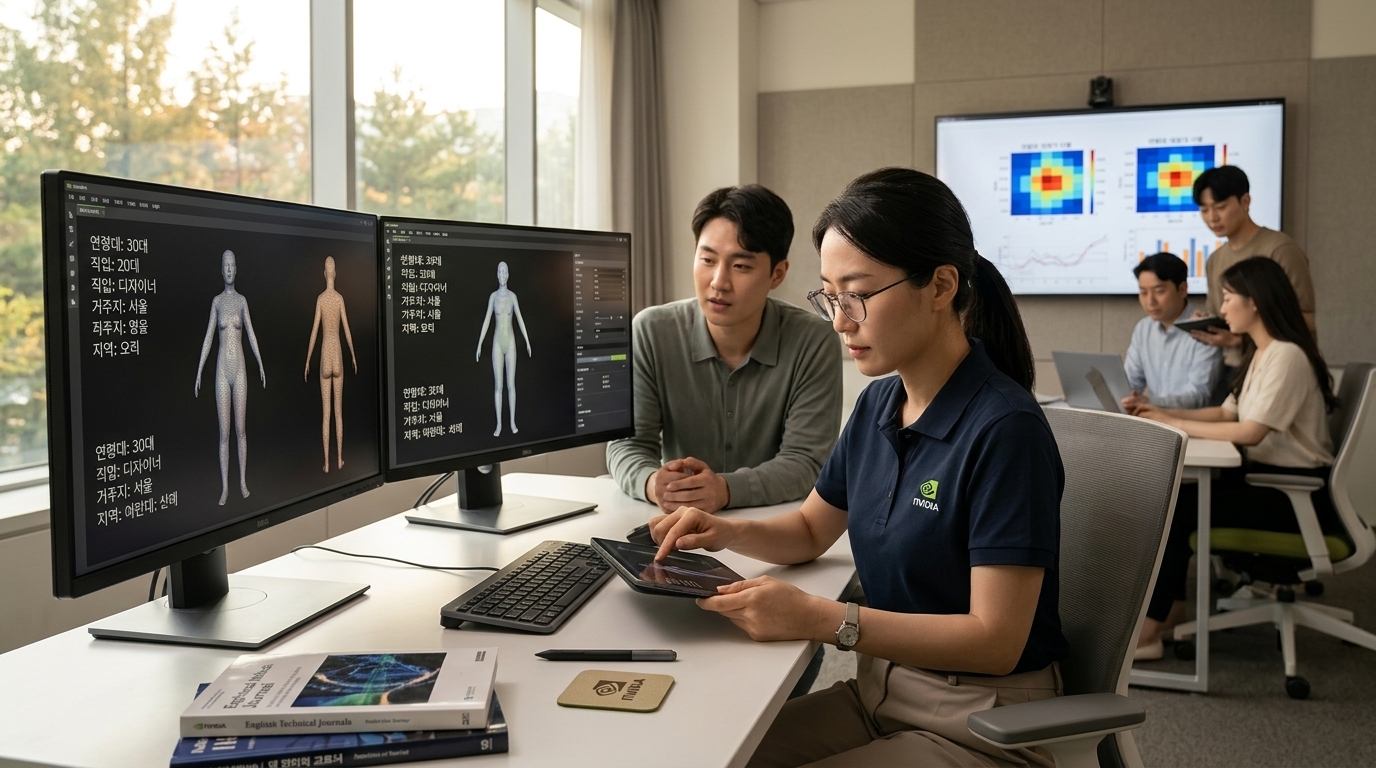
NVIDIA proposes a different path. Instead of waiting for organic data collection, we can utilize advanced models like Nemotron-3 8B to generate thousands of detailed, synthetic personas. These personas are not merely static profiles; they are dynamic digital characters with specific ages, occupations, locations, income levels, and interests, all grounded in actual statistics from the Korean census.
The Methodology of Synthetic Personas
The process begins by creating a demographic "skeleton." Using data from the Statistics Korea (KOSTAT), researchers determine population distribution. Subsequently, the Nemotron model is tasked with "clothing" these numbers with human traits. For instance, a record corresponding to a "35-year-old woman in Seoul working in tech" is transformed into a full persona with specific daily routines and linguistic preferences.
- Profile Generation: The LLM produces a rich biography for each synthetic user.
- Interaction Simulation: These personas interact with the AI agent, posing queries and providing feedback.
- Model Optimization: The agent is trained to adjust its tone and content based on the specific identity of the "person" it is addressing.
"Using synthetic data to create personas is not just a technical fix, but an exercise in digital empathy toward specific social groups," note the NVIDIA researchers.
Why Korea is the Ideal Testing Ground
South Korea possesses one of the most distinct and technologically advanced digital cultures in the world. The Korean language (Hangul) features structural elements that depend directly on the relationship between speakers. An AI agent addressing a teenager in Gangnam must use a different vocabulary and level of formality than when serving a retiree in Busan. The success of the synthetic persona methodology in Korea paves the way for its application in other high-complexity languages, including Greek.
Implications for the Future of Work and Privacy
The shift toward synthetic data solves one of the great paradoxes of our time: the need for personalization without violating privacy. Since the personas are synthetic, there is no risk of leaking the personal data of real users. However, this raises new questions. Can a "manufactured" persona fully represent the human experience? Or do we risk trapping AI in stereotypes that we ourselves created through our algorithms?
In conclusion, NVIDIA's initiative with Nemotron and Korean personas marks the end of the "one-size-fits-all" era in AI. Digital assistants will no longer be just smart; they will be culturally aware, capable of navigating the social minutiae that make every nation unique. For the global market, this means the next generation of AI will speak our language—not just in words, but in spirit.