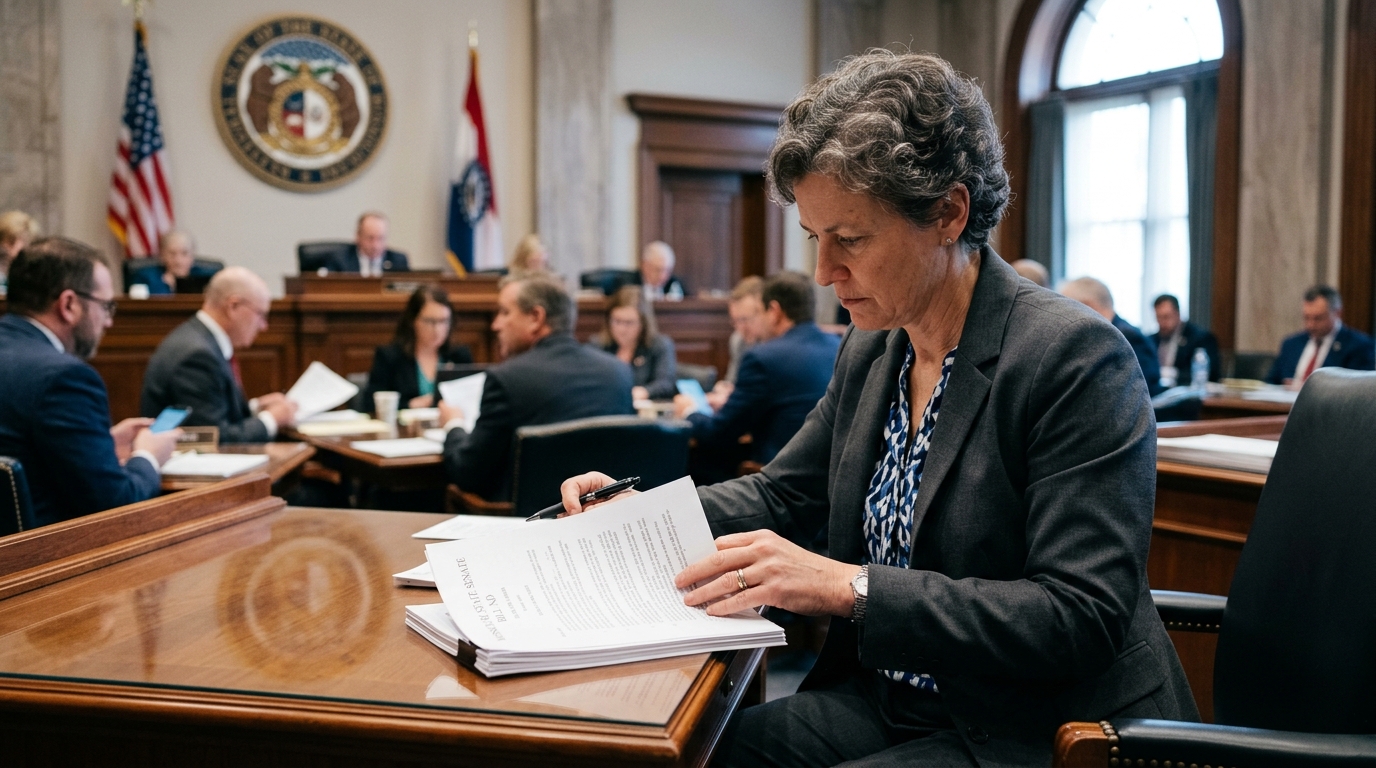
In an era where technological velocity consistently outpaces legislative deliberation, the state of Missouri is stepping into the breach. State lawmakers are aggressively advancing a landmark bill designed to confront two of the most volatile challenges of the digital age: the proliferation of AI-generated deepfakes and the psychological toll of social media on minors.
The bill, which has garnered significant bipartisan momentum, is more than just a local policy shift; it reflects a burgeoning global consensus. As of April 2026, the ease with which Artificial Intelligence can synthesize false yet hyper-realistic images and video has evolved from a technical curiosity into a potent weapon for harassment and political subversion.
Criminalizing the Synthetic Lie
The core of the legislation focuses on the strict criminalization of creating and distributing non-consensual AI-generated imagery. Missouri legislators emphasize that "revenge porn" has entered a nightmarish new phase. No longer does a perpetrator need access to actual private photos; a malicious actor can now generate explicit, realistic content using nothing more than a victim’s profile picture from social media.
The bill proposes significant prison sentences and heavy fines for those who employ AI tools to defame or violate others. "This isn't about stifling speech; it's about protecting human dignity from digital assault," stated one of the bill's primary sponsors. This distinction is pivotal, as tech giants often invoke the First Amendment to shield themselves and their users from liability for hosted content.
- Criminal penalties for non-consensual deepfake production.
- Statutory damages allowing victims to sue creators in civil court.
- Mandatory takedown requirements for platforms hosting such content.
Youth Protection: Ending the 'Wild West' of Social Media
The second pillar of the bill addresses the pervasive influence of social media on children. The legislation proposes mandatory age verification and requires explicit parental consent for users under the age of 16. Furthermore, it seeks to curb the use of addictive algorithmic features—such as infinite scrolls and predatory notification systems—during late-night hours.
"We are witnessing an entire generation being ensnared by algorithmic architectures that prioritize engagement over mental health," notes the committee’s supporting report.
Missouri’s move follows similar attempts in states like Utah and Arkansas, which faced immediate legal challenges from industry trade groups. However, Missouri’s approach is notably more granular, specifically targeting the technical mechanics of engagement algorithms to better withstand judicial scrutiny regarding commercial speech and privacy rights.
Political and Constitutional Implications
The debate in Jefferson City has taken on a sharp political edge. While child safety is a universal rallying cry, privacy advocates warn of the unintended consequences of mandated age verification. Such measures often require users to hand over sensitive identification documents to private entities, creating new cybersecurity risks and chilling anonymous speech.
Moreover, the deepfake provisions extend into the electoral arena. With major elections on the horizon, the fear of "synthetic disinformation"—videos showing candidates saying things they never uttered—is palpable. The bill mandates clear labeling for any AI-generated content in political advertising, aiming to restore a semblance of truth to the digital public square.
In conclusion, Missouri’s legislative push is a high-stakes experiment in whether traditional law can domesticate the wild growth of AI. Should the bill achieve its aims without being struck down by the courts, it may well serve as a blueprint for other jurisdictions grappling with the dual-edged sword of digital innovation and human vulnerability.