In an era where tech titans compete to announce the most staggering capabilities of their algorithms, one of the most influential leaders in the transportation sector has decided to draw a line in the sand. Ed Bastian, CEO of Delta Air Lines, caused a stir at the recent 'Great Place to Work' summit by categorically stating that the use of the term 'Artificial Intelligence' (AI) is a strategic and communicative blunder that sows panic rather than inspiring progress.
The Psychology of Terminology and the 'Artificial' Barrier
For Bastian, the word 'artificial' carries a negative baggage that suggests something fake, inauthentic, and, most importantly, something designed to replace human beings. 'You want to scare people?' he asked the audience rhetorically. 'Tell them that artificial intelligence is coming for you.' His analysis isn't just about marketing; it's about the very core of corporate culture. In an industry like aviation, where safety and hospitality depend directly on human judgment and empathy, promoting a technology that defines itself as 'intelligence without humans' creates friction in the trust of employees and passengers alike.
Delta, under Bastian’s leadership, has invested billions in cutting-edge technologies, from personalized airport signage to advanced weather prediction algorithms. However, the CEO insists on using the term 'Augmented Intelligence.' This subtle linguistic shift changes the focus: technology is not the protagonist but the tool that empowers humans to do their jobs better. This rebranding seeks to bridge the gap between technological efficiency and human connection.
The Clash with Silicon Valley
Bastian’s stance highlights a growing divide between Silicon Valley and traditional 'Main Street' businesses. While developers in California view AI as the ultimate milestone of human ingenuity, leaders of service-oriented companies see a potential threat to staff morale. According to recent surveys, 60% of workers worldwide feel anxious about their potential replacement by automated systems. When a CEO refuses to use the term, they are effectively trying to soothe this anxiety, ensuring that technology remains at the service of the staff rather than the other way around.
'Technology is never going to replace the warmth of a smile or the care of a flight attendant who sees a passenger is anxious,' Bastian emphasized.
This approach is not merely defensive; it is a strategic choice aimed at maintaining 'human centricity' in a rapidly digitizing world. Delta uses AI to optimize flight paths and reduce fuel consumption, but Bastian wants his pilots to feel they have an 'intelligent assistant' rather than a 'replacement' in the cockpit. This distinction is crucial for maintaining the high-stakes safety culture required in commercial aviation.
The Future of Work and the Ethics of Communication
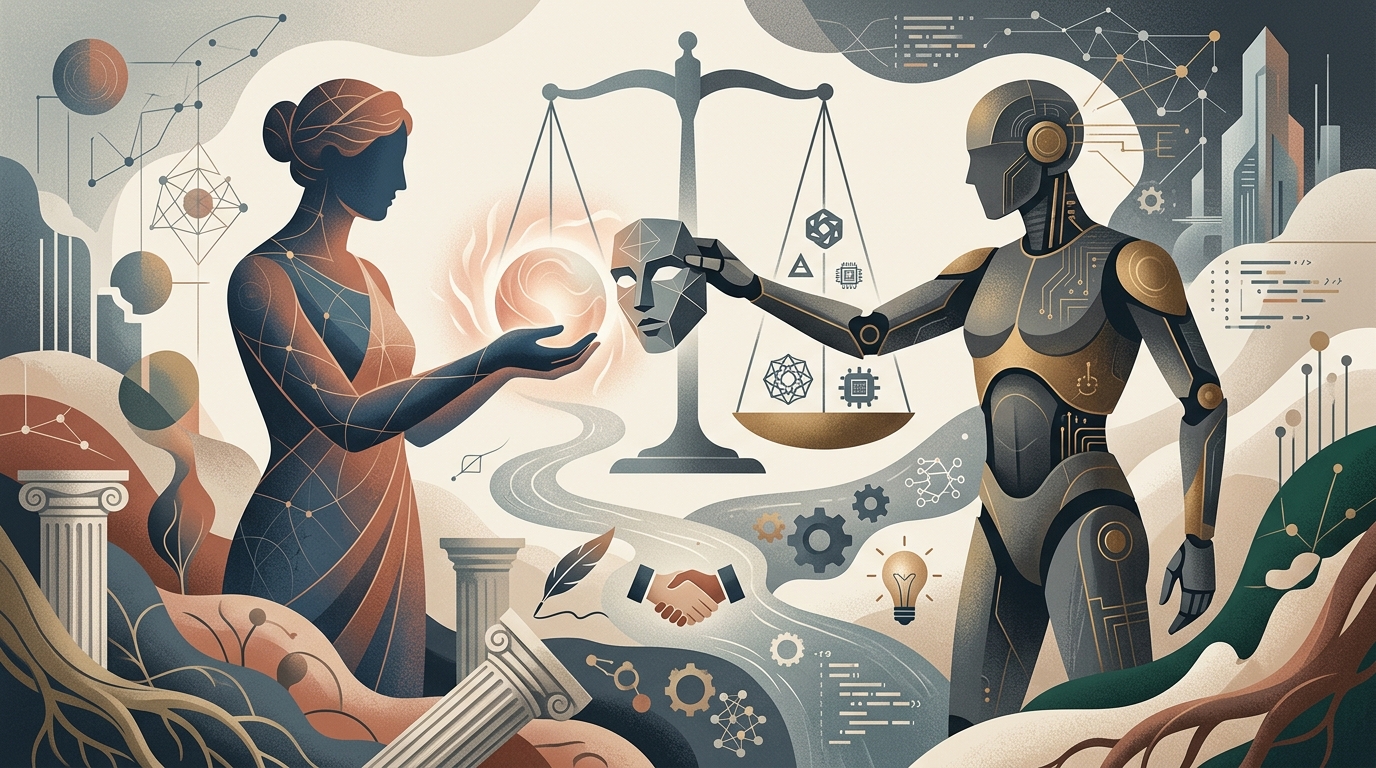
The debate opened by Bastian touches the heart of business ethics in 2026. As AI systems become increasingly capable, the need for transparency and 'human-in-the-loop' design becomes imperative. If companies continue to market AI as an autonomous entity that 'thinks' and 'decides,' they risk alienating their workforce. The proposal for 'Augmented Intelligence' serves as a bridge: it acknowledges the power of algorithms while keeping the steering wheel in human hands.
Furthermore, this semantic shift addresses the 'uncanny valley' of corporate automation. By framing AI as an augmentation, companies can integrate advanced tools without triggering the existential dread associated with the 'Singularity' or total job displacement. Bastian’s perspective suggests that for AI to be truly successful in the real world, it must be presented as a partner, not a successor.
In conclusion, Bastian’s move is a masterclass in leadership communication. It reminds us that the words we choose to describe our future shape how we will inhabit it. If the future of AI is indeed 'artificial,' then perhaps the fear is justified. But if we can see it as 'augmented,' then technology can become the greatest ally of human creativity and service excellence.
- Terminology significantly impacts employee and customer acceptance of new tech.
- 'Augmented Intelligence' emphasizes human empowerment over replacement.
- High-touch industries like aviation prioritize human empathy as a core value.
- Rebranding AI may be a necessary step for maintaining social and corporate stability.