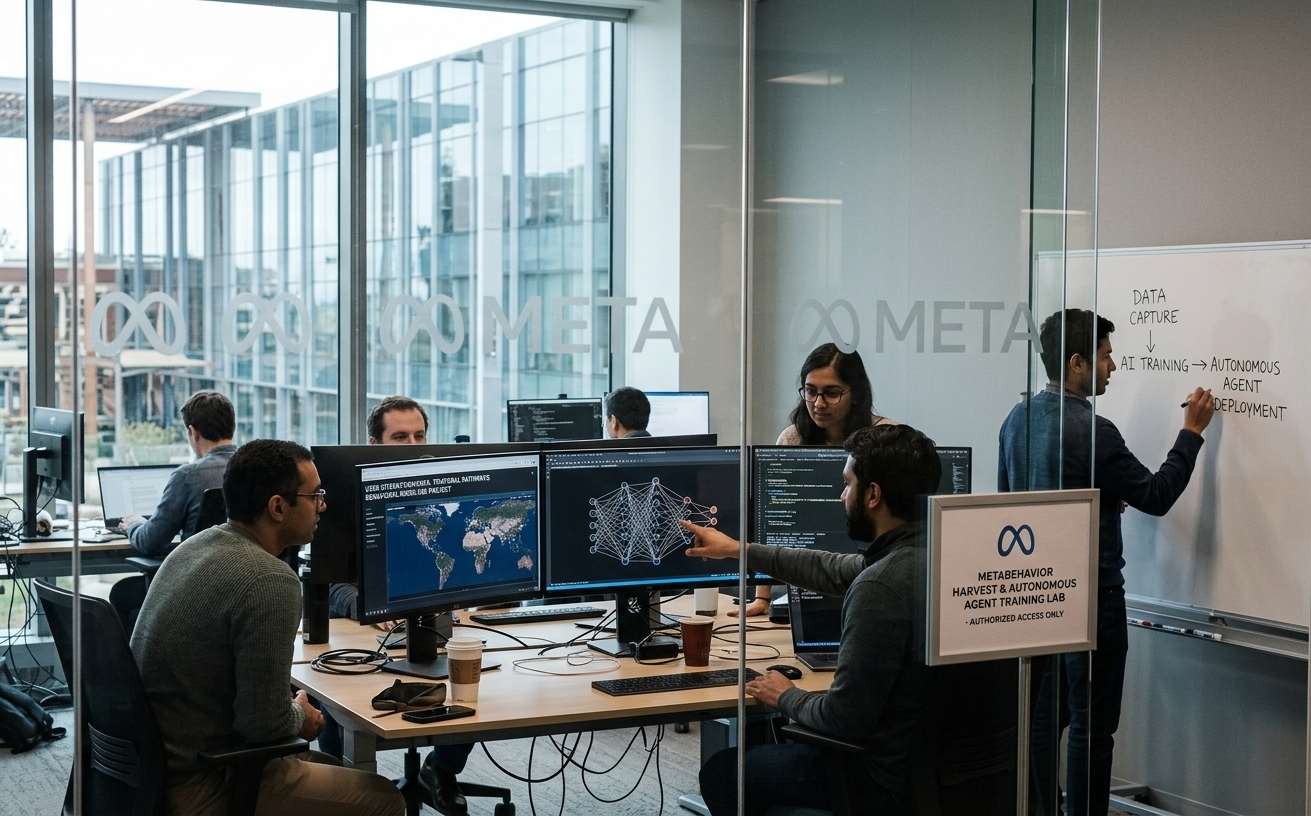
In the heart of Silicon Valley, Meta appears to be transforming its own workforce into a living laboratory for the next generation of artificial intelligence. According to recent disclosures, Mark Zuckerberg’s tech giant is implementing an initiative codenamed MCI, which goes far beyond simple performance metrics to penetrate the deepest layers of digital interaction. By tracking mouse movements, keystroke rhythms, and every single click, the company aims to distill human experience into training data for autonomous AI agents.
From Surveillance to Automation
This practice represents a fundamental shift in the paradigm of workplace monitoring. While telemetry tools were traditionally used for productivity tracking or system security, Meta is now utilizing them as a "knowledge mining" tool. The AI agents being developed will not merely follow instructions; they will learn to mimic how an experienced software engineer or data analyst solves problems, navigates complex software, and makes split-second decisions.
The ethical dilemma is stark: Meta employees are essentially training their own future digital replacements. The granular recording of their behavior is no longer about *what* they do, but *how* they do it. This process strips labor of its human element of intuition, converting it into a series of algorithmically predictable patterns.
The Psychology of the Workplace Panopticon
The implementation of such systems creates an environment of constant surveillance pressure. When an employee knows that every mouse hesitation or every backspace in a line of code is being recorded and analyzed, creativity often gives way to performative standardization. Workplace psychology experts warn of the "digital anxiety" phenomenon, where the need to appear constantly active overrides deep, qualitative thought.
- The erosion of privacy within the digital workspace.
- The conversion of human expertise into commodified code.
- The risk of fostering a toxic environment of absolute control.
Meta maintains that this data is used to improve internal tools and increase efficiency. However, the lack of transparency regarding where training ends and individual evaluation begins has sparked intense internal backlash, with many citing a breach of the implicit social contract between employer and employee.
The European Dimension and Regulatory Hurdles
While Meta is deploying these practices primarily in the US, the shadow of the GDPR and the EU's new AI Act looms large over such initiatives. In Europe, recording such sensitive behavioral data would face stringent restrictions. Using AI to monitor the emotional state or detailed behavior of employees is classified as "high-risk" or even prohibited under certain conditions of the AI Act.
"This is no longer about improving software; it’s about cloning human labor capacity," says a tech industry executive who requested anonymity.
The lingering question is whether Meta will attempt to export this model to other corporations via its business services. If "behavioral telemetry" becomes the new standard, the very concept of professional expertise will be radically altered, as a worker's value will be measured by how effectively they can feed the algorithm destined to succeed them.