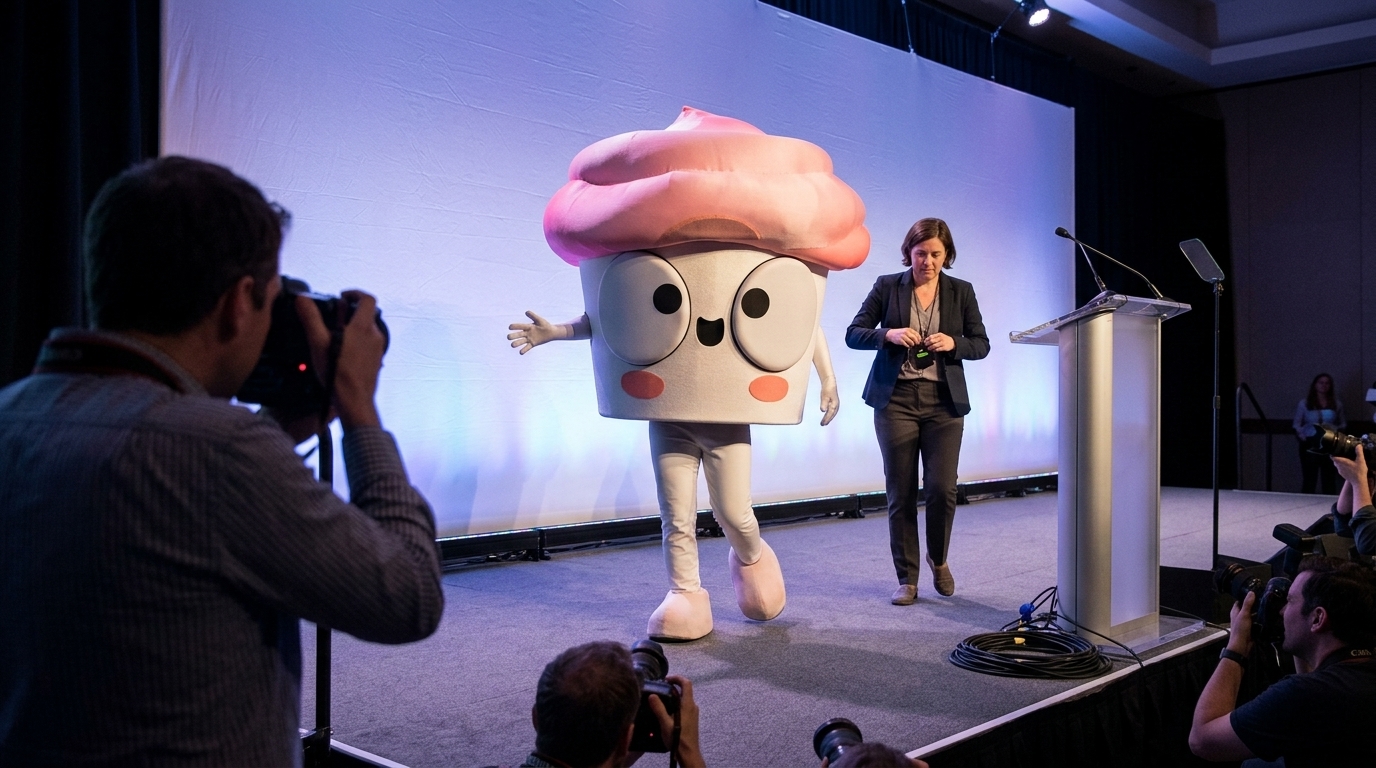
In the rapidly evolving landscape of digital media, the case of 'The Good Advice Cupcake' has become a definitive flashpoint for the conflict between corporate ownership and artistic integrity. Loryn Brantz, the Emmy-winning illustrator who breathed life into the adorable, pink-frosted character during her tenure at BuzzFeed, now finds herself in a heartbreaking position: watching her creation be transformed into an Amazon series produced with generative AI, all without her consent or involvement.
This issue is far more than a simple copyright dispute; it is a clarion call regarding the future of the entertainment industry. As tech giants and media conglomerates scramble to slash production costs, artificial intelligence offers a tempting, albeit ethically murky, shortcut. Brantz, who voiced her outrage across social media platforms, argues that utilizing AI strips the 'soul' from her character, converting a deeply personal artistic expression into a hollow, automated commodity.
The Legal Trap: 'Work for Hire' in the Machine Age
The crux of the controversy lies in the legal architecture of creative employment. When Brantz developed the Cupcake for BuzzFeed, she did so under 'work for hire' agreements. Under this framework, the corporation—not the individual creator—retains full ownership of the intellectual property (IP). BuzzFeed, grappling with significant financial headwinds in recent years, opted to monetize its IP library by licensing the character to Amazon for this new venture.
However, the ethical dimension is far more nuanced than the legal one. Brantz was not merely a technician executing a task; she was the visionary who built a community of millions around a character that embodied empathy and resilience. The decision to use AI for animation is viewed by many industry professionals as a form of 'digital cannibalism,' where an artist's unique style is ingested by a machine to eventually render the human creator obsolete.
AI Animation as a Tool of Displacement
Amazon and BuzzFeed appear to be prioritizing efficiency and scalability. AI-driven animation is significantly faster and cheaper than traditional methods, which require teams of skilled animators working for months. Yet, quality and authenticity are often the first casualties. Critics of the upcoming series point out that AI animation frequently lacks the nuanced timing, emotional depth, and 'squash and stretch' principles that human animators spend years mastering.
- The absence of human oversight often results in visual artifacts and 'uncanny valley' expressions.
- Automation eliminates entry-level roles for aspiring artists who historically used such projects to break into the industry.
- Using AI to bypass a creator's stylistic input sets a dangerous precedent for the entire creative economy.
Brantz told Wired that she feels 'betrayed,' emphasizing that her art was never intended to serve as training data for algorithms. Her stance has ignited a fresh wave of support for creator rights, with many fans calling for a boycott of the Amazon production in solidarity with original artistry.
The Future of IP in the Algorithmic Era
This case highlights the urgent need for updated legislation to protect artists from 'algorithmic exploitation.' While corporations may hold the legal title to an IP, the moral question remains: should they be allowed to use a creator's distinct aesthetic to train machines that will replace them? Thus far, the industry's answer seems to be a cynical 'yes,' provided it bolsters the bottom line.
"It is terrifying to see something you created with love turned into something so soulless and mechanical," Brantz remarked.
As Amazon proceeds with the series, the conversation is shifting toward how artists can safeguard their work in future contracts. Potential solutions include clauses that explicitly prohibit AI-generated derivatives or a broader cultural movement that values human-made content over corporate convenience. Until then, 'The Good Advice Cupcake' stands as a cautionary tale of the friction between technology and the human spirit.