In the high-stakes world of academic research, prestige is the ultimate currency. For decades, the public and the scientific community maintained an almost sacred trust in the findings published by institutions like Harvard University or the Dana-Farber Cancer Institute. However, the rise of independent "scientific sleuths" like Sholto David, armed with Artificial Intelligence, is exposing a systemic rot hidden behind ivy-clad walls and multi-million dollar grants.
The Rise of the Digital Auditor
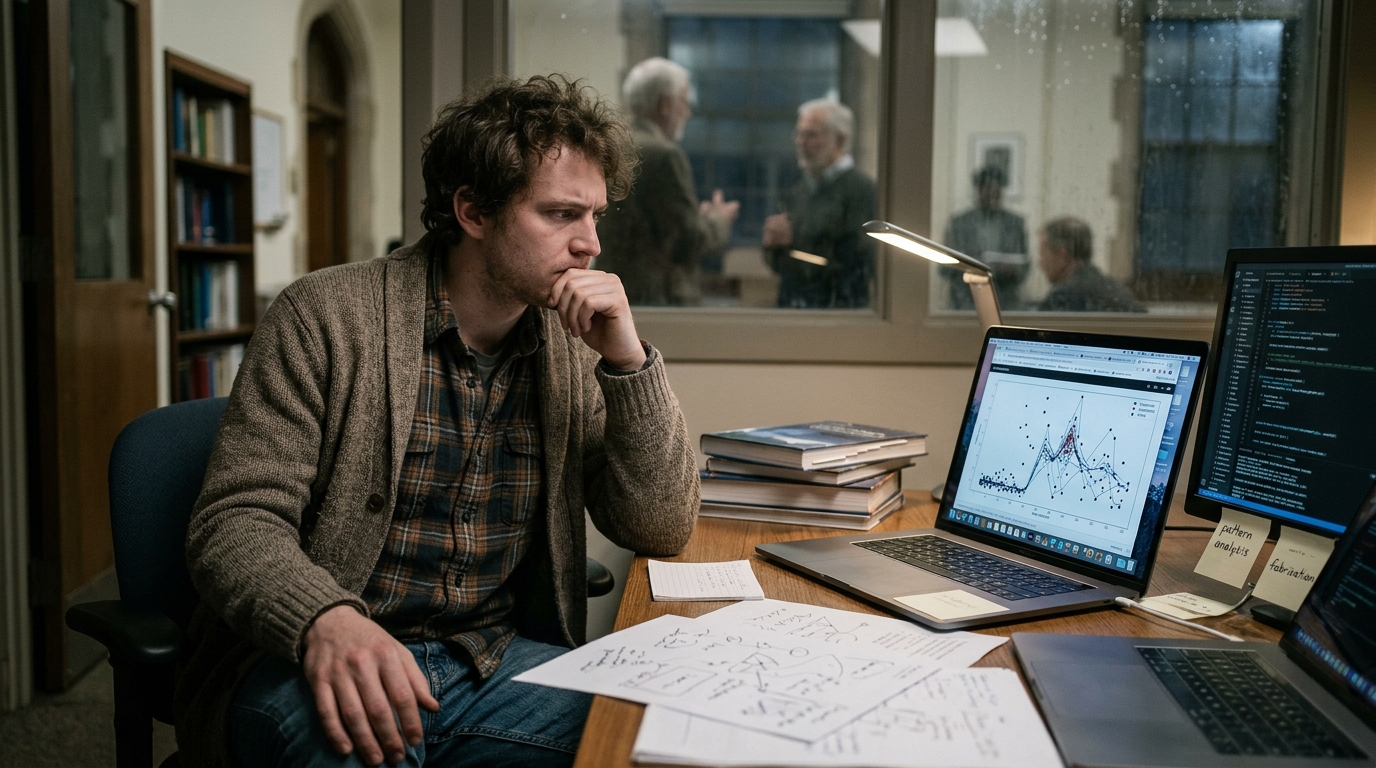
Sholto David is not your typical scientist. After stepping away from his PhD path, he pivoted to a role that traditional oversight bodies had largely neglected: the rigorous auditing of data integrity. Utilizing AI-driven tools such as ImageTwin and Proofig, David began a systematic scan of thousands of published papers, looking for the tell-tale signs of data manipulation.
The methodology is as precise as it is devastating. AI can detect within seconds if a microscopy image has been duplicated, rotated, flipped, or subtly altered in Photoshop to present results that never actually occurred. What would take a human reviewer weeks of agonizing side-by-side comparison, the algorithm identifies as a simple pattern mismatch in the blink of an eye.
The Dana-Farber Crisis and Its Global Impact
David's work culminated in a massive scandal at the Dana-Farber Cancer Institute, one of the world's premier cancer research centers. Following his detailed reports, the institute was forced to initiate retractions or corrections for dozens of papers, some authored by its highest-ranking executives. The blow to the institution's reputation was significant, but the implications are far broader than a single campus.
"Science is built on the foundation of truth. When that truth is sacrificed for the sake of a career or a grant, the entire structure is at risk of collapse," David has noted in his public dossiers.
The use of AI by independent investigators represents a new form of "democratic oversight." No longer is the power of validation held solely by the editorial boards of major journals, who have often been accused of being too lenient with high-profile authors or too overwhelmed to perform due diligence. Now, anyone with the right software can challenge the giants of academia.
The Pathogens of 'Publish or Perish'
The question remains: why would esteemed scientists risk everything to manipulate data? The answer lies in the toxic incentive structure of modern academia, often summarized as "publish or perish." Laboratory funding, tenure, and global recognition are directly tied to the volume of publications in high-impact journals. This pressure creates a perverse incentive to produce "clean" and groundbreaking results, even if the actual data is messy or inconclusive.
- Systemic Failure: Universities often prioritize the revenue generated from patents and federal grants over the tedious work of ethical auditing.
- Peer Review Limitations: Reviewers are typically unpaid volunteers who lack the time and tools to check raw data for sophisticated fraud.
- AI as a Double-Edged Sword: While AI can be used to generate fraudulent data, it is currently proving to be the most effective weapon in the arsenal of those trying to stop it.
The Future of Scientific Integrity
As we move through 2026, the academic world stands at a critical juncture. The Sholto David case was not an isolated incident; it was the catalyst for a new era of algorithmic transparency. Many journals are now integrating AI image-checking software into their submission workflows. However, the legacy of decades of unchecked publications remains a minefield of potential retractions.
The ultimate challenge for the future is restoring public trust. In an age of rampant misinformation, science must remain the gold standard of objective truth. If Artificial Intelligence is the tool required to purge the record of falsehoods, then the work of independent sleuths will be remembered as the necessary corrective that saved science from its own institutional inertia.