April 2026. The landscape of the modern classroom has shifted seismically over the last three years. Where Artificial Intelligence (AI) was once viewed as a form of "digital plagiarism" to be policed, it is now an inextricable part of the pedagogical fabric. However, a new trend is emerging, not from teachers or concerned parents, but from the students themselves: a profound, existential anxiety about what it actually means to "learn" in the age of algorithms.
The Crisis of Authenticity and Cognitive Atrophy
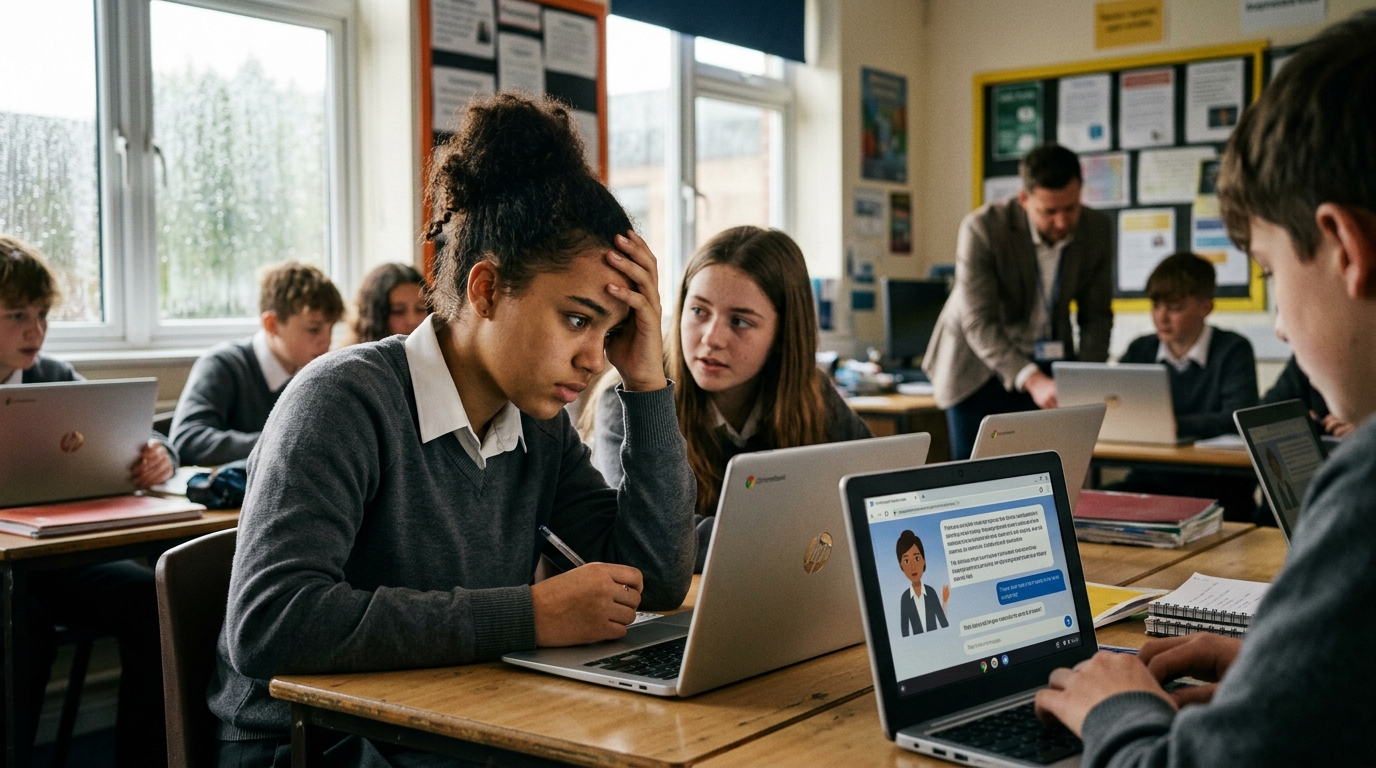
According to recent reports from educational institutions and student unions, the primary concern is no longer about getting caught using AI. Instead, students are worried about losing their own ability to think independently. The frictionless ease with which AI generates essays, solves calculus, and writes code has created an environment where mental effort feels optional, and sometimes even futile. Many students report feeling "cognitively dependent," fearing that without an algorithmic prompt, their minds will struggle to process complex concepts.
"If an AI can write my analysis of Plato in ten seconds, what is the point of me spending ten hours on it?" asks a high school senior. This question isn't about laziness; it’s about the search for meaning. When the process of learning—which is inherently difficult and time-consuming—is bypassed by an instant answer, the satisfaction of intellectual mastery evaporates. Education risks transforming from a journey of internal growth into a mere exercise in output management.
The Shadow of Automated Assessment
Another significant source of stress is the increasing use of AI by educators for grading and feedback. Students express a growing sense of disillusionment knowing that work they spent hours crafting might be "read" and judged by an algorithm in milliseconds. This "dehumanization" of assessment creates a profound sense of alienation.
- Algorithmic Bias: Fears that AI systems might penalize non-traditional writing styles or cultural nuances as "anomalies."
- Lack of Empathy: AI can correct syntax, but it cannot appreciate the personal growth or the struggle behind an original idea.
- The Automation Loop: A dystopian scenario where students use AI to write papers and teachers use AI to grade them, leaving the human element as a mere spectator in a closed loop of data processing.
"We feel like we are becoming nodes in a data pipeline rather than members of a learning community," says one sociology student.
The Digital Divide 2.0
Despite the promise of democratizing knowledge, AI appears to be widening social inequalities. Students with access to premium, high-reasoning AI models have a distinct advantage over those restricted to free, outdated versions. This new "Digital Divide" is no longer just about internet access; it’s about the quality of the synthetic intelligence one can afford. In the classroom, this translates into an invisible hierarchy where financial status dictates the sophistication of the tools supporting the student’s academic performance.
Redefining Education for the AI Era
The solution lies not in prohibition—which has already failed—but in a radical re-evaluation of what we teach. Educators are now being pushed to emphasize skills that AI cannot easily replicate: emotional intelligence, ethical reasoning, collaborative leadership, and creative problem-solving in real-world contexts. Schools must evolve into spaces where human connection and critical dialogue are valued more than the production of a flawless document.
Students themselves are calling for more transparency and ethical frameworks. They want to know when and how AI is being used in their education, and they are demanding that the human teacher remains the central pillar of the experience. Their growing concern is, ironically, a hopeful sign: it indicates that the younger generation recognizes the intrinsic value of human thought in a world that threatens to automate it out of existence.