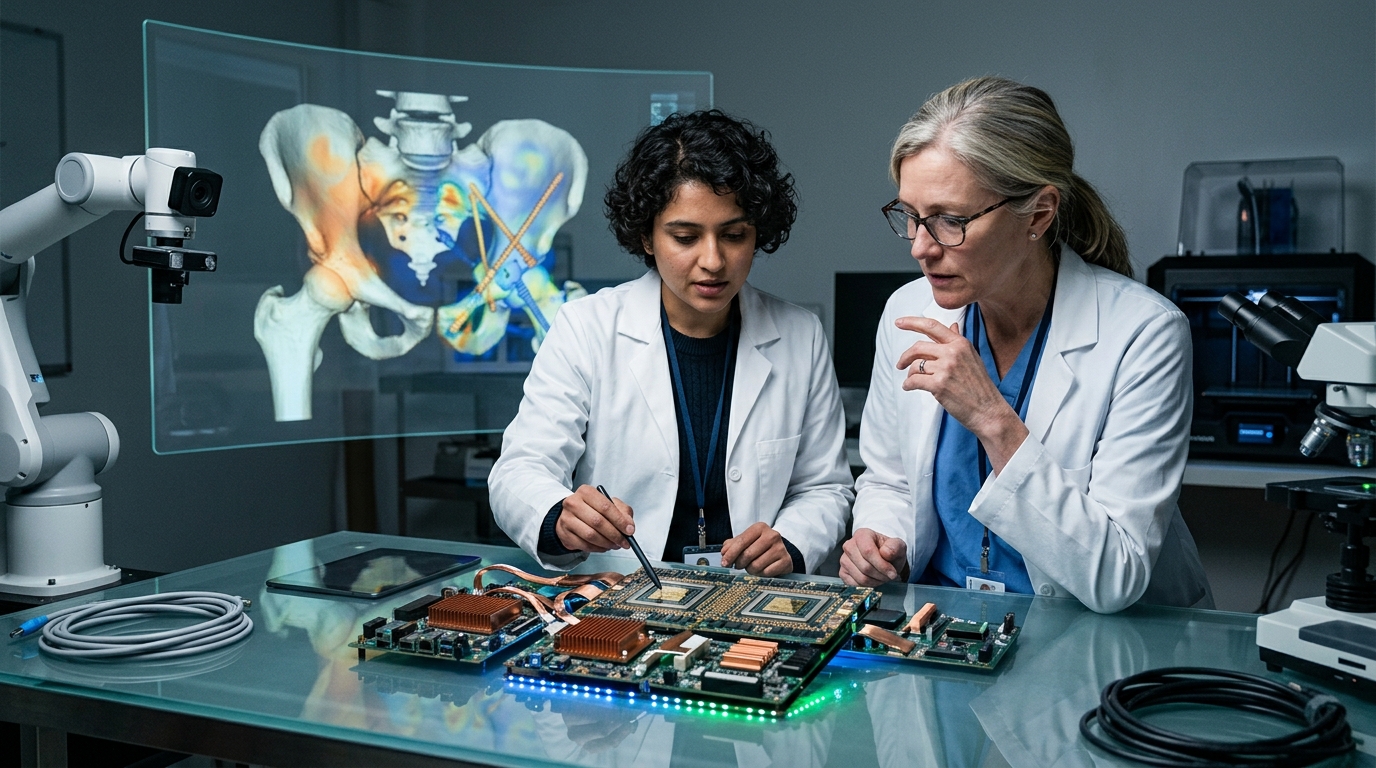
The landscape of modern medicine is undergoing a profound transformation, driven by the integration of computational power and clinical expertise. A comprehensive review recently published in Cureus sheds light on the evolving role of Artificial Intelligence (AI) in orthopaedics, specifically regarding fracture diagnosis and surgical planning. No longer a niche experimental tool, AI is becoming a cornerstone of precision medicine, offering a level of analytical depth that was previously unattainable through traditional methods alone.
The Power of Computer Vision in Radiography
At the heart of AI’s impact on orthopaedics lies Computer Vision, primarily powered by Convolutional Neural Networks (CNNs). These algorithms are designed to process visual data with meticulous detail. In the high-stakes environment of an Emergency Room, human fatigue and cognitive bias can lead to oversight, particularly with non-displaced or stress fractures. AI systems, however, do not suffer from exhaustion. By analyzing radiographs against a backdrop of millions of training images, AI can highlight suspicious areas for the radiologist to review, acting as a tireless digital assistant.
The study highlights that AI's sensitivity in detecting subtle fractures—such as those in the scaphoid or the femoral neck—often matches or exceeds that of senior clinicians. This synergy between human intuition and algorithmic precision is significantly reducing the rate of missed diagnoses, which is one of the leading causes of litigation in orthopaedics. Furthermore, the ability of AI to automate the classification of fractures according to established systems like AO/OTA ensures standardized reporting, which is vital for multi-disciplinary care coordination.
Surgical Planning 2.0: Precision and Personalization
While diagnosis is the first step, the true power of AI is perhaps most evident in the pre-operative phase. Modern orthopaedic surgery is moving away from a 'one-size-fits-all' approach toward radical personalization. AI-driven software can now perform automated segmentation of CT and MRI scans, converting flat images into dynamic 3D models. This allows surgeons to perform a 'virtual surgery' before entering the operating room.
- Automated 3D reconstruction for complex pelvic and acetabular fractures.
- Predictive modeling for implant longevity and bone remodeling.
- Enhanced accuracy in total joint arthroplasty through AI-optimized alignment.
By simulating different surgical approaches on a patient's digital twin, surgeons can identify potential pitfalls and select the optimal hardware. This level of preparation translates to shorter operative times, reduced blood loss, and faster recovery periods for patients. Moreover, the integration of AI with 3D printing allows for the creation of patient-specific instrumentation (PSI), ensuring that every plate and screw is perfectly contoured to the individual’s anatomy.
Ethical Considerations and the 'Black Box' Dilemma
The rapid adoption of AI is not without its controversies. One of the most significant hurdles is the 'black box' nature of deep learning; the logic behind a specific AI-generated decision is often opaque to the end-user. This lack of transparency poses challenges for clinical trust and legal accountability. If an AI system recommends a surgical path that results in a complication, the question of liability becomes a complex legal knot involving the surgeon, the hospital, and the software developer.
"AI should be viewed as an augmentative tool, not a replacement. The 'human touch' and ethical judgment of a surgeon are irreplaceable components of the healing process," the researchers emphasize.
Furthermore, there is the risk of 'automation bias,' where clinicians might blindly follow AI recommendations without applying critical skepticism. Ensuring that the next generation of orthopaedic surgeons is 'AI-literate'—capable of both utilizing and questioning these tools—is essential for the safe progression of the field.
The Horizon: Intraoperative AI and Global Access
Looking ahead, the next frontier is the real-time application of AI during surgery. Augmented Reality (AR) headsets, powered by AI, could soon provide surgeons with 'X-ray vision,' overlaying internal structures onto the surgical field in real-time. This would be particularly transformative for minimally invasive procedures, where visibility is limited. Additionally, AI has the potential to democratize high-quality care. In regions with a shortage of specialist radiologists or orthopaedic surgeons, AI-driven diagnostic tools can provide a baseline level of expert analysis, bridging the gap in global healthcare equity.
As we move deeper into 2026, the question is no longer whether AI belongs in the operating room, but how we can best integrate it to enhance human capability while maintaining the highest standards of patient safety and ethical integrity.